


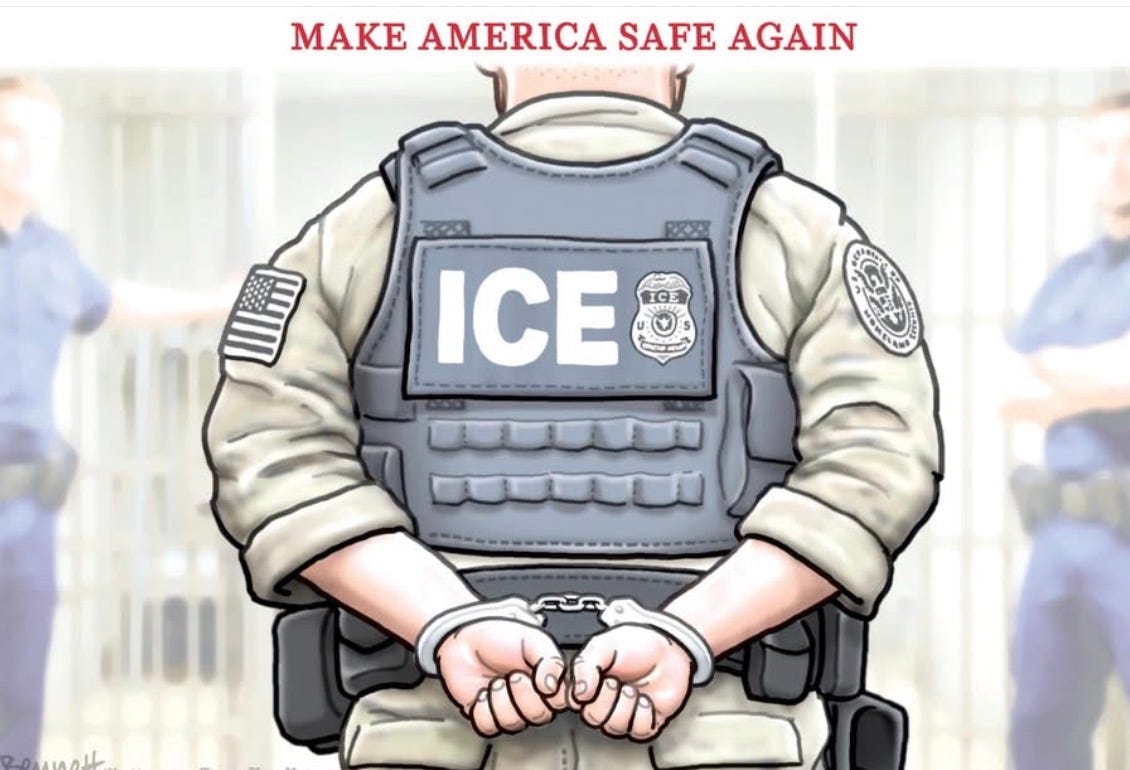
As fatal shootings involving federal immigration agents spark protests and scrutiny in cities across the country, the Florida Keys stand in uneasy contrast: immigration enforcement activity has increased, but no shootings by Immigration and Customs Enforcement or Customs and Border Protection officers have been reported locally — even as residents describe false arrests, aggressive encounters and a growing climate of fear.
The national debate intensified this month after a U.S. Immigration and Customs Enforcement agent fatally shot Renée Nicole Good during an encounter in Minneapolis, one of several recent incidents involving federal immigration agents that have raised questions about when and how deadly force is used.
Those questions echo warnings issued more than a decade ago in an internal review by the Police Executive Research Forum, which examined 67 deadly force incidents involving U.S. Customs and Border Protection officers and Border Patrol agents between 2010 and 2012
The PERF report found that agents too often fired at moving vehicles, a practice the review said rarely stopped threats and frequently escalated danger to officers, passengers and bystanders. The report urged agencies to train officers to move out of harm’s way, prioritize de-escalation and limit deadly force to situations involving an immediate, unavoidable threat to life.
While CBP later revised its use-of-force policies, civil liberties advocates say recent ICE shootings show that gaps remain between written policy and real-world practice — particularly during vehicle encounters and neighborhood enforcement actions.
In the Florida Keys, enforcement has followed a different trajectory.
Local officials and community advocates say ICE and CBP activity has increased over the past year, including traffic stops, detentions and administrative immigration actions. Yet there have been no reported instances of federal agents discharging firearms during enforcement operations in the Keys.
That absence of deadly force, however, has not translated into calm.
Immigrant advocates and clergy members report a rise in negative interactions, including false arrests, prolonged detentions based on mistaken identity, and encounters described as unnecessarily aggressive.
Several residents told Above the Fold they were detained or questioned only to be released hours later with no charges or immigration holds.
Those tensions spilled into public view Sunday, Jan. 11, when more than 215 people gathered in Key West for a demonstration titled ICE Out for Good Key West, organized with less than 24 hours’ notice.
“We put the call out and people showed up,” said one organizer who didn’t want to be named. “What you’re seeing isn’t just fear — it’s frustration. People are paying attention, and they don’t want what’s happening elsewhere to happen here.”
The PERF report warned that enforcement tactics relying heavily on confrontation — even without gunfire — can erode public trust and undermine community safety. When residents fear law enforcement encounters, the report noted, they are less likely to report crimes or cooperate with investigations.
That dynamic appears to be emerging in the Keys. Community leaders say families are increasingly reluctant to engage with any uniformed officers, uncertain whether they are dealing with local police or federal agents operating under different rules.
In Minneapolis, video footage and eyewitness accounts of the Jan. 7 shooting have fueled disputes over whether the ICE agent faced an imminent threat — precisely the type of scenario PERF cautioned agencies to avoid by improving positioning, communication and tactical restraint.
The contrast has not gone unnoticed locally.
“Every time there’s a shooting somewhere else, it lands here too,” said a Florida Keys attorney who tracks immigration enforcement trends. “We may not have crossed that line into deadly force, but the same enforcement culture is present — and the same risks apply.”
Advocates caution that geography and scale may explain the lack of shootings in the Keys, but they warn that policy failures elsewhere often migrate. What begins as a problem in large metropolitan enforcement operations, they say, can eventually reach smaller communities without stronger oversight and transparency.
For now, the Florida Keys occupy a narrow and fragile middle ground — spared the bloodshed seen elsewhere, but grappling with the consequences of intensified federal enforcement and strained trust between officers and the communities they police.
As national scrutiny grows and the legacy of the PERF report resurfaces, residents here are watching closely — and, increasingly, showing up in public — hoping the Keys do not become the next cautionary example.


