



KEY WEST, Fla. — A Key West immigration attorney is warning that Haitian asylum-seekers and others are being forced to choose between traveling through an expanding federal enforcement presence to attend court in Miami or staying home and risking deportation orders.
Wayne Dapser has five Haitian clients scheduled for in-person hearings at Miami Immigration Court this week. Some are so frightened of being detained on the way that they may not make the trip, he said.
“They are obviously scared to travel to Miami, and some may decide not to make the trip and will get an order of deportation for failing to appear,” Dapser wrote in an email obtained and reviewed by Above the Fold on Sunday.
The warning comes amid reports of increased immigration enforcement not only in Key West but throughout Monroe County.
Big Day for Border Patrol: At Least Eight Detained in Key West

KEY WEST, Fla. — U.S. Border Patrol agents took at least eight people into custody Saturday during a series of enforcement actions in Key West, including a forceful detention outside Tavern N Town that was recorded on video.
Dapser said he had received reports of around eight U.S. Customs and Border Protection officers operating in Key West, at least eight people detained Saturday and approximately six others detained during the preceding days. Reports from elsewhere in the Keys also point to an expanding presence by federal immigration officers up and down Monroe County.
Federal authorities have not released a full accounting of recent immigration enforcement operations in Monroe County.
“It looks like it will be a very bad time coming up now,” Dapser wrote.
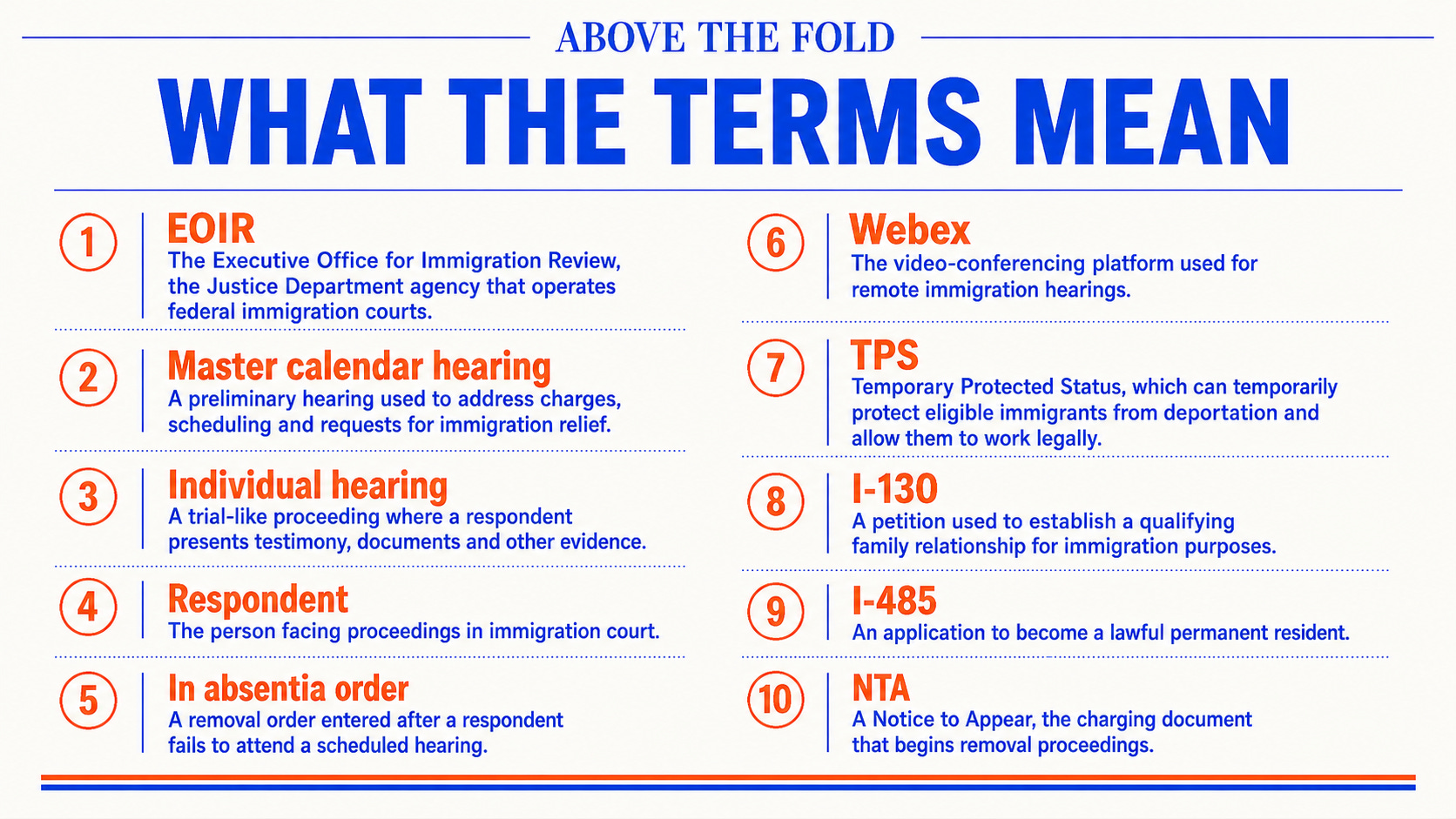
A sole practitioner, Dapser is one of two Key West attorneys whose practices focus heavily on asylum cases and proceedings before the Executive Office for Immigration Review, the Justice Department agency that operates immigration courts.
He said that most of his clients are Haitian and that many recently lost the legal protections provided by Temporary Protected Status after the federal government terminated Haiti’s TPS designation.
The program had allowed eligible Haitians to remain and work legally in the United States because of dangerous conditions in Haiti. The U.S. Supreme Court cleared the way for the Trump administration to end those protections in June.
Remote appearances denied
More than 30 of Dapser’s master calendar hearings in Miami this year had been approved for remote appearances through Webex, the court system’s version of Zoom. Both he and his clients had been permitted to participate remotely.
That changed recently.
Two new orders allowed Dapser to appear through Webex but required his clients to appear in person at the Miami courthouse.
Follow-up motions explaining the difficulties and potential dangers of the trip produced the same result, he said.
For residents of Key West, an appearance in Miami requires traveling the Overseas Highway — the only road connecting the Lower Keys to the mainland — or flying from Key West International Airport.
The motions described reports of license-plate checks, traffic stops and enforcement activity involving federal, state and local agencies along the highway. Clients also fear reports of immigration screening at airports.
Dapser called the trip a “gauntlet.”
A July report from the U.S. Government Accountability Office said immigration judges generally had discretion under EOIR policy to decide whether participants could appear remotely. The report found that remote hearings reduced travel costs, improved access to private attorneys and saved time.
Nearly one-third of the roughly 2 million immigration hearings held during fiscal year 2025 took place remotely, according to the GAO.
The Justice Department continues to publish Webex links for Miami immigration judges. Its website advises parties to contact the court if they are uncertain whether their hearings are scheduled in person or online.
Immigration attorneys have since reported that respondents in non-detained cases before the Miami court will be required to appear in person beginning Sept. 8. Some clients, including Dapser’s, are already receiving orders requiring personal appearances.
‘Nothing in writing’
Several immigration judges questioned by Dapser confirmed that respondents were being required to appear in person. None initially said they had seen a written directive.
On Friday, Aug. 21, one judge provided a fuller explanation.
“He said that there is nothing in writing: It is a verbal instruction,” Dapser wrote.
According to the attorney, the judge said an immigration judge who allowed respondents to appear through Webex could be fired. The judge reportedly referenced the removal of immigration judges in Chicago, including judges with comparatively low asylum-approval rates.
Above the Fold has not independently verified that conversation. No publicly posted EOIR directive reviewed by Above the Fold states that judges will be dismissed for permitting remote appearances.
The judge also said immigration judges were scheduled to meet Wednesday and that additional guidance could follow, according to the email.
Miami Immigration Court is overseen by Assistant Chief Immigration Judge Elisa M. Sukkar, according to the Justice Department’s directory.
Petition Calls For Arrest Of Border Patrol Agent Following Allegations Of Misconduct In Key West

Ed. Note: A Spanish version of this article appears at the bottom of the page. Please feel free to share with members of the community.
Missing court can mean deportation
Failure to attend an immigration hearing can result in an in absentia removal order — a deportation order issued without the respondent being present to defend the case.
One person known to Dapser missed a master calendar hearing where he intended to ask for more time to hire an attorney. The court ordered him removed in absentia.
Another received an in absentia order after a judge refused to continue the case while a family-based immigration petition and green-card interview remained pending, he said.
“The horror and inhumanity of this procedure will become apparent in the next few months,” Dapser wrote.
Clients who appear in Miami fear being detained along the way or at the courthouse. Those who stay home could lose their cases without presenting evidence or making an argument before the judge.
The enforcement increase throughout Monroe County has intensified that fear. The county’s geography leaves people traveling north with few options and no alternate highway around checkpoints, traffic stops or enforcement operations.
Dapser also said immigration judges are warning that individual hearings — the trial-like proceedings where asylum applicants present testimony and evidence — could be scheduled on short notice when transferred to newly appointed judges.
In some instances, as little as 10 days’ notice could be considered sufficient.
“That is not enough time to fully prepare a case for a hearing,” he wrote.
Pressure beyond immigration court
The pressure is not limited to the courthouse.
Dapser said U.S. Citizenship and Immigration Services field offices have begun delaying or denying some permanent-residency applications when the beneficiary was out of status at the time of filing.
Applicants could receive an immediate Notice to Appear in immigration court or face detention, he said, including in some cases involving arriving immigrants or immediate relatives with applications pending before USCIS.
For now, five of Dapser’s clients face hearings they cannot afford to miss and a trip they are increasingly afraid to make.
“Any suggestions or advice on how to safely get clients to their hearings in Miami are very appreciated,” he wrote.
This is an evolving story. Watch this space.
Thank you! I hope to share this with some people who are living under a rock…