
TROPICAL DISTURBANCE: Ballot Box Brawls: 10 Elections That Built — and Bloodied — Key West Politics
From Reconstruction-era ballot stuffing to the “Conchs versus outsiders” fight of 2026, Key West elections have never been quiet — or particularly clean.

KEY WEST, Fla. — Key West politics has never been a genteel business.
The island’s elections have featured gunfire, fraudulent ballots, torchlight parades, whisper campaigns, religious crusades, family feuds and margins small enough to haunt the losing side for years.
The names and issues have changed. The underlying fights have not: old families against newcomers, reformers against entrenched interests and candidates promising to clean up City Hall against those accused of benefiting from it.
Today, those divisions are often reduced to a familiar and emotionally loaded phrase: “Conchs versus outsiders.”
That tension is hardly new. Ernest Hemingway explored Key West’s divisions among working Conchs, wealthy visitors and people who arrived hoping to reinvent themselves in To Have and Have Not, published Oct. 15, 1937. Nearly nine decades later, similar arguments over who belongs, who benefits and who gets to control the island still shape its politics.
They are especially pronounced in the 2026 election. The hostility is not confined to the mayoral contest between incumbent Danise Henriquez and City Commissioner Sam Kaufman. It has spread through the District II, IV and V commission races — especially via negative attacks fueled by Key West athletic supporter Jack Nile’s PAC — where candidates and their supporters are fighting over development, special interests, political influence and who has the right to claim Key West as their own.
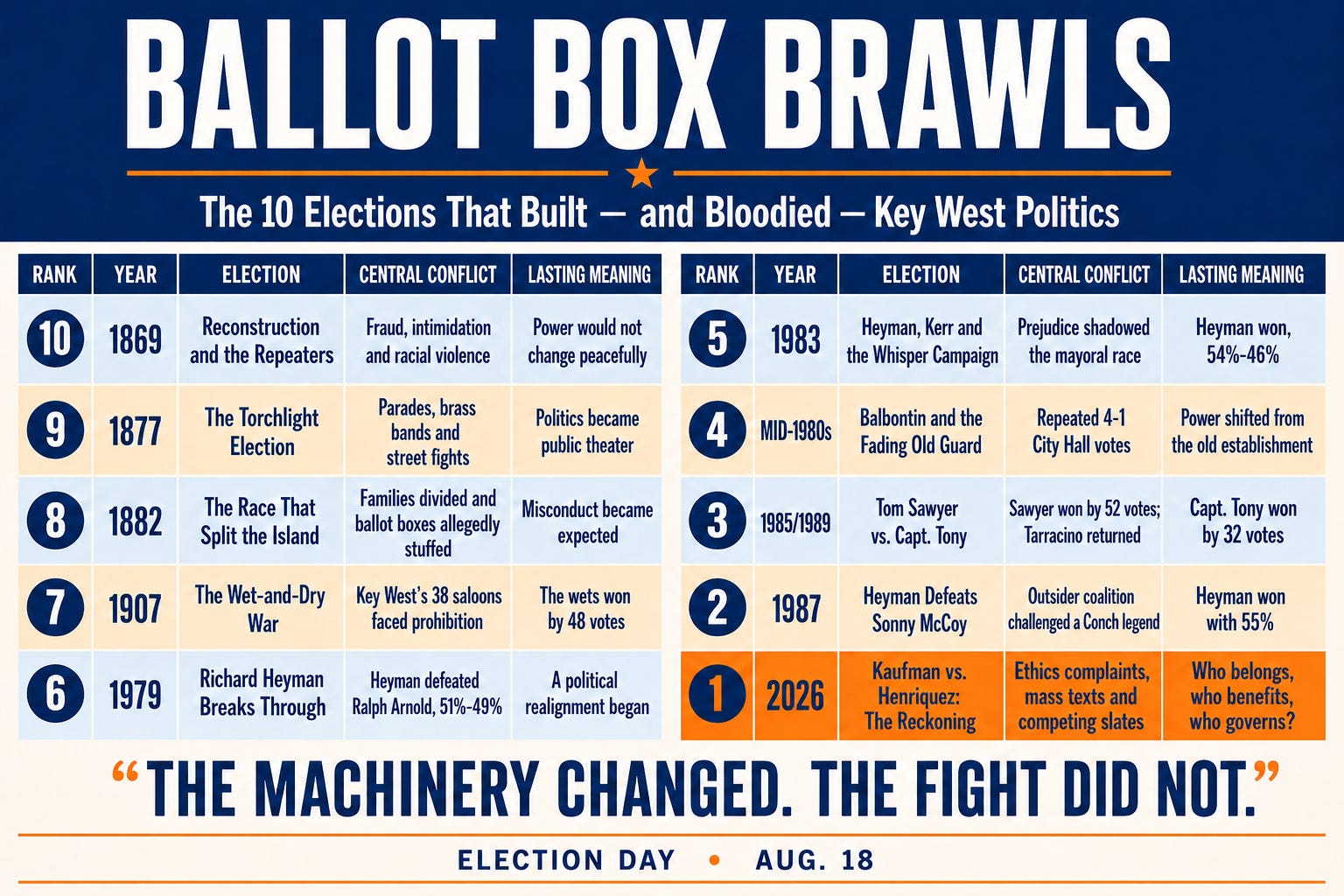
Here are 10 contests that helped shape that political culture, beginning in Reconstruction and counting down to the election Key West is fighting over now:
10. Reconstruction and the Repeaters — 1869
The 1869 mayoral race between Democrat Joseph Beverly Browne and Republican E.L. Ware was among Key West’s first major elections after Black men gained the right to vote.
The response was intimidation, fraud and violence.
So-called “repeaters” cast ballots multiple times, sometimes under assumed names. Election workers were accused of allowing ballots to disappear or totals to change. The practice became so familiar that “repeater” remained part of the island’s political vocabulary for years.
The violence was equally brazen. During a procession involving newly enfranchised Black voters, a Confederate veteran reportedly fired on a parade wagon near Front and Duval streets.
It was an early warning that political power in Key West would not change hands peacefully.
9. The Torchlight Election — 1877
By 1877, Key West had turned campaign season into public theater.
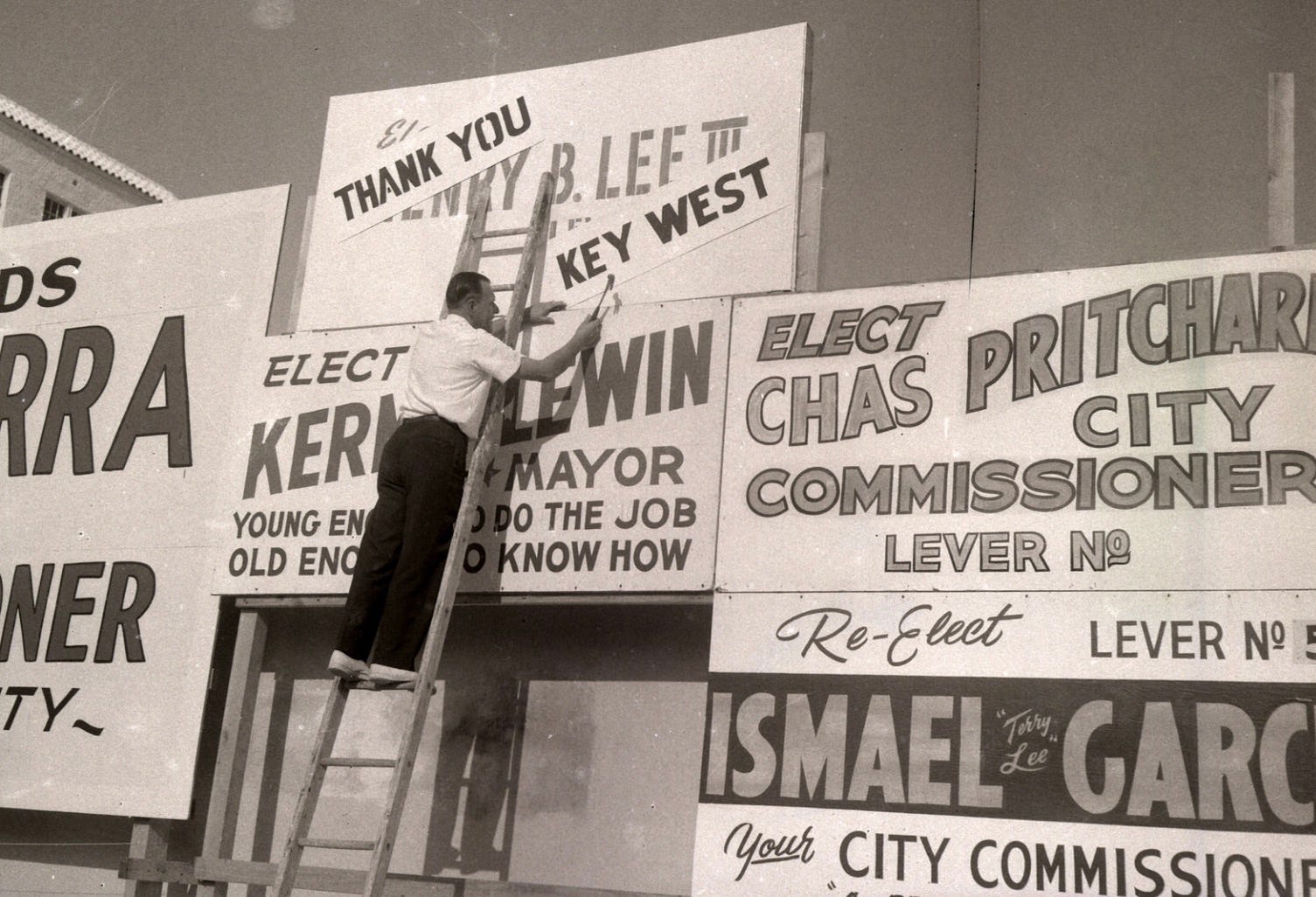
The mayoral race between L.W. Bethel and Dr. J.W.V.R. Plummer featured torchlight parades along Duval Street, competing brass bands and speeches that sometimes ended in shoving matches.
Newspapers called the campaign “spirited,” the sort of restrained description 19th-century editors used when civic participation began to resemble a street fight.
Bethel won, but the larger legacy was the spectacle itself. Key West politics had moved out of meeting rooms and into the streets, where noise, crowds and personality could matter as much as policy.
8. The Senate Race That Split the Island — 1882
The state Senate contest between George Allen and C.B. Pendleton was described at the time as one of the bitterest elections Monroe County had seen.
It divided more than political parties. Families split. Friendships ended. Neighbors who had known each other for years stopped speaking.
Allen prevailed as an independent-minded Republican, but the fight continued into the next election cycle. His opponents were accused of stuffing ballot boxes with hundreds of fraudulent votes in an effort to drive Allen’s allies from local office.
The alleged fraud was hardly concealed. By then, election misconduct had become less an aberration than an expected part of the process.
7. The Wet-and-Dry War — 1907
In 1907, Key West voters were asked whether the city should remain “wet” or shut down its 38 licensed saloons.
The referendum drew what was described as the largest political gathering the city had seen. Ministers preached against alcohol before a packed Jackson Square. Saloon owners and their allies fought back. Heckling and shouting nearly spilled into a riot.
The wets won by 48 votes.
The narrow victory reflected more than the island’s fondness for drinking. Saloons were woven into Key West’s economy and culture, and the vote foreshadowed the city’s resistance to national Prohibition.
Washington could outlaw liquor. Convincing Key West to stop drinking it was another matter.
6. Richard Heyman Breaks Through — 1979
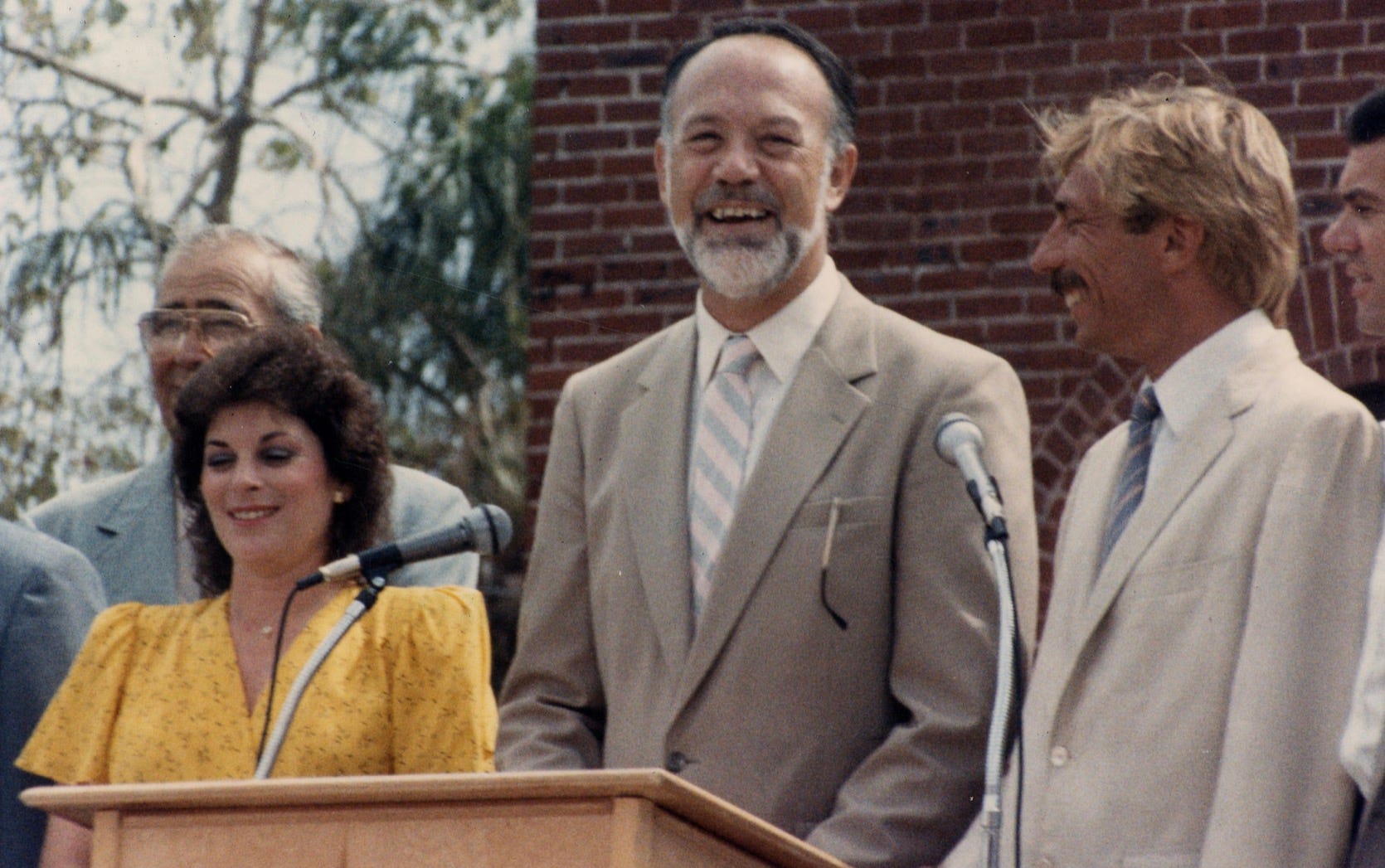
Richard Heyman was a gallery owner without an old Conch surname or an inherited political organization.
In 1979, he defeated incumbent Commissioner Ralph Arnold in a runoff, 51% to 49%.
The margin was small, but the implications were not. Heyman’s victory exposed a widening divide between the families that had controlled City Hall for generations and the gay residents, artists, business owners and newcomers transforming Old Town.
It was the sort of change that Key West had long resisted and could no longer avoid. The argument over who counted as a “real” islander had returned in another form.
What looked like an upset in one commission district became the beginning of a broader political realignment.
5. Heyman, Kerr and the Whisper Campaign — 1983
Four years later, Heyman ran for mayor against Richard Kerr in one of the ugliest modern campaigns in Key West history.
The contest followed a brutal attack on playwright Tennessee Williams and unfolded as the AIDS crisis fueled fear and hostility toward gay people across the country.
Kerr’s campaign ran advertising warning voters about a “deadly disease” of weak leadership. In the political climate of 1983, the double meaning was difficult to miss.
Heyman won, 54% to 46%, becoming Florida’s first openly gay elected mayor and one of the nation’s first openly gay mayors.
The result showed that the island had changed — and that its old political order could no longer rely on prejudice to hold power.
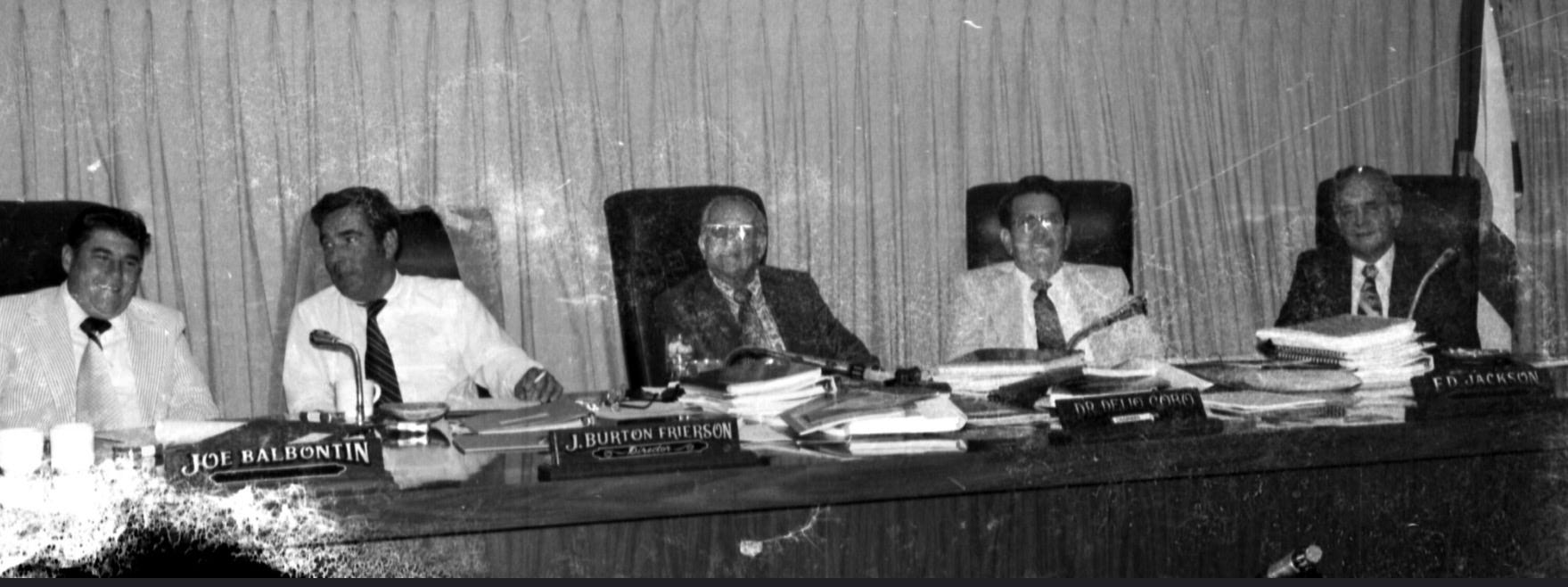
4. Balbontin and the Fading Old Guard — Mid-1980s
Commissioner Joe Balbontin became one of the last defenders of the old political order as a new majority consolidated control at City Hall.
Balbontin and Commissioner Mira repeatedly found themselves on the losing end of 4-1 votes involving personnel decisions, police operations and city contracts.
Across the divide stood figures such as Frank Romano, the founder of Key West Aloe and a member of the growing business class that had helped reshape the island.
The fights were not always dramatic enough for national headlines, but they mattered locally. Meeting by meeting and vote by vote, the balance of power was moving away from the old Conch establishment.
The arguments were ostensibly about contracts, employees and government policy. Beneath them was the same question that had followed Key West politics for generations: Who gets to run the island?
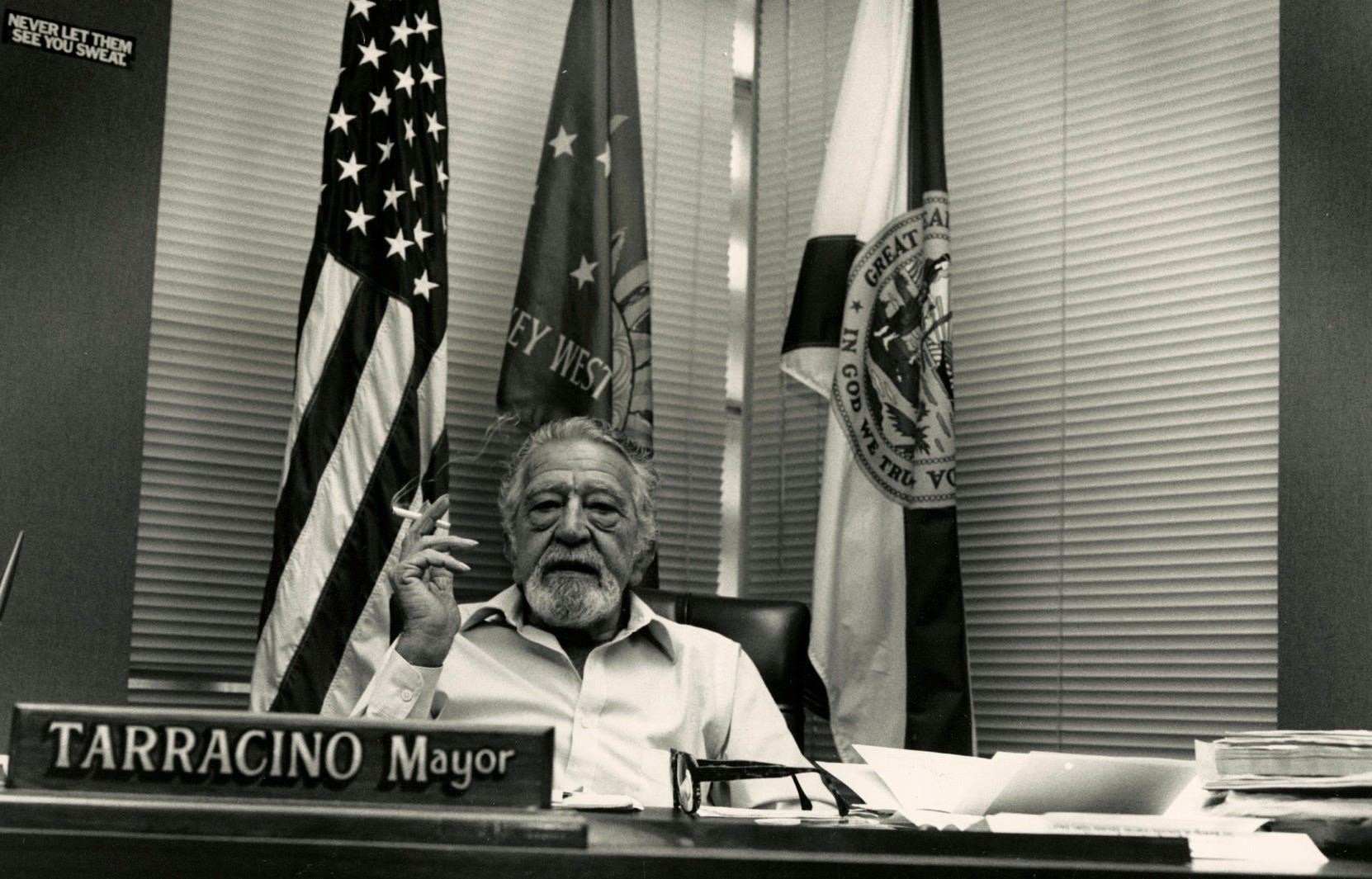
3. Tom Sawyer vs. Capt. Tony — 1985
This is the election Key West still tells over drinks.
Banker Tom Sawyer faced Anthony “Capt. Tony” Tarracino, the tattooed saloonkeeper, former gunrunner and larger-than-life character later immortalized in a Jimmy Buffett song.
Tarracino led the primary with 44.6% of the vote, compared with Sawyer’s 43.7%, among 7,005 ballots cast.
The runoff turned after a Sawyer supporter paid for a newspaper advertisement detailing Tarracino’s colorful personal history. Sawyer won by 52 votes.
Tarracino did not stay beaten.
Four years later, he returned and won the mayor’s office by 32 votes. He ran as himself — stories, scandals and all — and Key West decided that was good enough.


2. Heyman Defeats Sonny McCoy — 1987
In 1987, Heyman faced Charles “Sonny” McCoy, a five-term former mayor and one of the island’s most recognizable politicians.
McCoy had once water-skied from Key West to Cuba as a publicity stunt, an accomplishment that ensured his place in island lore even before the campaign began.
Heyman won the runoff with 55% of the vote, carrying Old Town and Bahama Village.
The victory was widely viewed as the end of the old Conch establishment’s political dominance. In less than a decade, Heyman had gone from outsider gallery owner to the central figure in a movement that changed who could govern Key West.
That era ended with his death in 1994, but the coalition he helped build permanently altered island politics.
It also proved that the line between Conch and outsider was never fixed. Given enough time, newcomers became neighbors, neighbors became voters and voters became the new establishment.
1. Kaufman vs. Henriquez — and the 2026 Reckoning
The weapons have changed. The hostility has not.
Instead of torchlight parades and brass bands, Key West now has social media campaigns, mass text messages, ethics complaints and public-record emails landing in reporters’ inboxes.


Henriquez and Kaufman entered the campaign as longtime members of the same city government. By May, their race had become openly hostile.
City Manager Brian Barroso accused Kaufman’s campaign of improperly using City Hall resources for political purposes. He copied city attorneys on the email, placing the accusation squarely in the public record.
A Kaufman supporter later filed a complaint alleging that city social media accounts were being used to benefit Henriquez’s campaign. Kaufman followed with complaints against Barroso and Henriquez before the Florida Commission on Ethics.
But the mayoral race is only the top of the ballot-box brawl.
The District II contest between Bobi Lore and Mark Rossi, the District IV race among Sarah Compton, Wayne Garcia and Juan Llera, and the District V contest between Chris Massicotte and Greg Sullivan have also become increasingly personal with supporters of all camps becoming involved on social media channels.
Candidates, political committees and their supporters are fighting over campaign money, development, business influence and the records of those already inside City Hall. Endorsements, attack messages and campaign mailers have reinforced the perception that the election is not a collection of separate district races but a struggle between competing slates for control of the city.
On both sides, many have framed that struggle as “Conchs versus outsiders.”
It is an effective political weapon because it reduces a complicated election to a question of identity: Who belongs here? Who understands Key West? Who arrived too recently to have a voice, and who has lived here long enough to claim ownership of its future?
But the slogan conceals more than it explains.
Some of the candidates described as outsiders have lived and worked in Key West for decades. Some candidates promoted as representatives of old Key West are supported by developers, tourism interests and wealthy donors whose decisions have helped make the island increasingly unaffordable for working Conchs.
If this were simply a Conch political system, its benefits would presumably reach ordinary Conch families. They would be reflected in affordable housing, livable wages, manageable commercial rents and equal access to City Hall.
Instead, critics argue, the greatest benefits too often flow to a much smaller circle of property owners, contractors, political donors and businesses with the money and connections to influence government decisions.
The more revealing divide may not be Conchs against outsiders at all. It may be political access against political exclusion — those who benefit from City Hall’s decisions against those who believe they have been shut out.
That argument would have been familiar when Hemingway published To Have and Have Not in 1937
“my family’s going to eat as long as anybody eats. What they’re trying to do is starve you Conchs out of here so they can burn down the shacks and put up apartments and make this a tourist town. That’s what I hear. I hear they’re buying up lots, and then after the poor people are starved out and gone somewhere else to starve some more they’re going to come in and make it into a beauty spot for tourists.”
― Ernest Hemingway, To Have and Have Not
Hemingway’s Key West was divided among struggling local families, wealthy yacht owners, tourists and newcomers occupying the same small island without sharing the same economic reality.
As we are now.
The novel’s central division was between the people who had and the people who did not.
In 2026, the characters have changed. The resentment has not.
Hovering over the campaign is a Monroe County grand jury report examining misconduct at City Hall between 2021 and 2024.
The investigations produced criminal charges against former city officials and documented failures involving contracting, planning, code enforcement and accountability.
Kaufman has presented himself as the commissioner willing to challenge the administration and expose wrongdoing. His opponents argue that a commissioner with years of experience inside City Hall cannot completely separate himself from the government he now condemns.
Henriquez faces a different set of questions. Her opponents have scrutinized her votes and positions involving development, federal immigration enforcement, the city’s rainbow crosswalks and water-quality testing near cruise ship operations as well as taking credit for projects that were approved and started before her election.
The commission candidates face their own versions of the same test: whether they represent a break from Key West’s political establishment or merely another faction competing to control it.
When the votes are counted Aug. 18, Key West will not be settling 157 years of political warfare.
But it will decide who writes the next chapter.