

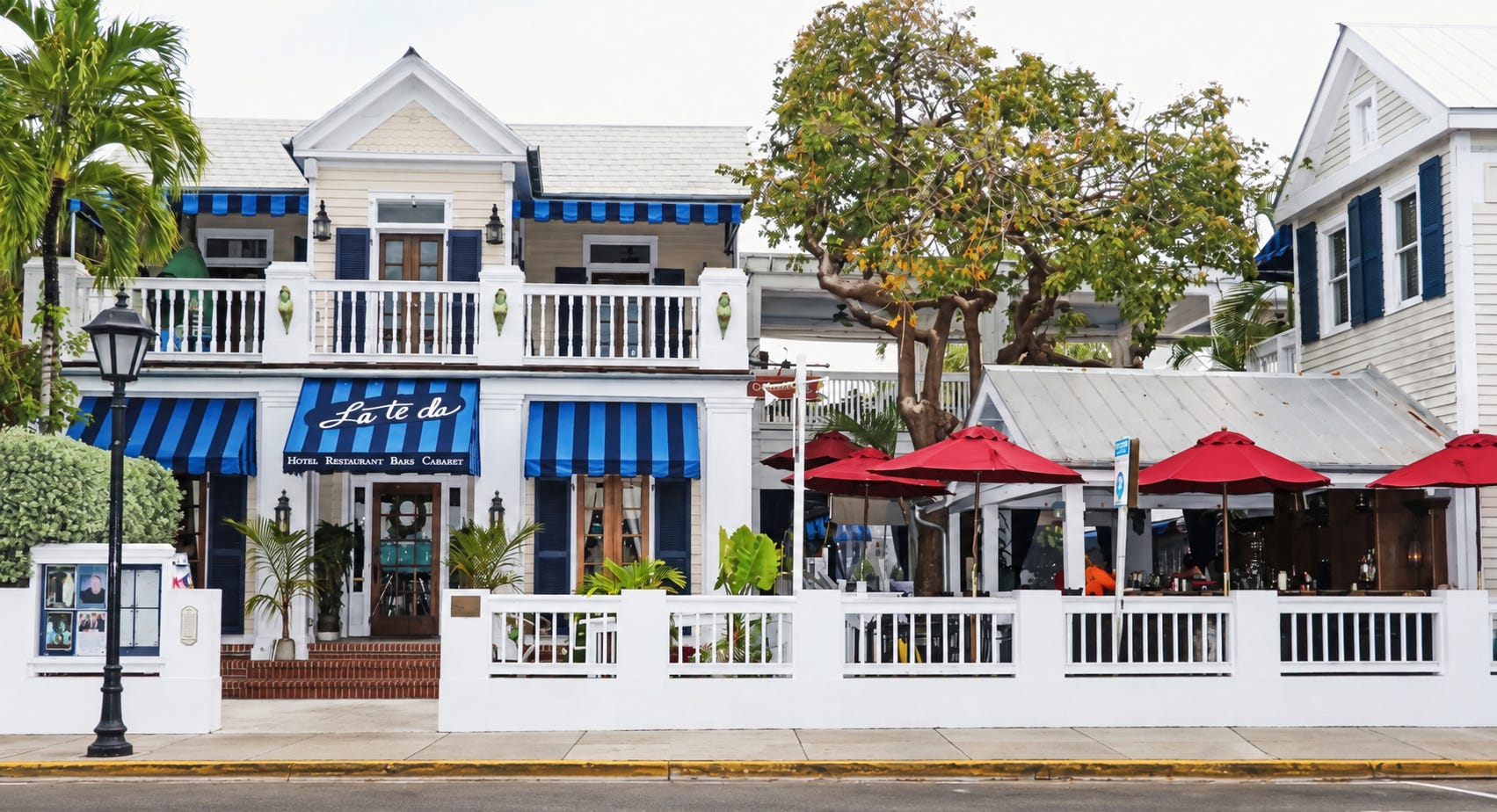
KEY WEST, Fla. — A wrongful-death lawsuit against the City of Key West, La Te Da and multiple felony-indicted former Chief Building Official Raj Ramsingh will continue after a Monroe County judge denied Ramsingh’s first attempt to have the claim against him dismissed.
Circuit Judge Tim Koenig denied the motion Aug. 25 in a two-page order. The ruling keeps Ramsingh in the case while the parties move forward with discovery and other pretrial proceedings.
Irena Kalvel, acting as personal representative of the estate of her husband, construction worker Peter Kalvel, filed the lawsuit May 21. The complaint alleges Kalvel suffered catastrophic injuries and died after dangerous construction, demolition, renovation or structural work was allowed to occur at or in connection with the La Te Da property on June 11, 2024.
The estate alleges La Te Da failed to maintain safe premises and that Key West and Ramsingh failed to properly inspect the work, enforce building and safety codes, stop known dangerous activity and ensure required permits and precautions were in place.
BACKGROUND
THE FRAUDULENT AND CORRUPT ACTS OF THE BUBBA BOZO TRIO

Well, the Monroe County State Attorneys Office released the grand jury report delving into corruption at 1300 White Street and the dirty dealings by the Bubba Bozo Trio of disgraced (and likely disbarred) City Attorney Ron Ramsingh, his brother, former Chief Building Officer Raj Ramsingh, and now retired small-time thug, former Code Enforcement Director…
Ramsingh Claimed Immunity
Ramsingh’s June 22 motion sought dismissal of Count III — the negligence claim against him individually — with prejudice.
The motion argued the complaint described conduct performed within the course and scope of his employment as Key West’s chief building official.
Under Florida Statutes, government employees generally cannot be held personally liable for legal actions brought within the scope of employment unless they acted in bad faith, with malicious purpose or in a manner exhibiting wanton and willful disregard for human rights, safety or property.
Ramsingh’s lawyer argued that the estate had pleaded, at most, ordinary negligence and that the city was the proper defendant for conduct attributed to him as a municipal employee.
The estate countered that its complaint alleged more than a routine inspection error.
It pointed to allegations that Ramsingh exercised supervisory and operational authority over permitting, inspections, code enforcement, demolition approvals and construction oversight; knew of dangerous conditions and a documented pattern of permitting and inspection problems; and recklessly or unlawfully approved, permitted, ignored or failed to stop unsafe activity.
Koenig denied the motion without elaboration.
Ramsingh may still raise immunity later, including after the factual record has been developed and the estate must ultimately prove its allegations.
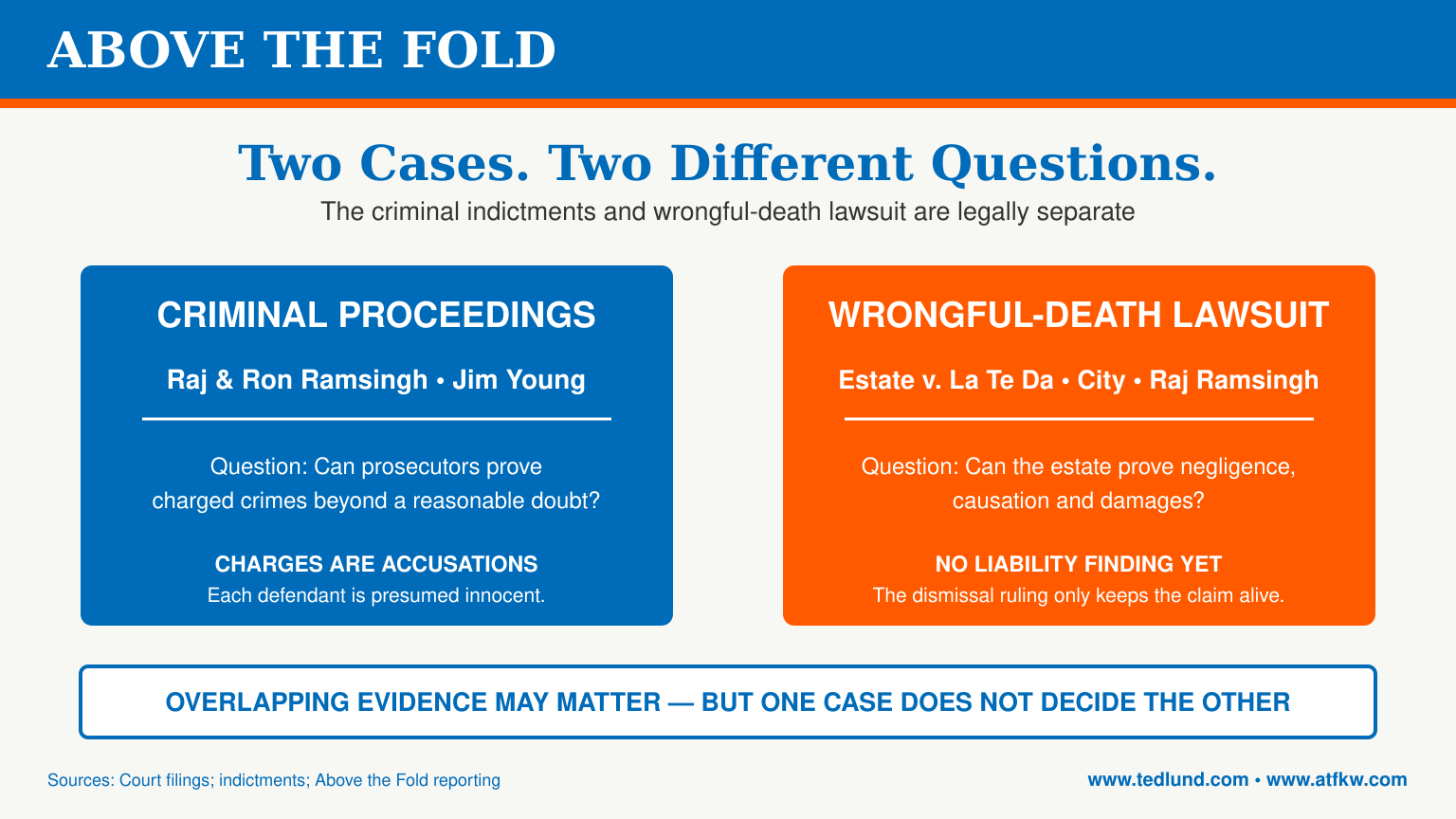
Criminal Indictments A Separate Matter
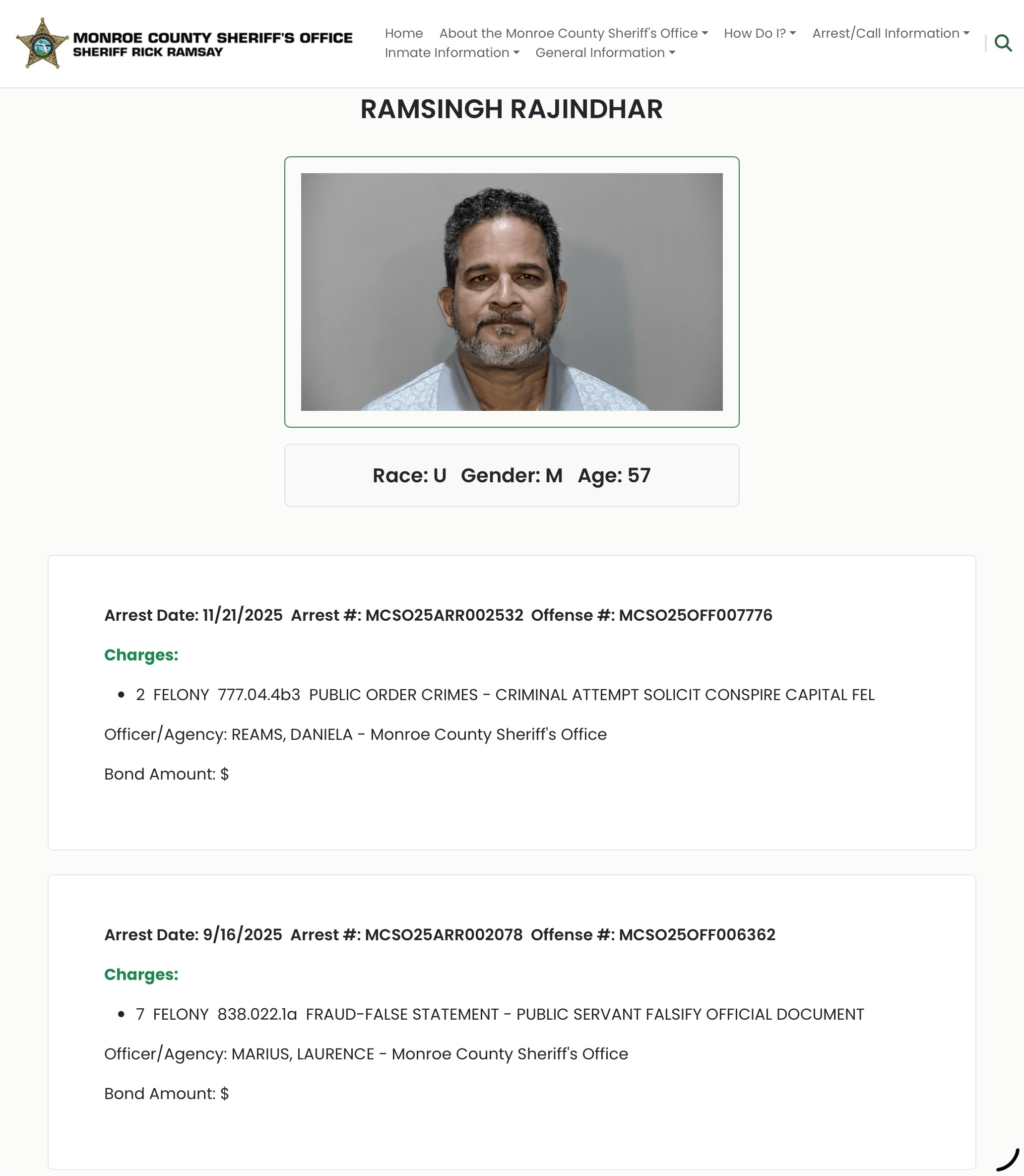
The civil case unfolds as Raj Ramsingh, his brother, felony-indicted former City Attorney Ron Ramsingh, and indicted former Code Compliance Director Jim Young face criminal charges arising from broader investigations into Key West City Hall.
Raj Ramsingh has faced charges including official misconduct, obstruction and organized fraud. Ron Ramsingh and Young also were charged in connection with allegations that evidence was altered, destroyed or concealed during investigations.
BACKGROUND
Three Key West Employees Indicted

The Key West City Commission will meet in a special session on Monday, April 21 at 5 p.m. The meeting will be televised.
Who Could Pay — And How Much
Because Kalvel’s claim arose in 2024, the applicable version of Florida’s sovereign-immunity law generally limits the amount recoverable directly from a local government to $200,000 for one person and $300,000 for all claims arising from one incident.
A court may enter a judgment above those limitsm but collecting the excess from the city would require a claims bill approved by the Florida Legislature.
The city also may be able to settle within available insurance coverage without a claims bill, depending on the policy and circumstances. La Te Da is a private defendant and does not receive the city’s statutory cap.
Ramsingh’s position is more complicated.
If the conduct is found to have occurred within the scope of his city employment and does not meet the statutory bad-faith, malicious-purpose or wanton-and-willful-disregard exception, the city generally is the proper governmental defendant and Ramsingh would be immune from personal liability.
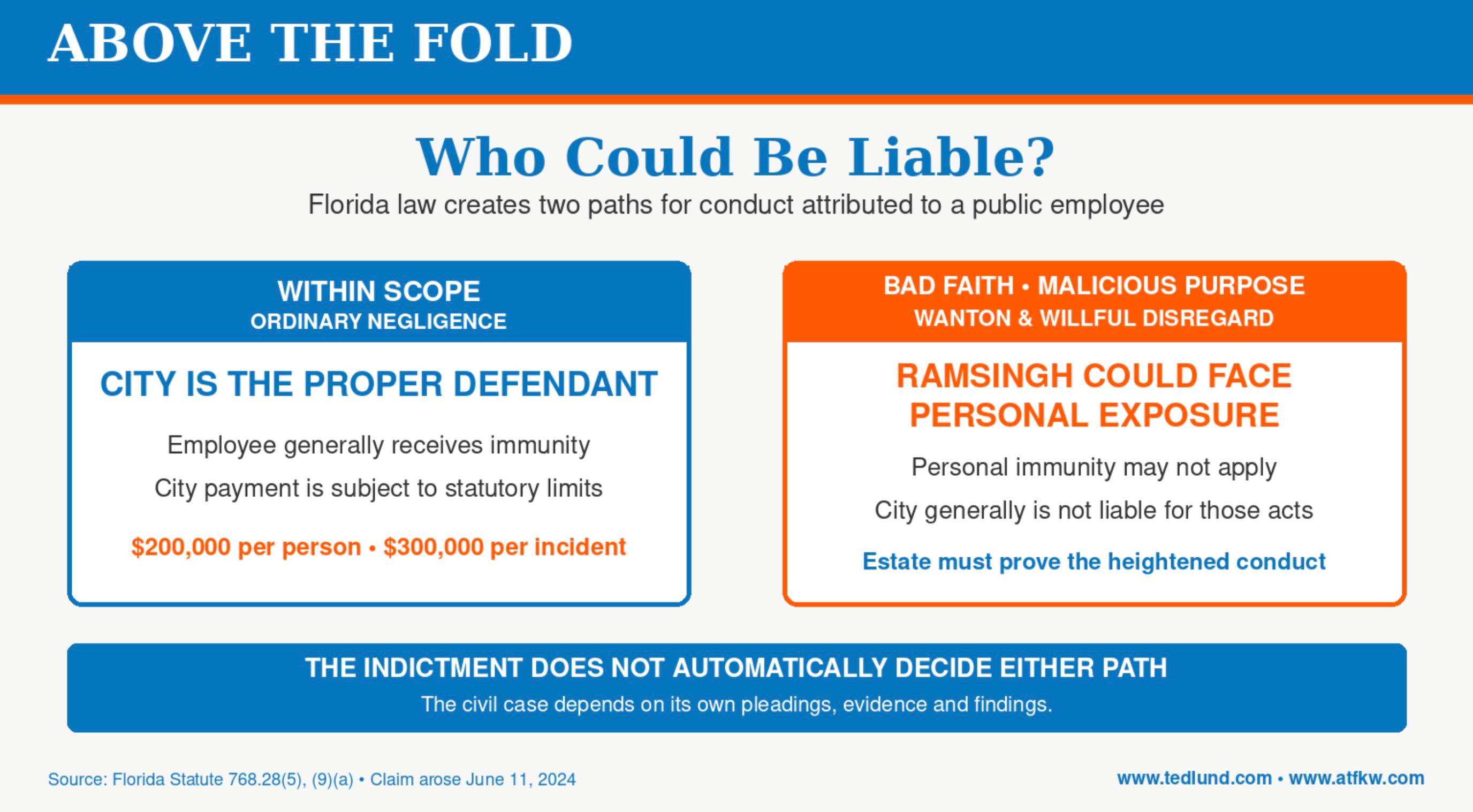
If the estate proves that Ramsingh crossed that statutory line, he could face significant individual exposure.
The allocation of fault among La Te Da, the city, Ramsingh and any other responsible party could materially affect who ultimately owes what.
A Multimillion-Dollar Case — But Not Yet A Valuation
The complaint does not state a specific dollar demand, but seeks damages available under Florida’s Wrongful Death Act, including loss of support and services, loss of companionship and protection, mental pain and suffering, medical and funeral expenses, and lost net accumulations to the estate where legally recoverable.
For planning purposes, Above the Fold considers $5 million to $10 million a reasonable broad working range for the gross potential value of a death case involving a surviving spouse.
An upper scenario of $10 million to $15 million could be possible if the evidence supports substantial noneconomic loss, significant economic damages or aggravated conduct.
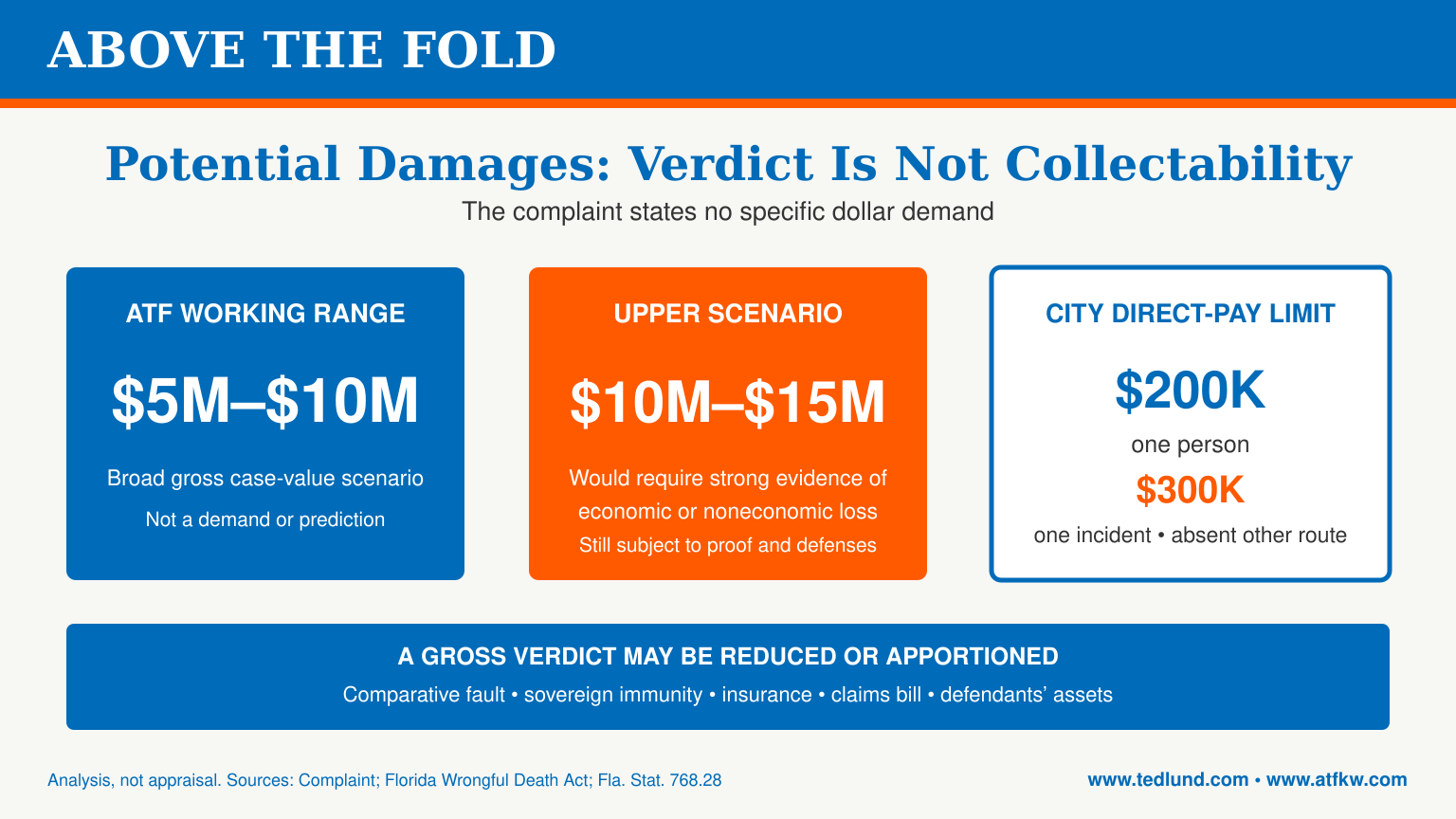
The available evidence is not yet sufficient for a reliable case valuation, and any gross verdict could be reduced by comparative fault, apportioned among defendants or limited in collectability by sovereign immunity, insurance terms and the defendants’ assets.
For now, however, the immediate result is narrower: Ramsingh remains a defendant and the estate may continue pursuing discovery.
Don’t want to become a paid subscriber?