

Navy RIB Slams Lit Channel Buoy off Key West; Sailors Hurt, Safety Questions Raised
Rigid inflatable boat on reported night training run hits marker 13 near Truman Waterfront, injuring at least three sailors and heavily damaging lit navigational aid.

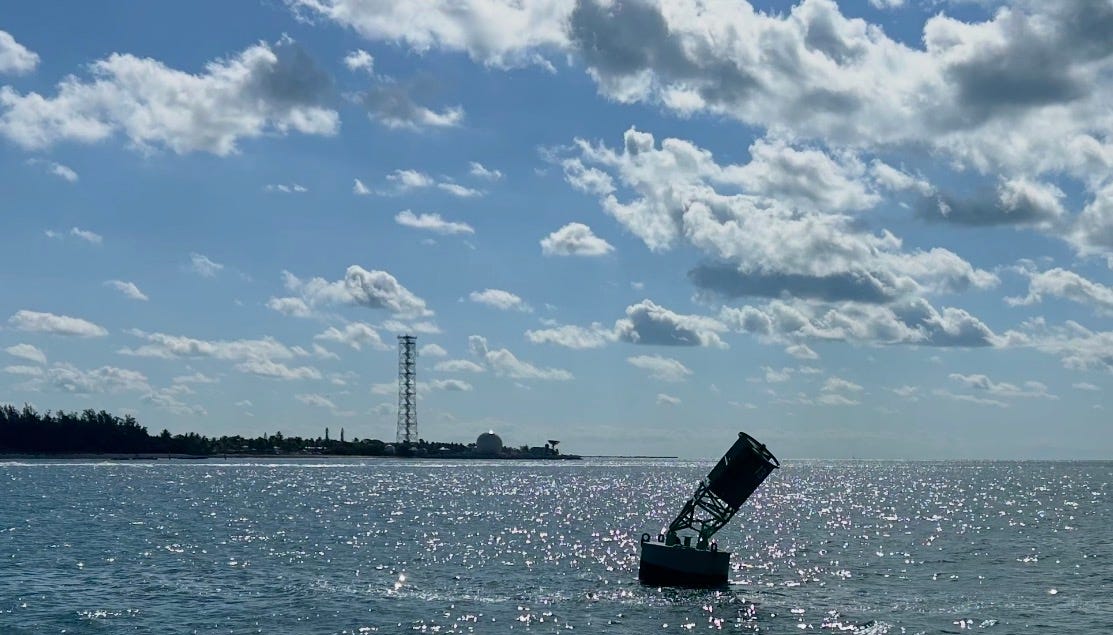
KEY WEST, Fla. — Several U.S. Navy sailors were injured early Friday when a rigid‑hulled inflatable boat struck a lit channel buoy during what was described as a training exercise off Key West, according to emergency radio traffic.
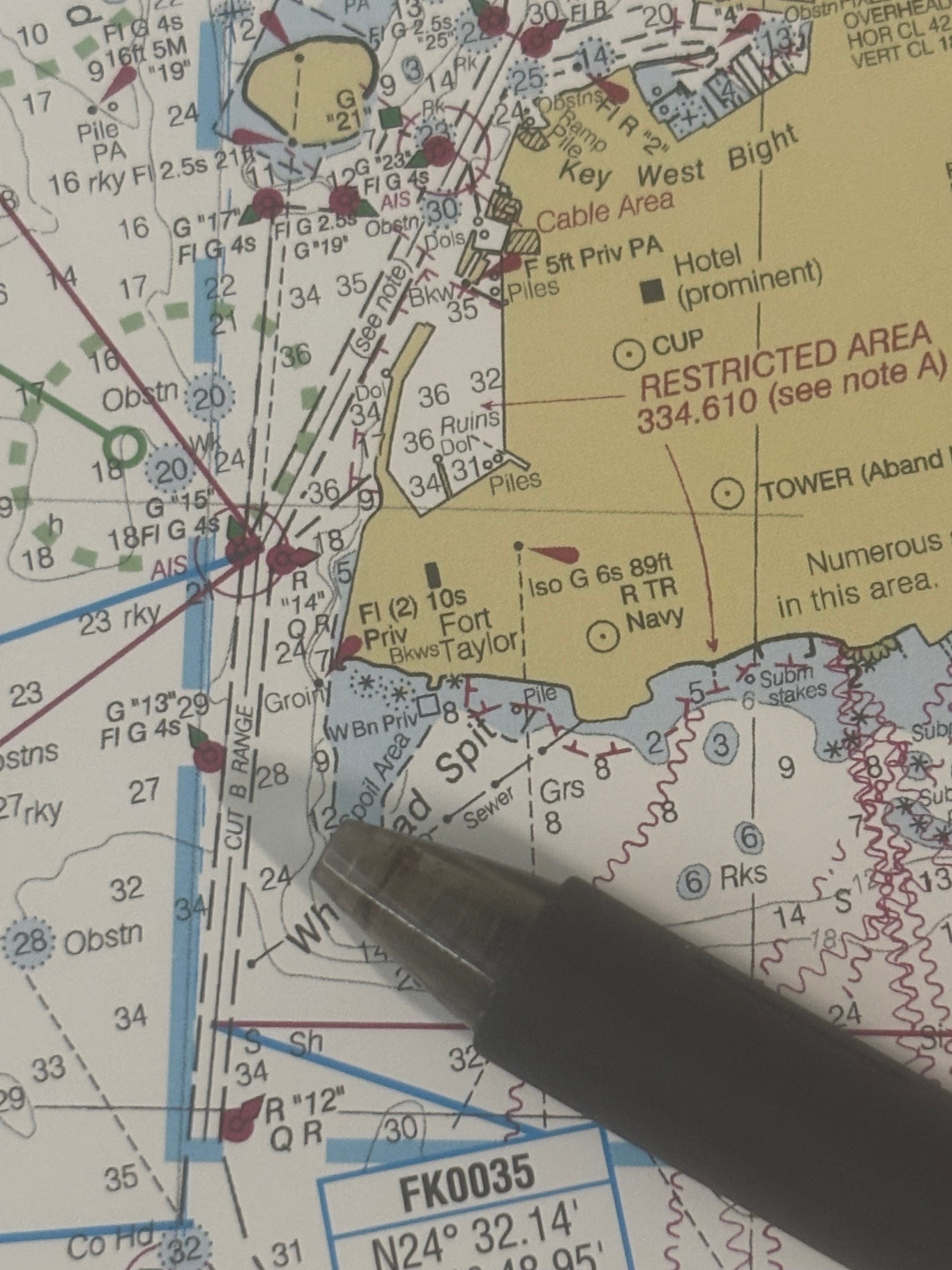
A dispatch recording transcript timestamped 5:31 a.m. indicates “multiple minor injuries” were reported after the Navy RIB hit lighted buoy 13 on the west side of the main ship channel, just off the tip of Key West, and “everyone got tossed and banged around” near the Truman Waterfront Boat Ramp at Truman Annex. Rescue crews were told at least one sailor appeared to have a broken nose and that others may have suffered possible concussions, lacerations, bumps and bruises.
After they arrived on scene, however, Key West First Responders said there three possible airlift patients with multiple other refusals.
Dispatch Recording (click to listen)
It is unclear how many were aboard the vessel.
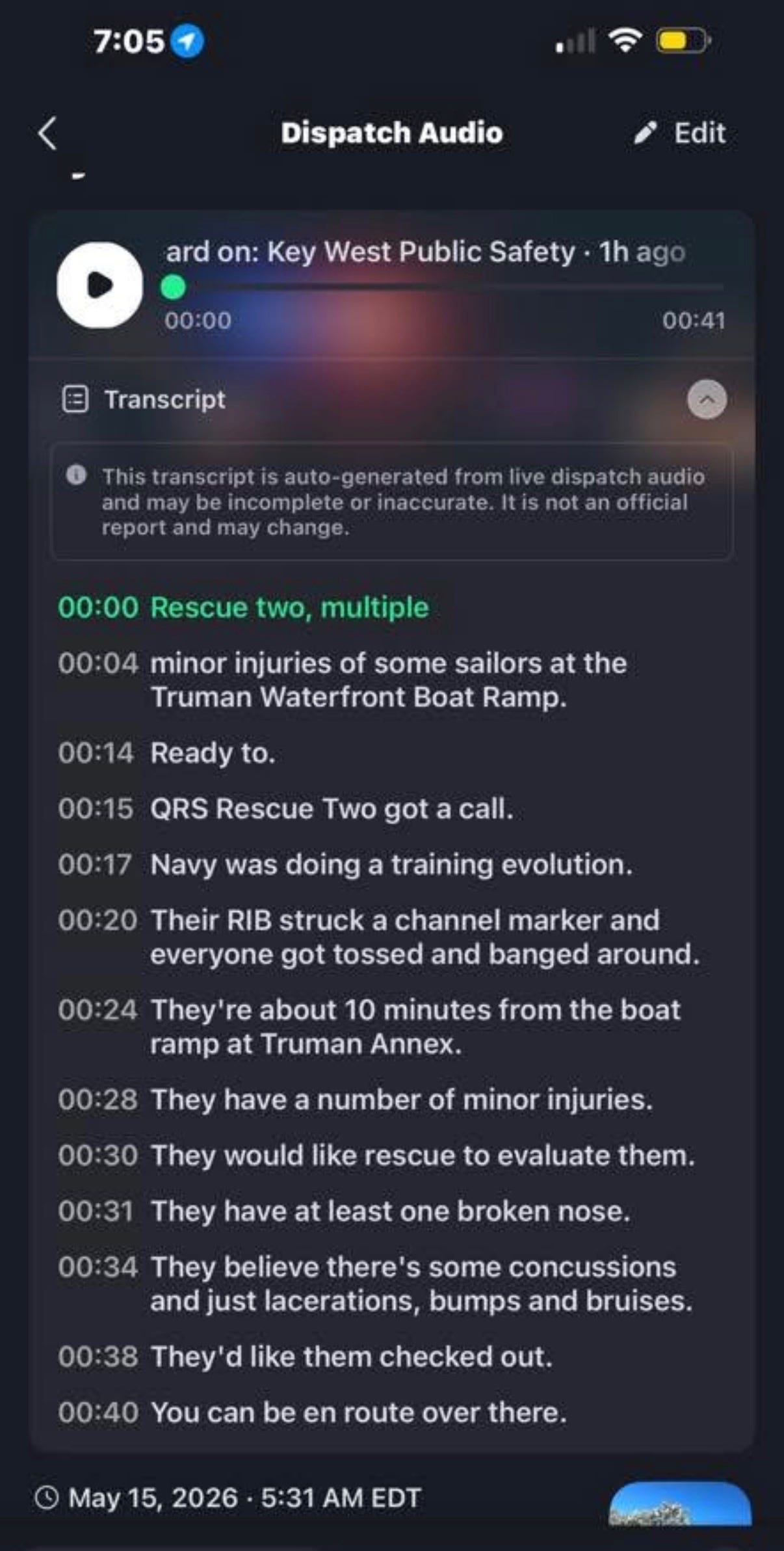
Rescue units were advised the injured sailors were about 10 minutes out from the Truman Waterfront Boat Ramp and that Navy officials wanted local responders to evaluate them once they reached shore, according to the dispatch audio. The impact caused major damage to the navigational aid at lighted buoy 13, but the status of the training vessel was not immediately known.
Nighttime RIB operations in Key West Harbor are typically described by military sources as highly routine but tightly controlled, given the mix of elite training missions and nearby civilian boat traffic. Key West serves as a major hub for advanced maritime training, including operations tied to Naval Air Station Key West and the U.S. Army Special Forces Underwater Operations School, where low‑visibility navigation and congested waterways are treated as mission‑critical hazards rather than background conditions. In that environment, safety protocols for night evolutions are generally structured around redundancy, rapid medical access and strict controls on how and when boats move through the harbor.
Standard practice for Navy and special operations training at night calls for more than one boat on scene, with a dedicated safety or chase vessel positioned nearby rather than single‑boat tactical evolutions in the dark, according to people familiar with those procedures. Even when only one RIB appears to be operating in the channel, a second safety boat may be holding just outside the main traffic lane, or the visible RIB itself may be acting as the safety platform for divers or swimmer pairs in the water.
Medical coverage on these missions also tends to be layered rather than centered on a single doctor or corpsman sitting on a chase boat. Instead of relying solely on a standalone medic, crews are typically trained in Tactical Combat Casualty Care, and the boats carry trauma kits, oxygen and hypothermia gear designed for rapid interventions. Because Key West Harbor is only minutes from military docks at Truman Annex and nearby civilian slips, plans often emphasize fast evacuation to higher levels of care on shore over keeping a full medical team afloat.
Several questions about the circumstances of Friday’s accident remained unanswered. At least one witness with knowledge of the incident said on social media that at least one person aboard the boat was wearing civilian clothing (although that could not be confirmed) raising additional questions about who was on the training ride and in what capacity.
If the outing was in fact a Navy training evolution, it is unclear what safety assets were formally assigned, whether a dedicated chase or medical support vessel was present, and why local first responders — rather than a Navy medical platform — were requested to evaluate the injured sailors.
Authorities have not released the sailors’ names or the specific Navy unit involved, and investigators have not yet said what caused the collision or whether speed, visibility or traffic in the channel played a role. Emails seeking comment from the Naval Air Station Key West public information office were not returned as of press time.
This is an evolving story. Watch this space.