

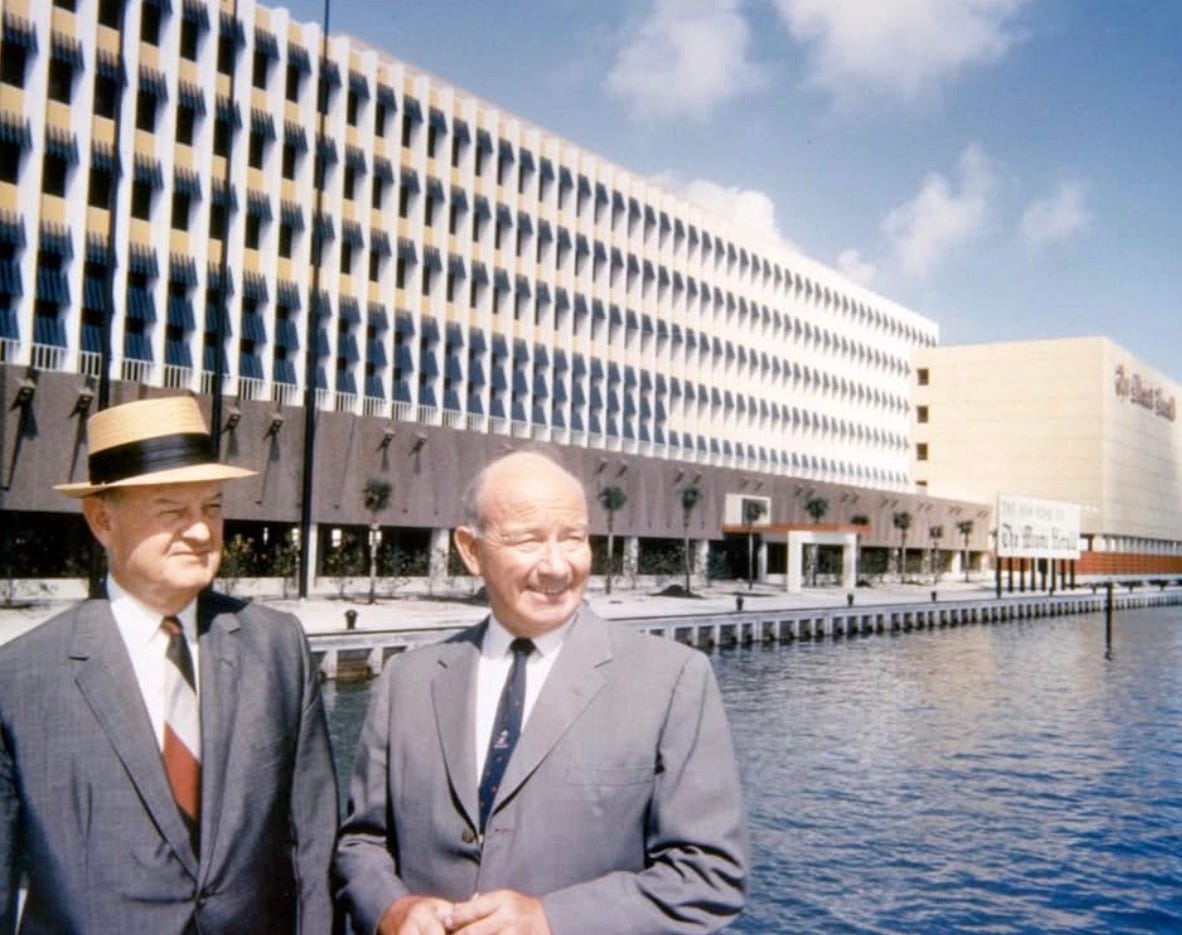
McClatchy is cutting deeply into its newsrooms, with The Miami Herald and El Nuevo Herald among the biggest casulaties following comments by management leadership saying subscriber interest no longer supports the company’s level of investment.
Reports by the Associated Press and The New York Times did not establish what staffing or coverage changes, if any, were planned for those operations — although it has been confirmed that Florida’s largest city no longer has a newspaper with a dedicated Miami City Government reporter; the publisher also eliminated the Broward County government position.
“We cannot continue investing where subscriber interest does not support the investment,” Greg Farmer, McClatchy’s executive vice president of local news, wrote in an employee email obtained by The Times.
Farmer said consumer revenue had fallen 41% over five years while expenses remained flat, requiring “a different choice.”


That choice included eliminating more than 30 positions — more than a third of the Miami operation’s editorial staff — according to The Times’ Sept. 10 report.
The AP subsequently reported 28 job losses and four frozen positions, including the entire writing staff of El Nuevo Herald. Across McClatchy, more than 90 unionized journalists and media workers at 17 publications were laid off, according to the union. Read the AP report.
“A Blood Bath”
Carol Marbin Miller, the Herald’s deputy investigations editor, described the layoffs and elimination of vacant positions as “a blood bath” in an interview with The Times.
“We’re all gobsmacked by the breadth of the cuts,” she said. “I have seen multiple rounds of layoffs or buyouts. I cannot remember a day in which 30 slots were wiped off the slate.”
The cuts included the Herald’s Miami City Hall reporter, according to The Times, eliminating a dedicated position covering city government.
Marbin Miller, who was not laid off, said leadership recently told journalists they were not productive enough and needed to focus on “generating more page views, more engagement.”
Now that right there, is “leadership.”
And believe me, I know “leadership” when I see it.
Questions for the Florida Keys
For Monroe County readers, the unanswered question is whether McClatchy’s cuts will further reduce reporting devoted specifically to the Florida Keys.
It remains unclear whether the reductions will affect the Miami Herald’s Florida Keys bureau or The Keynoter. Much of the Herald’s southern coverage is already concentrated on Homestead, Florida City and Key Largo, less focus on the rest of the island chain.
Any further reduction in dedicated Keys coverage would mean fewer journalists tracking county and municipal budgets, scrutinizing development proposals, filing public records requests and pressing elected officials for answers.
The loss of a government reporter also goes well beyond fewer stories from public meetings. It can erase years of source development and institutional knowledge about spending, contracts, personalities and policy decisions — the kind of background that often allows a reporter to recognize when something does not add up.
Falling Revenue, Shifting Priorities

Farmer told employees that McClatchy had maintained its investment in local news over the preceding five years despite declining consumer revenue, according to The Times.
He said the company would invest in journalism that “is differentiated, consequential and difficult to replicate; reporting rooted in our communities and strengthened by sources, investigation, verification, context and judgment.”
He maintained that McClatchy remained “deeply committed” to local journalism.
A company spokeswoman did not respond to The Times’ requests for comment.
The reductions extended across the country. At the Lexington Herald-Leader, 13 of 23 newsroom employees were laid off, The Times reported. Another 17 journalists were cut at Pacific Northwest publications, according to the regional newspaper guild.

Another Round of Cuts
McClatchy, formerly a family-run newspaper company, was acquired by hedge fund Chatham Asset Management in 2020 after filing for bankruptcy.
In late 2025, the conglomerate closed its breaking-news desk and Washington bureau while making additional cuts across its newspapers.
This year, journalists in several McClatchy newsrooms objected to an artificial intelligence tool that summarizes articles and produces versions for different audiences according to the Columbia Journalism Review. An unnamed person familiar with executive decisions told The Times that the latest layoffs were related to business performance, rather than AI.
Marbin Miller, a 26-year Herald veteran, said the scale of the reductions left her concerned about the newspaper’s ability to cover its community.
“Miami is about to become a news desert,” she told The Times. “Even if we survive these cuts, there just won’t be enough of us left to do a fraction of what this market requires.”