

Ed. Note: As a student at the University of Florida College of Journalism and Communications, I was lucky to have Carl Hiaasen as one of my early mentors — and to study alongside his son, Scott, who carried the same journalistic fire. Both inspired generations of UF journalists to dig deeper and write with purpose.
We even shared some of the same professors — Jean Chance and William McKeen — whose classrooms shaped our sense of storytelling and ethics. Hiaasen’s legacy reminds us that great journalism isn’t about cynicism; it’s about caring enough to tell the truth.
Long before cruise ships and cruise-ship protests, before Duval Street became a walking mall of margaritas, bongs and T-shirts, Key West was the scene of an altogether different commerce.
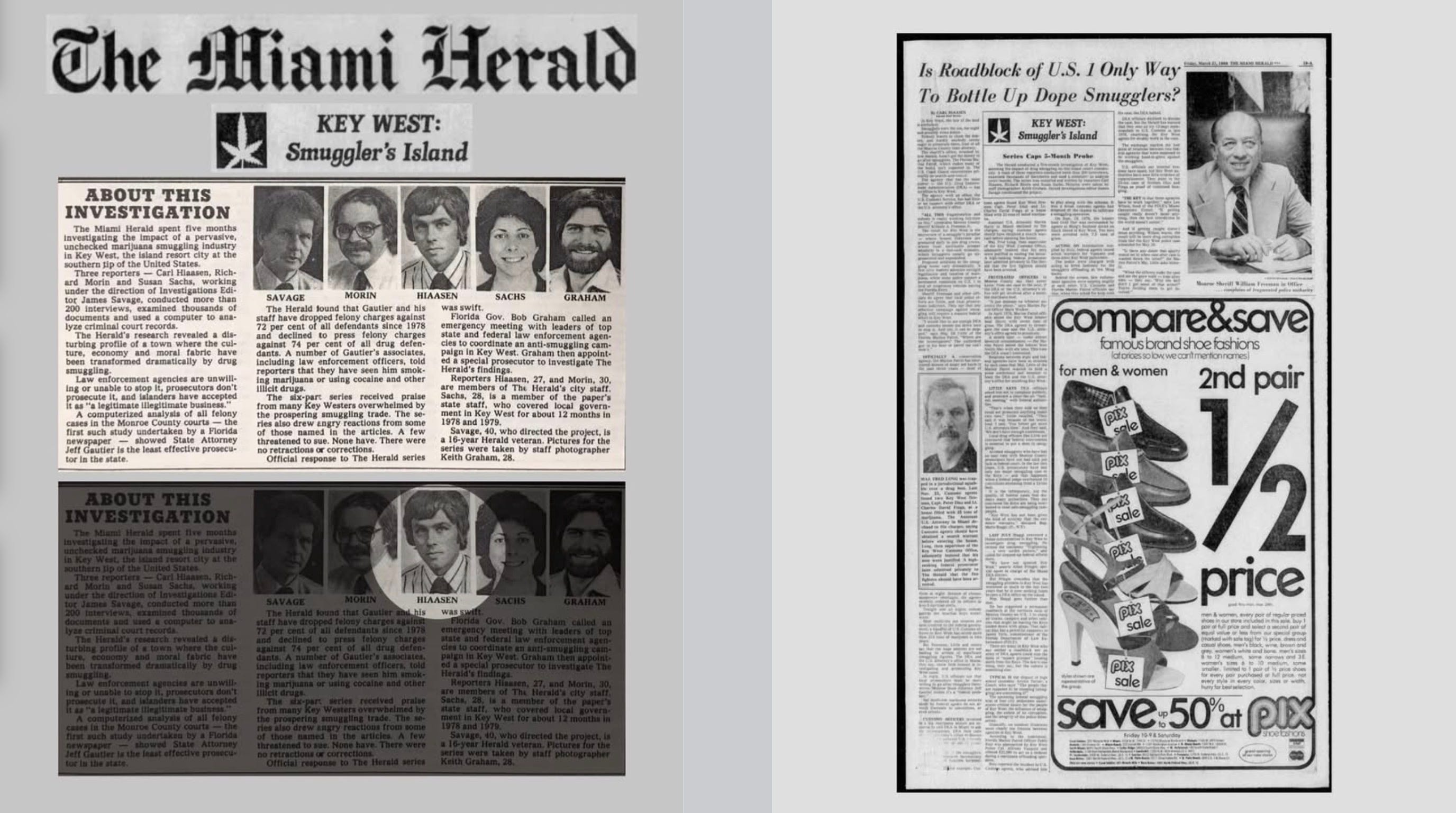
In the late 1970s, the island’s turquoise shallows and hidden mangroves provided perfect cover for a booming drug trade — and The Miami Herald’s groundbreaking series “Key West: Smuggler’s Island” told the rest of America what locals already knew.
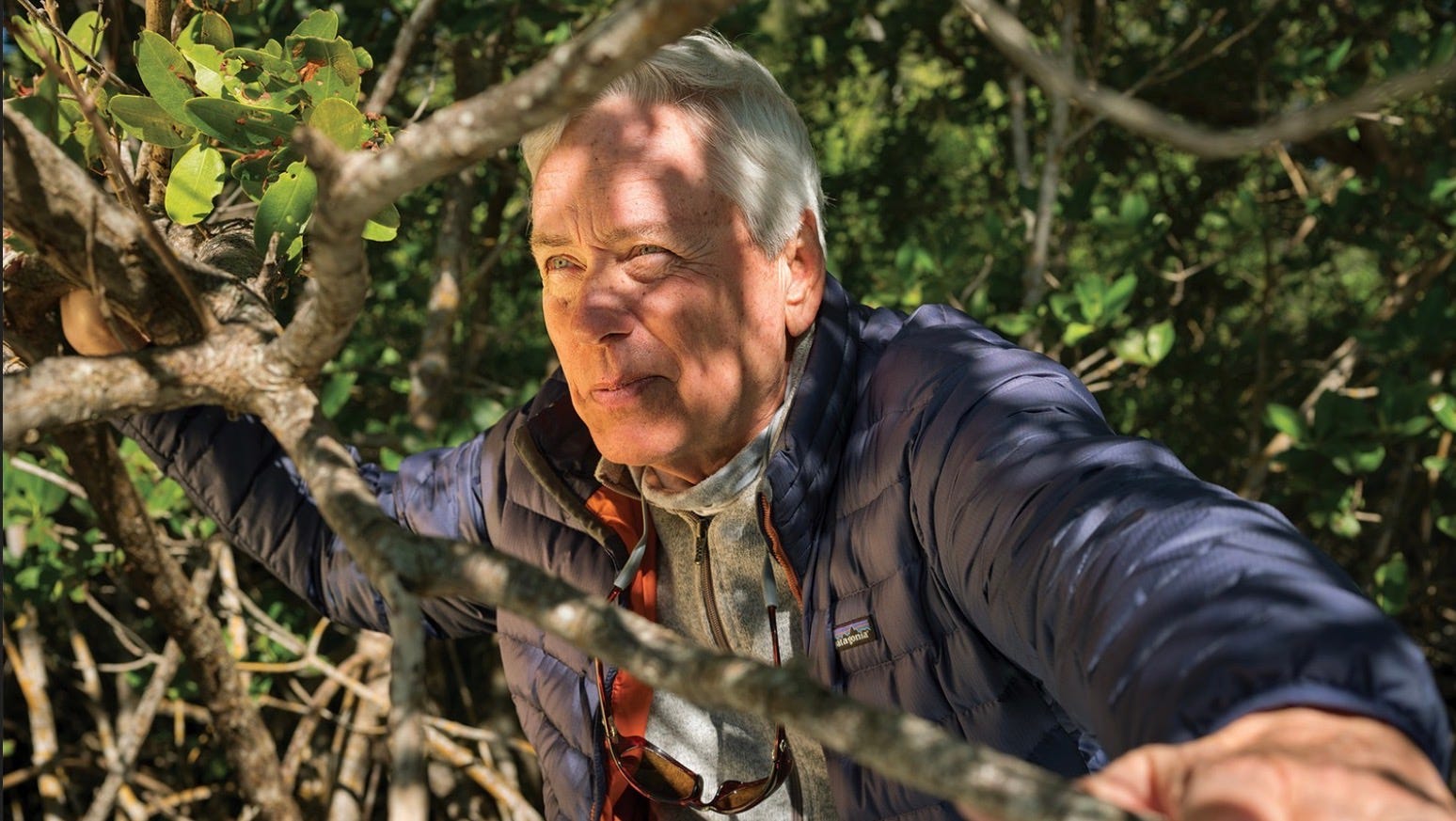
A young reporter named Carl Hiaasen helped lead the project, tracing how boatloads of marijuana — and later, cocaine — moved almost openly through Monroe County while cash and influence blurred the line between enforcement and accommodation.
Breaking the Story
The Herald’s Smuggler’s Island series landed in 1980 and 1981, earning Hiaasen and colleagues Richard Morin and Susan Sachs a Pulitzer Prize finalist citation for Local Investigative Reporting.
It was journalism as law enforcement — part exposé, part warning flare, and the first national map of an illicit maritime economy hiding in plain sight.
At street level, the reporting showed how geography and culture intertwined: shrimp boats moonlighting as drop vessels, charter captains in 25-foot center consoles acting as go-fast mules, and step-vans hauling “square groupers” through town before dawn.
The Herald detailed how Key West’s charter fleet — licensed for tourists chasing tarpon and sailfish — became a perfect cover for smugglers shuttling contraband from mother ships hovering just outside the reef line.
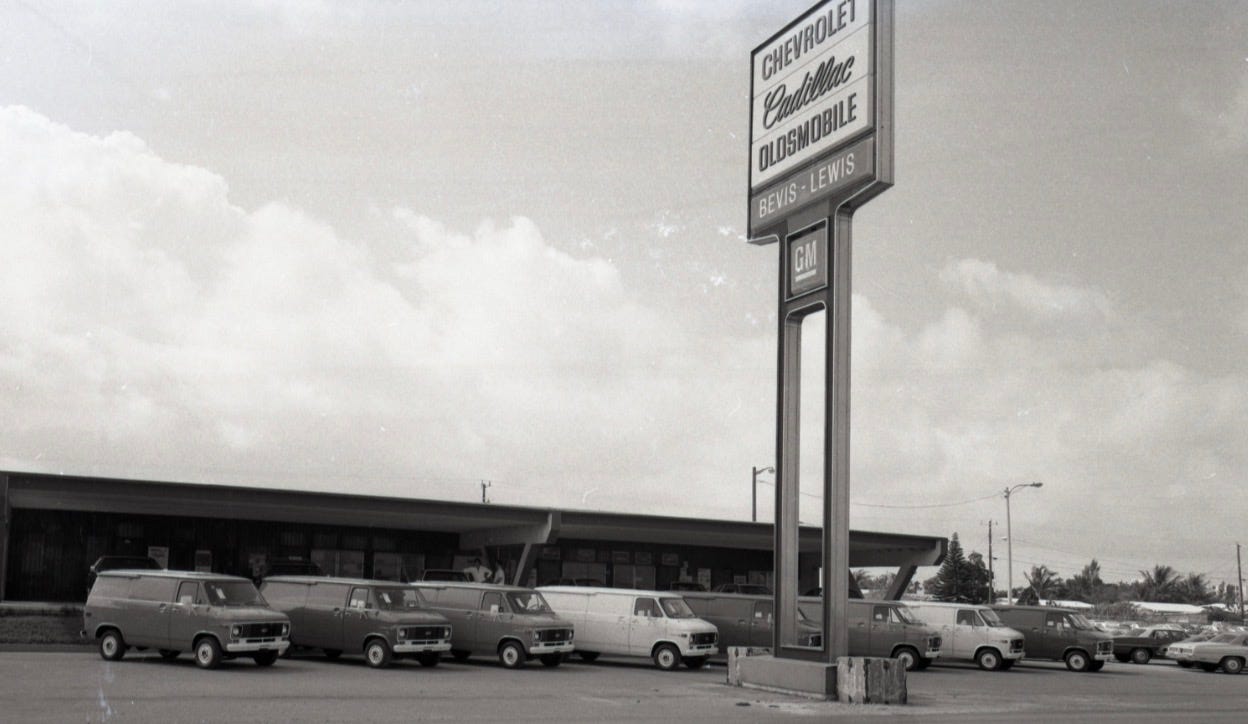
The money poured in so fast that even legitimate businesses rode the wave. During the smuggling heyday, Bevis-Lewis Chevrolet on North Roosevelt Boulevard ranked as the number-one car dealership in the entire General Motors system, fueled by locals paying cash for pickups and Corvettes. It was perhaps the clearest sign that dope dollars had gone mainstream.
Hiaasen’s dispatches sketched a social web where illicit money seeped into bait shops, marinas and campaign accounts alike. Locals spoke in euphemisms; bales washed ashore and disappeared by morning. The young reporter wrote that the island “lived off the sea — for better or worse.”
The Law and the Limits
On the enforcement side, Monroe County Sheriff William “Billy” Freeman confronted hauls so large they spilled into public view. In November 1980, federal agents and deputies made what they called the Big Pine 29 raid — 25,000 pounds of marijuana, 30 people charged, and Freeman quipping that it looked “like a family reunion” of interwoven Keys clans.
The image — bales stacked like cordwood behind the jail — captured the absurd scale of an island economy built on contraband.
Hiaasen’s stories went beyond the busts: he examined how geography, isolation and a culture of autonomy had made enforcement nearly impossible.
“When everyone knows everyone,” Hiaasen later wrote, “it’s hard to draw a clean line between the good guys and the bad.”
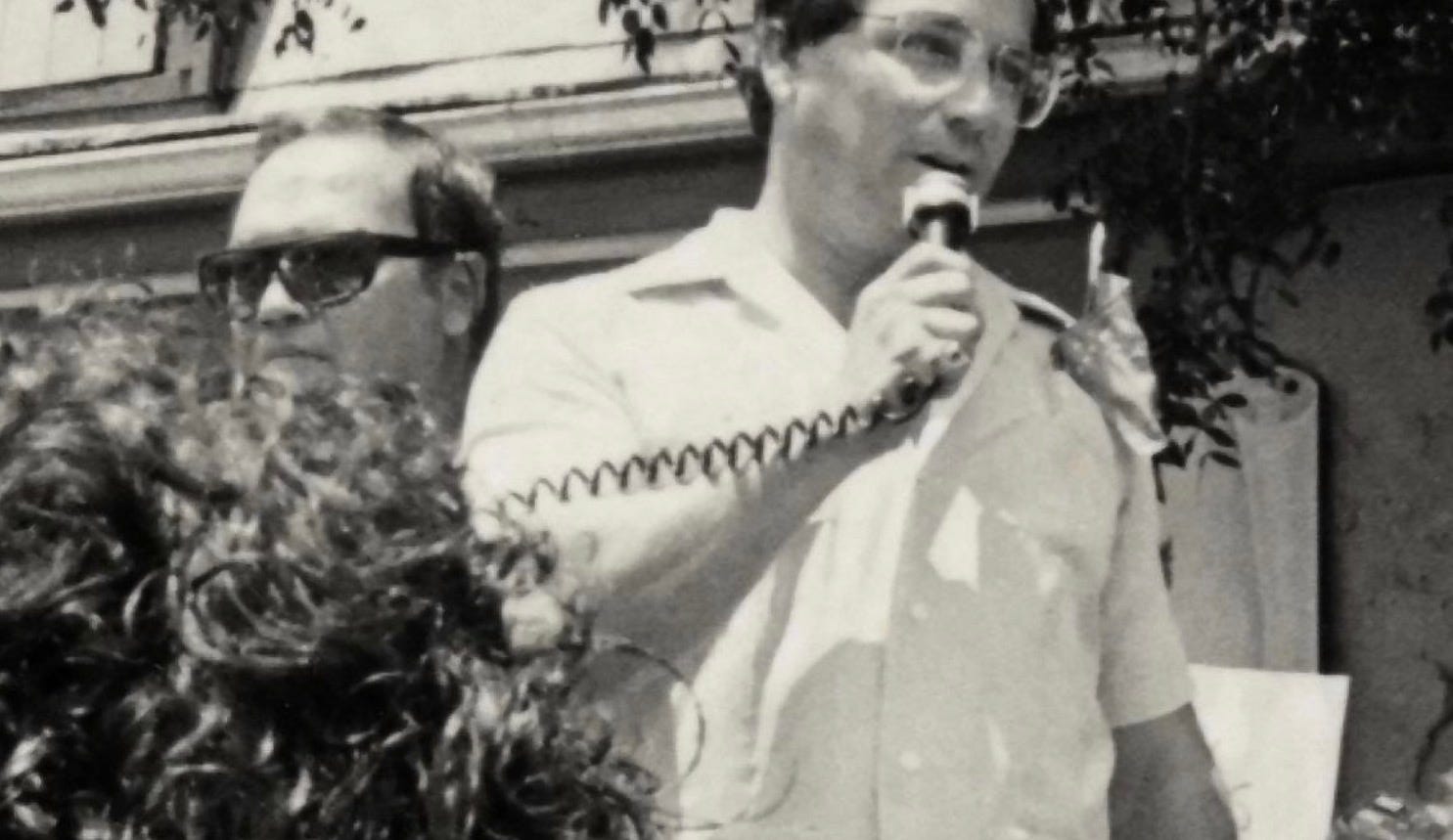
Dennis Wardlow and the Birth of the Conch Republic
By 1982, federal crackdowns meant to stem that flow reached comic extremes. A U.S. Border Patrol checkpoint at the head of U.S. 1 near Florida City snarled traffic for miles, humiliating residents and strangling the tourist economy.
That’s when Mayor Dennis Wardlow — a Conch born and raised in Key West’s working-class heart — led the city’s most famous act of rebellion. When a federal judge refused to block the checkpoint, Wardlow announced, “Tomorrow at noon we’re going to secede.”
On April 23, 1982, he followed through — declaring the Conch Republic, naming himself Prime Minister, symbolically “declaring war” on the United States by breaking a loaf of stale Cuban bread over the head of a man in a Navy uniform, and surrendering one minute later to demand a billion dollars in “foreign aid.”
The protest worked. The blockade disappeared within days, and the Conch Republic became a permanent emblem of the Keys’ irreverent independence — part tourism brand, part civic therapy after years of being treated like a smuggler’s way-station.
Wardlow would later say the gesture wasn’t about anarchy but pride: “We just wanted the mainland to stop treating us like another offshore problem.”
Hiaasen’s Through-Line
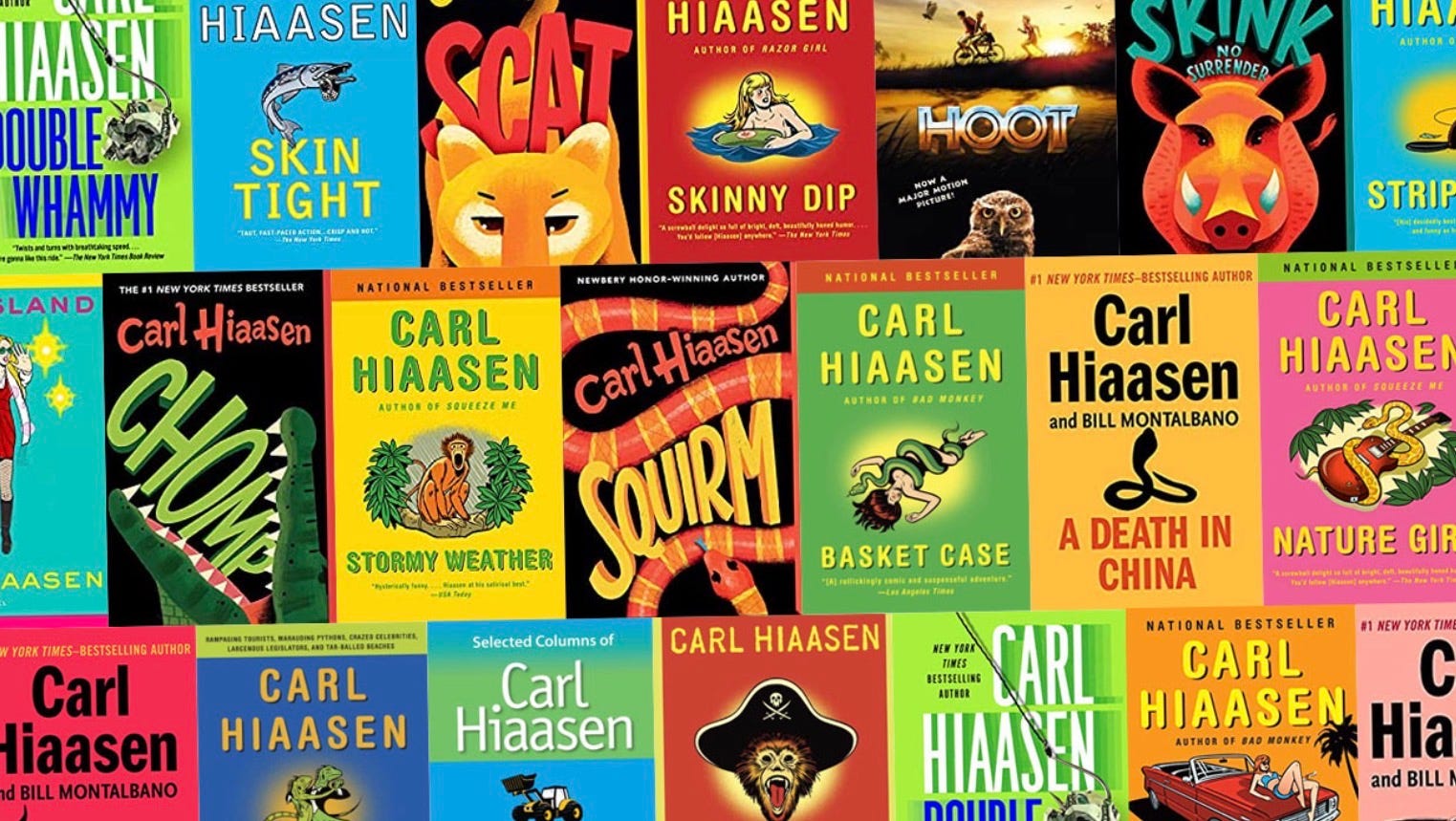
For Hiaasen, the Keys series was a career forge. He joined The Herald in 1976, cut his teeth chasing corruption and environmental abuse, and learned that Florida’s prettiest places often hid the darkest deals.
The moral clarity that animated his later columns and novels — from Tourist Season to Strip Tease — runs straight back to Smuggler’s Island.
It was journalism with salt spray on it, skeptical of power and allergic to hypocrisy.
Why It Endures
The Herald’s Smuggler’s Island changed how the nation saw Key West: not a sleepy paradise but a pressure point between law and lawlessness, tourism and trade.
Wardlow’s Conch Republic rebellion and successful rebranding of the Southernmost City showed the other side of that coin — a community pushing back when federal oversight threatened its livelihood.
Four decades later, the waters off the Lower Keys still yield “square groupers” from time to time, and federal task forces still patrol the same channels. But the legacy of Hiaasen’s reporting — and Wardlow’s showman’s defiance — endures: proof that in the Florida Keys, the line between farce and tragedy, between freedom, smuggling and corruption, will always run just below the surface.
Dennis Wardlow had the right idea. I think we should secede again with what’s going on in the country. Unfortunately, though, some of our supposed local leaders are complicit…
Thanks for looking back at when we were last “under siege”