


The City of Layton has unanimously approved a resolution opposing the inclusion of new offshore oil and gas leasing off Florida’s coast, joining Key Colony Beach and the Monroe County Board of County Commissioners, which have each adopted identical resolutions without dissent.
The City of Key West is scheduled to consider the same resolution at its next meeting, scheduled for Tues., Jan. 6 beginning at 9 a.m. The measure was proposed by Sam Kaufman, a District II commissioner and mayoral candidate, and is listed as Item No. 4 on the City Commission’s agenda.
The resolutions oppose the federal government’s proposed five-year Outer Continental Shelf oil and gas leasing program being developed by the Bureau of Ocean Energy Management, warning that expanded drilling could move oil and gas activity within about 100 miles of Florida’s shoreline and into prevailing currents that flow toward the Florida Keys.
In a Dec. 30 letter circulated to environmental organizations and elected officials, the Florida Keys Environmental Coalition said the proposed leasing plan would open more than 31,000 additional square miles of the eastern Gulf of Mexico to oil and gas development, including areas within about 80 miles of the Dry Tortugas. Public comments on the proposal are due by Jan. 23, 2026.
Public comment maybe submitted via eComment on the City’s website.
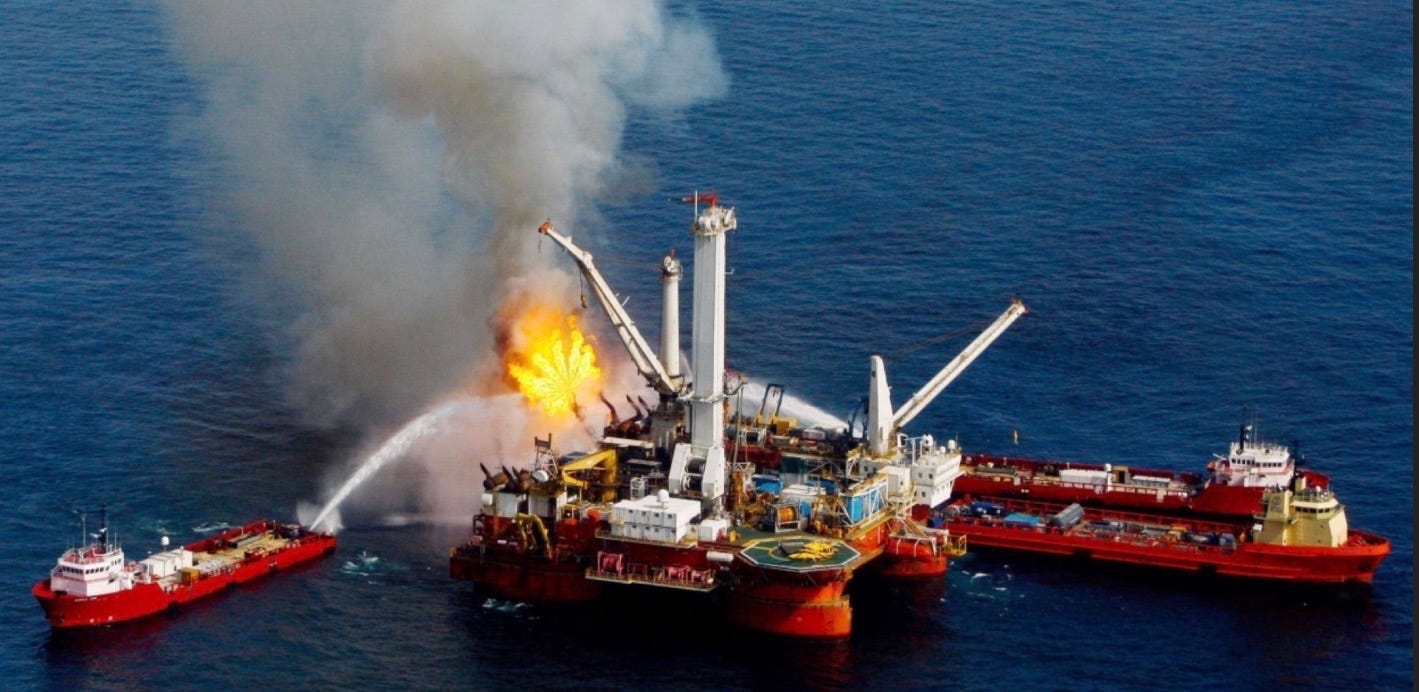
Local officials and environmental advocates warn that any offshore drilling incident—even one occurring more than 80 miles offshore—could mirror the catastrophic impacts of the 2010 Deepwater Horizon disaster, which occurred nearly 300 miles from the Florida Keys yet still resulted in widespread shoreline contamination and long-term ecological damage.
Given prevailing Gulf currents, critics say a similar spill closer to Florida would pose an immediate and severe threat to the fragile marine environment surrounding the Keys, including coral reefs, seagrass beds, fisheries, and the tourism-dependent economy that relies on clean water and healthy ecosystems.
Local officials said Monroe County’s economy depends heavily on a healthy coastal and marine environment that supports tourism, recreation, and commercial and recreational fishing. The resolutions state that offshore drilling carries inherent risks, including spills, habitat destruction and pollution, that could cause long-term harm to property values, natural resources and quality of life.
The measures warn the proposed expansion poses a clear and present danger to Dry Tortugas National Park, Everglades National Park, and the Florida Keys National Marine Sanctuary, all of which anchor the region’s tourism economy and support globally significant marine biodiversity.
The resolutions also cite the use of seismic air-gun blasting in offshore exploration, saying the practice produces intense underwater noise that disrupts whales, dolphins, sea turtles and fish stocks by interfering with communication, navigation, reproduction and foraging behavior.
Officials described the Keys’ ecosystem as delicately balanced, noting that damage to any portion of the system can trigger irreversible impacts extending from Florida Bay and the Everglades to the coral reef tract, the only barrier reef in the continental United States.
The resolutions reference the 2010 Deepwater Horizon oil spill as a cautionary example, noting that the disaster occurred nearly 300 miles from the Florida Keys yet still affected more than 1,300 miles of shoreline across Florida and the Gulf Coast.
Environmental advocates say the unanimous votes reflect rare unity across multiple levels of local government.
The coalition said the Islamorada Village Council is also expected to consider a similar resolution on Jan. 6, with the City of Marathon scheduled to take up the issue Jan. 13.
Environmental groups are urging residents to contact elected officials and attend meetings to support unified opposition, arguing that sustained public pressure is critical to protecting the Keys’ marine environment and tourism-dependent economy.
For further questions about the proposal or more information, contact FKEC.