


KEY WEST — City commissioners unanimously approved continuous water quality monitoring equipment for Key West Harbor, moving forward despite repeated questions from lame-duck District IV Commissioner Lissette Carey and objections from Pier B’s attorney to allegations of cruise ship-related violations.
The 7–0 vote approved a measure sponsored by Commissioner Mark Rossi to install equipment on the harbor’s “Yellow Man” structure and include funding for the monitoring program in the fiscal year 2027 budget.
City resiliency coordinator Alison Higgins announced that staff had already ordered equipment for just under $25,000 — substantially below the $46,534.93 estimate in the resolution.
The equipment could arrive within a month, Higgins said, with monitoring potentially beginning in October if contracting questions are resolved.
“We’ve heard from both sides tonight here, and who is right? Who is wrong? We’re going to find out,” Rossi said.
Carey Presses Staff After Receiving Answers
Carey repeatedly questioned when monitoring would produce results and what the city had learned from previous testing.
After Higgins explained that the equipment would arrive within a month but installation depended on contracting decisions, Carey suggested a considerably longer delay.
“So it could be like a year before we get results,” Carey said.
Higgins rejected that timeline, explaining that monitoring could begin in October if the city could proceed with Stantec. That would mark the start of new data collection.
Carey then turned to the previous testing.
“We’ve been testing for a long, long time, but it doesn’t sound like we’ve gotten any answers for a long, long time,” Carey said.
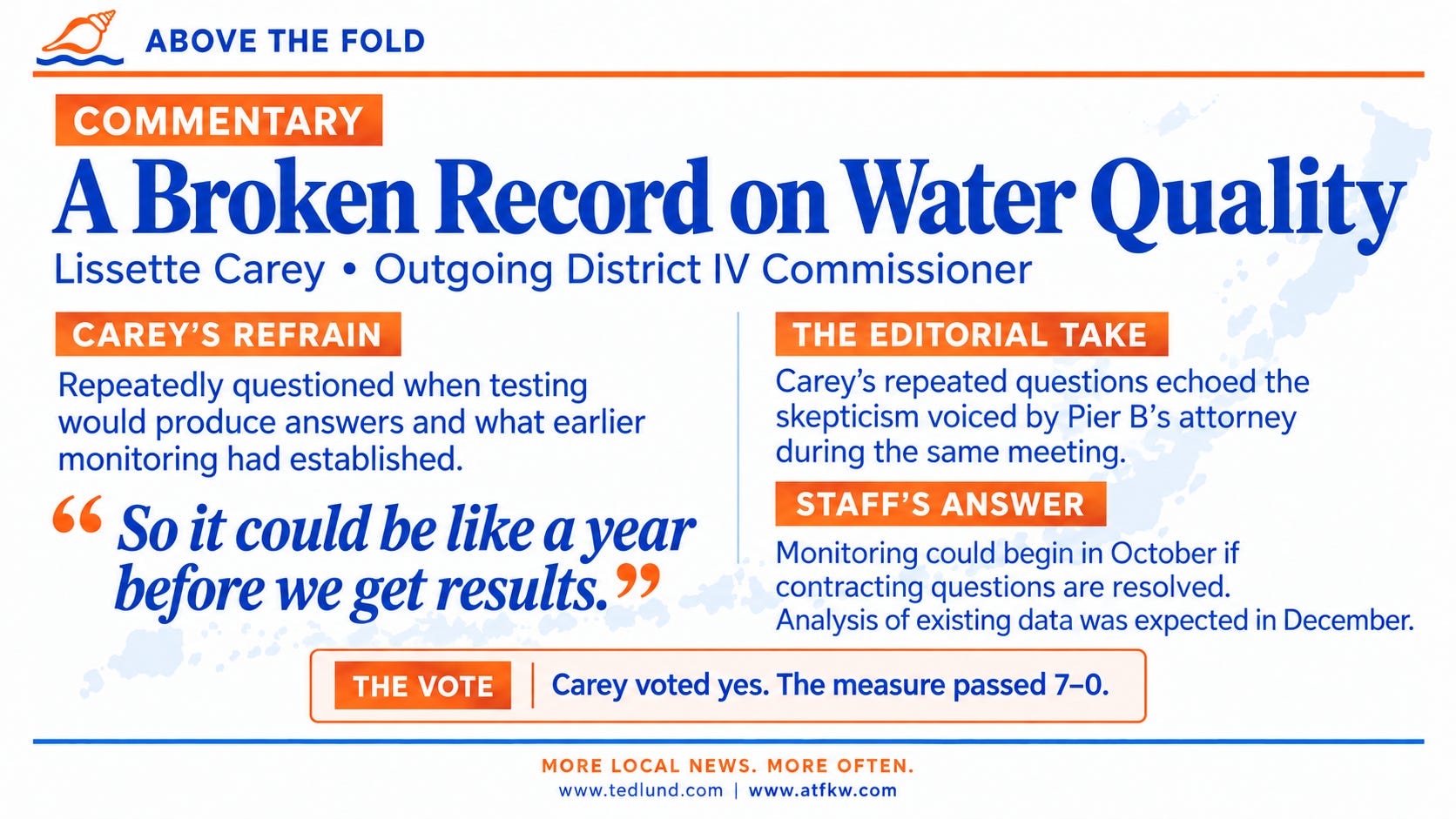
Higgins said raw data had been provided to the Environmental Protection Agency, the Florida Department of Environmental Protection and Stantec. Some information had only recently arrived, she said, and Stantec expected to report on its analysis in December.
Mayor Sam Kaufman also pointed out that an EPA report was already available in commission agenda materials.
The purpose of the work, Higgins explained, was to identify problems, consider corrective measures and determine whether those measures improved conditions.
“We don’t want to sample for sampling’s sake,” Higgins said.
Carey ultimately joined the rest of the commission in approving the funding.
Pier B Attorney Challenges Violation Claims
Carey’s questions followed remarks from Bart Smith, an attorney representing Pier B, who endorsed professionally designed monitoring but disputed claims by Safer Cleaner Ships representatives that cruise ship operations had produced 35 violations of state and federal water quality standards.
Smith described the issue as “temporary turbidity from cruise ship prop wash.” He said city attorneys and the Coast Guard had advised that propeller wash did not constitute the violations alleged.
Those were Smith’s assertions. The equipment vote did not resolve the disputed allegations.
“First we support water quality monitoring that is scientifically based, reviewed and approved by professionals,” Smith said.
“To just throw it in front of a bow thruster of a cruise ship is not a comprehensive and scientifically objective assessment of water quality,” Smith said.
The Wolf in the Henhouse
Smith, who has water quality testing issues of his own related to his Key West Regional Utilities on Stock Island, has in the past floated Mote Marine as a possible arbiter of date.
But if Mote were ever to be involved in an RFP for City of Key West water-quality monitoring, the organization would need to undergo stringent vetting because of the appearance of a potential conflicts of interest.
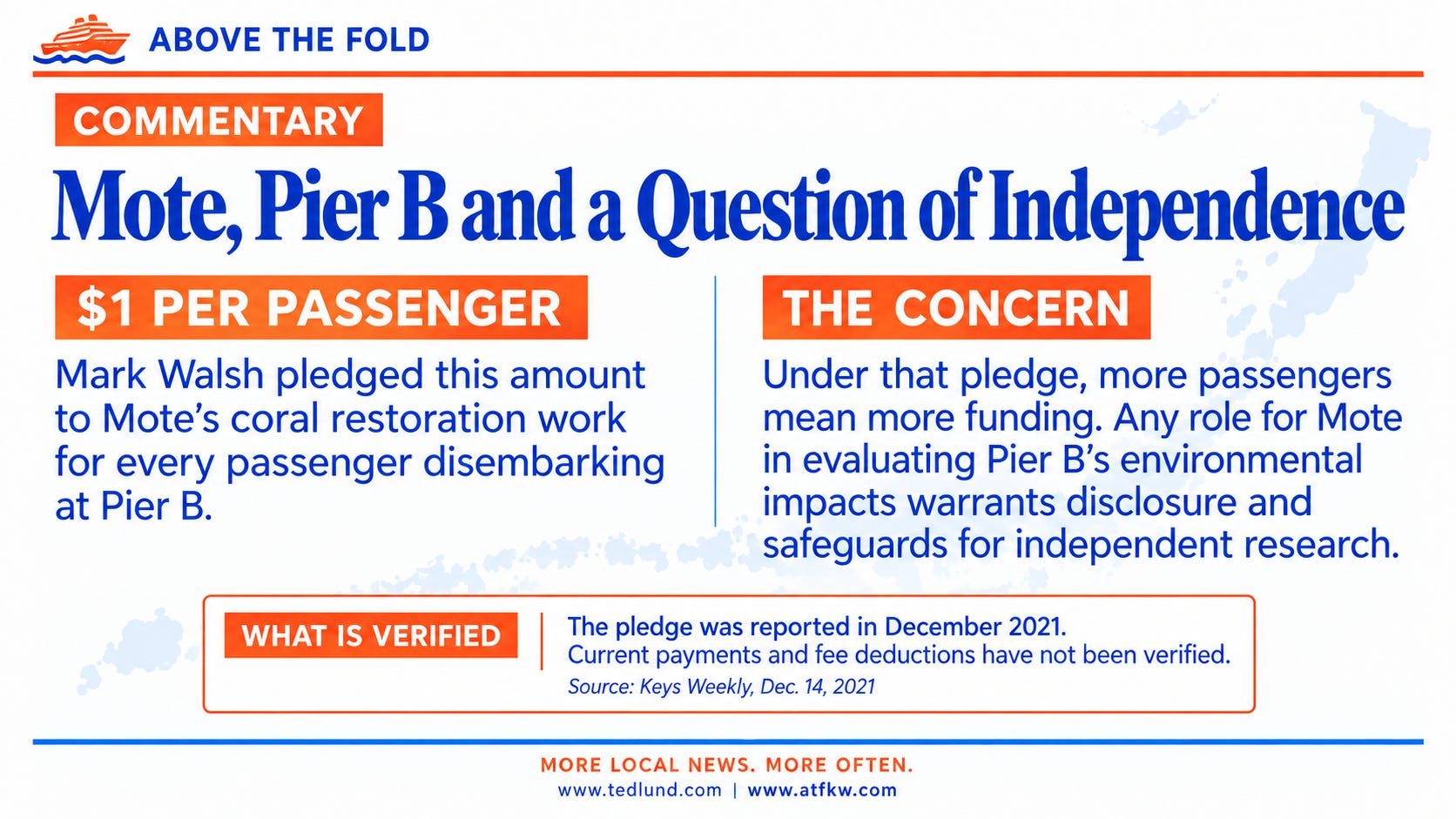
In December 2021, Mark Walsh pledged $1 to Mote’s coral-restoration work for every passenger disembarking at Pier B, tying Mote’s funding directly to the volume of cruise traffic the pier handles.
That arrangement could create a financial connection to the activity Mote might be asked to assess. Officials should not treat Mote as a neutral evaluator without first determining whether the pledge remains active, how much money has been paid, who controls it, and whether Mote’s Pier B-related work could increase or preserve that funding stream.
The City should also scrutinize the basis for any Mote experts’ claims that corals are thriving.
The corals reportedly doing well are more turbidity-resilient plating corals, while the elkhorn, staghorn, and soft corals that traditionally inhabited Key West Harbor are now all but nonexistent. Pointing to the survival of hardier species does not establish that the harbor’s historic coral community is healthy or that cruise-ship activity has no meaningful environmental effects. Any assessment should account for species loss, habitat degradation, water quality, vessel pressure, and noise rather than relying on selective evidence of coral survival.
Rather, that is what scientists and researchers at the Florida Keys National Marine Sanctuary refer to as a “shifting baseline,” meaning that those in Key West Harbor now are seeing it the best they have ever seen — lacking a baseline of 20, 30, or 40 or more years to see the radical decline in water quality and species diversity.
What About the Fish?
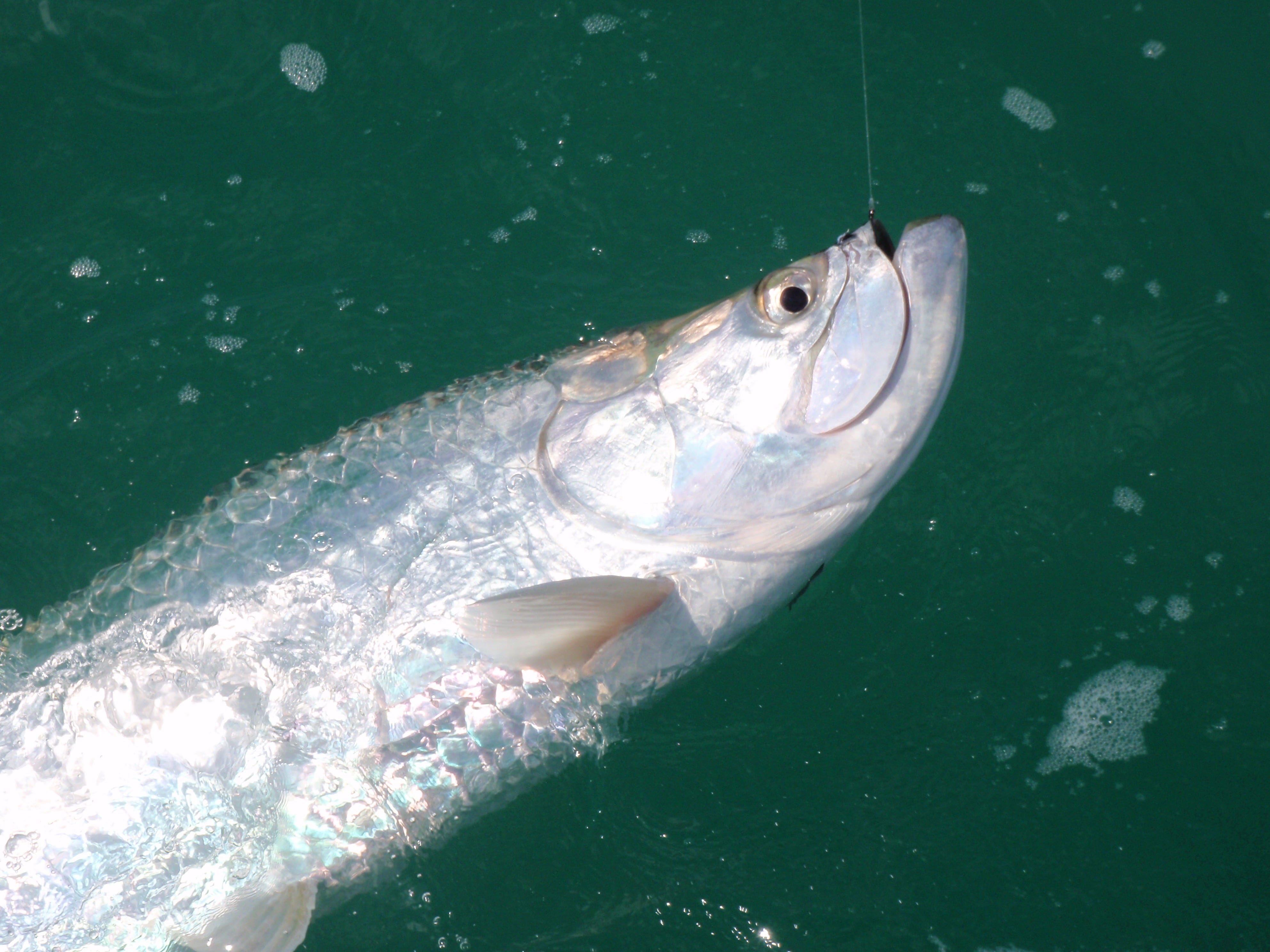
Fishermen and anglers also report changes in fish populations and behavior. With the loss of brain and other stony corals and living coral heads, traditional permit and snapper fishing in deeper water is all but nonexistent. Tarpon—probably the most water-quality-tolerant species targeted by anglers in Key West Harbor—remain plentiful, but pressure waves and noise pollution have changed their habits and behavior, particularly at the mouth of Key West Harbor off the tip of Fort Zachary Taylor. Those changes affect the livelihoods of hundreds of light-tackle and flats guides who often target the “silver king” in that area during the predawn hours.
If Mote were to respond to an RFP, officials should require full disclosure of all payments, pledges, grants, contracts, and other financial relationships involving Pier B, Mark Walsh, and related entities. They should also disclose how any pledge is structured, whether it is contingent on passenger volume or project approval, and what safeguards would prevent donor influence over study design, data collection, interpretation, and public statements. Given Mote’s potential financial connection to Pier B, an independent review by an unaffiliated institution should be considered mandatory—not optional. The pledge alone does not conclusively prove that Mote’s science is “bought and paid for,” but it creates a serious appearance of a conflict of interest and warrants aggressive public scrutiny before Mote could be entrusted with water-quality monitoring or evaluating Pier B’s impacts.
Propeller Wash and Turbidity Are Different Questions
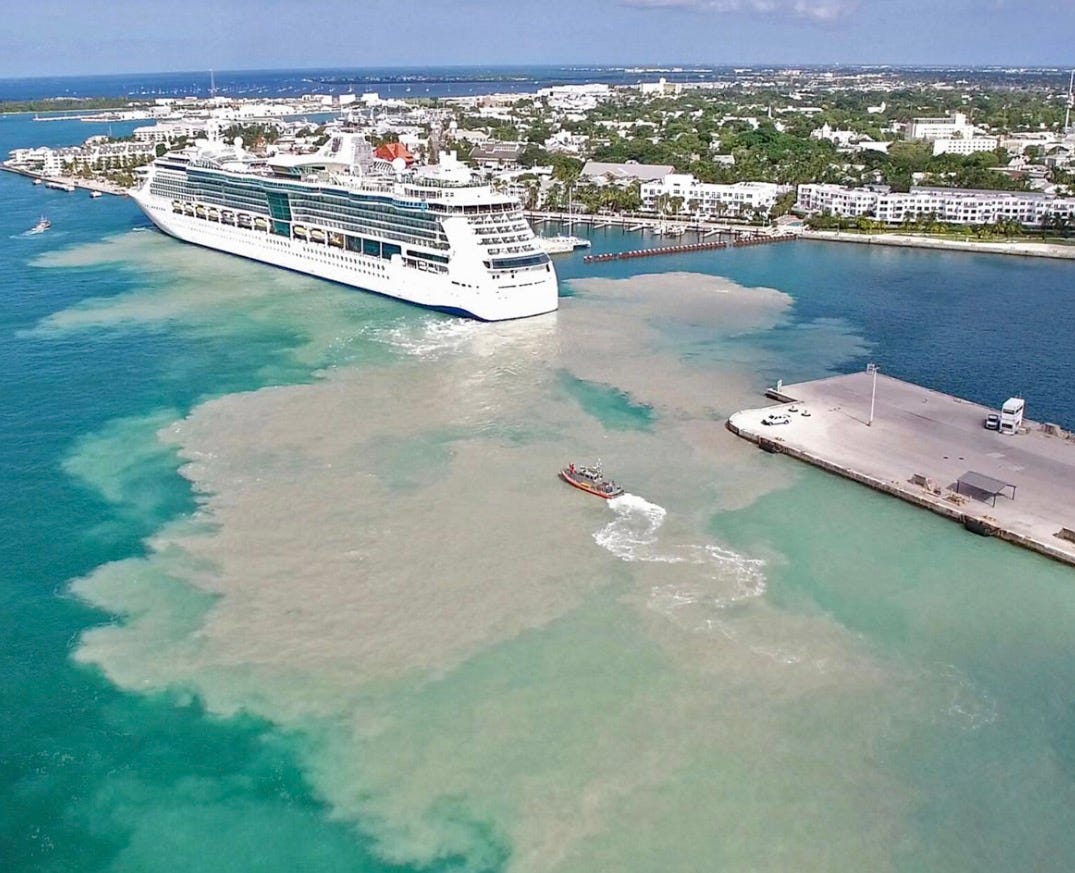
Smith explicitly acknowledged turbidity in his remarks. His argument about whether propeller wash constitutes a violation, however, does not settle the separate question of how sediment stirred up by vessel operations affects harbor water quality.
Propeller wash is the movement of water generated by a vessel’s propellers. Turbidity measures water cloudiness caused by suspended material, including sediment. Propeller wash can stir bottom sediment into the water column, particularly in shallow water.
EPA guidance on pollution from marinas and recreational boating identifies that mechanism. The agency explains that propeller wash can mix sediment into shallow waterways, reducing photosynthesis, interfering with feeding, clogging fish gills and smothering aquatic life. EPA guidance, Section 2, pages 2-6–2-7.
Water movement is the mechanism; suspended sediment and the resulting turbidity are water quality concerns. EPA’s sediment assessment guidance identifies boat traffic as a potential source of excessive suspended sediment and visible plumes as evidence warranting investigation. EPA sediment assessment guidance.
That guidance supports investigating vessel-related sediment disturbance. It does not independently establish the alleged 35 violations at Pier B. Determining whether particular events exceeded applicable standards requires measurements, background conditions and the governing requirements.
Likewise, attributing a plume to insufficient clearance beneath a ship requires evidence about the vessel’s draft, water depth and operating conditions. A visible plume alone does not establish that a ship was operating in water too shallow for its draft.
Supporters Welcome Restored Monitoring
Arlo Haskell, speaking for Safer Cleaner Ships, thanked Rossi and described the purchase as a step toward restoring monitoring lost over the previous several years.
Haskell encouraged the city to consult the college about its experience with the earlier equipment. He also urged scientific advice on additional testing for scrubber wastewater, gray water and ballast-related discharges.
He distinguished that broader effort from replacing the previous monitoring equipment, saying experts should determine how to test for additional substances.
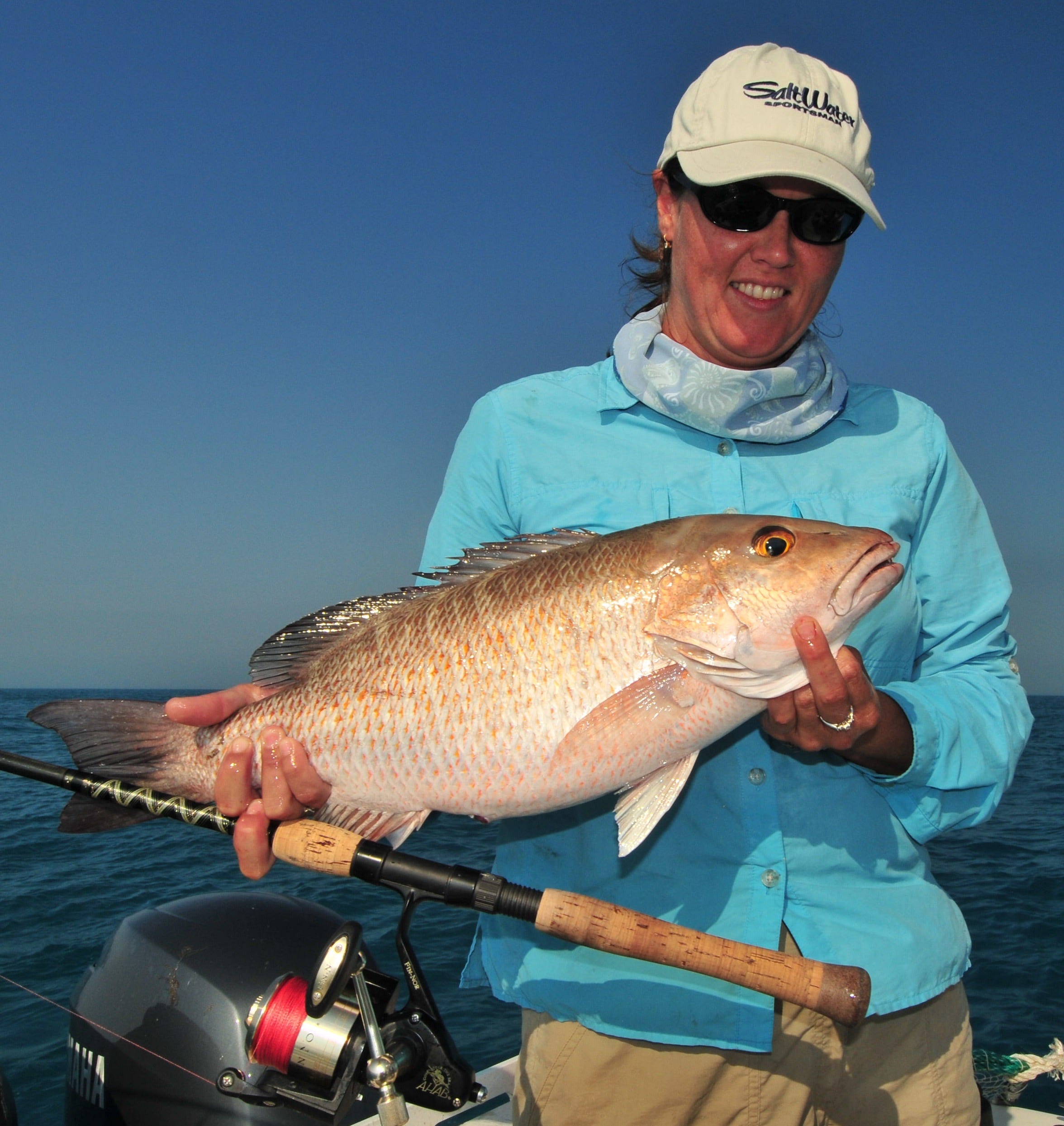
World-renowned flats guide Will Benson said healthy water supports local businesses, property values and the activities that bring visitors to Key West.
“Understanding what’s going on in these waters is really important,” Benson said.
Benson described the vote as an opportunity to rebuild public trust and support decisions with scientific evidence.
District IV commission candidate Sarah Compton also endorsed the purchase and thanked Rossi for advancing it.
Equipment Already Ordered
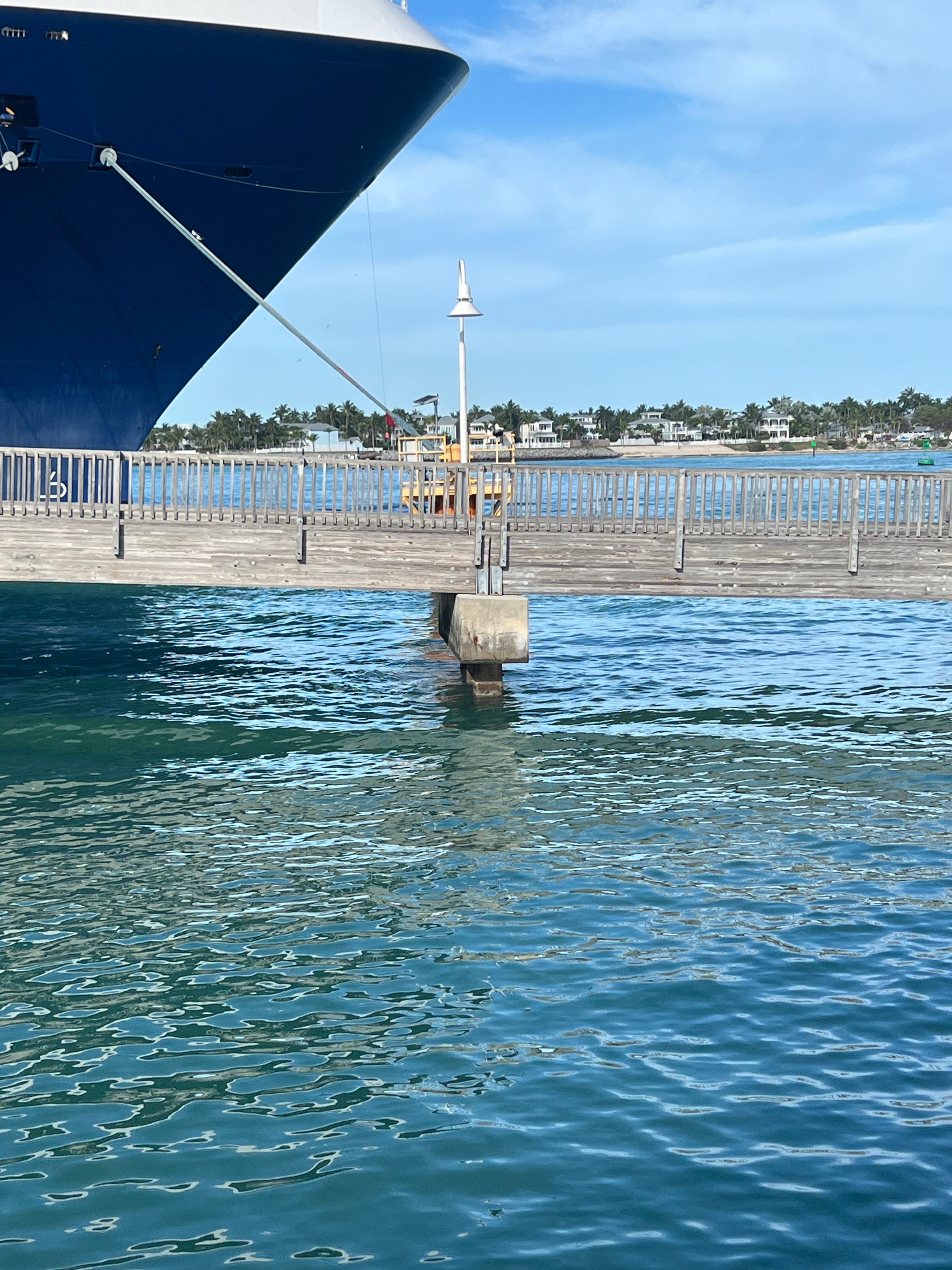
Higgins said staff found equipment that would arrive sooner, could be deployed more quickly and would be easier to maintain than the option reflected in the original estimate.
“I’m very excited to say that not only did we find appropriate equipment, we found it at almost half the price,” Higgins said.
Because the purchase came in below $25,000, Higgins said staff needed only two quotes, which they obtained before placing the order.
City Manager Brian Barroso said commissioners had already provided direction at the previous meeting and that the purchase could proceed under his existing authority.
The legal department is reviewing whether the original request for proposals covered continuous monitoring or whether another competitive solicitation is necessary. A path forward is expected to return to commissioners in October.
Kaufman Seeks Funding for Broader Testing
Rossi called for monitoring beyond the harbor, including waters near Mount Trashmore, Garrison Bight and beaches around the island.
“I too want to make sure that we keep our pristine waters for the future and for our children,” Rossi said.
Kaufman supported expanding the effort but said the current budget did not contain enough money to cover every proposed location.
He requested a breakdown showing what existing funding could support and how much additional monitoring would cost. He also urged the city to make water quality funding part of its legislative agenda.
“The state legislature should have an interest in protecting the water of Florida and the Florida Keys to protect tourism and everything,” Kaufman said.
Barroso said staff was gathering the requested information for an October presentation.
Commissioner Aaron Castillo seconded Rossi’s motion. Castillo, commissioners Monica Haskell, Donie Lee, Chris Massicotte and Rossi, and Kaufman voted to approve it.
And in the end, after all of the filibustering, Carey voted for the measure, betraying one her last acts of fealty.

Don’t want to become a paid subscriber?


