


A cluster of agenda items scheduled for tomorrow’s Key West City Commission meeting — the first meeting of 2026 — is reviving long-running scrutiny of how the Island City regulates tourism operators, manages public land and streets, and exercises financial oversight over some of its most powerful commercial tenants.
At issue are four items on the Jan. 6 agenda: a proposed Fourth Amendment to the lease with Tropical Shell and Gifts, Inc. (Agenda Item #21), and three evening-session ordinances addressing sightseeing vehicle capacity and franchises for Buggy Bus and the Conch Tour Train (Agenda Items #36, #37 and #38). Together, the items would shape how public land, streets and rights-of-way are used by Historic Tours of America–affiliated companies and other private operators for years to come.
In a detailed opposition letter submitted to the commission, former Planning Board member and retired trial attorney Greg Lloyd argues that advancing the lease extension now — more than two years before its expiration — is procedurally premature and substantively risky given the city’s simultaneous reconsideration of private transit services following the termination of the Duval Loop.
The lessee, Tropical Shell and Gifts, Inc., is owned by Ed Swift, who, along with business partner Chris Belland, co-founded Historic Tours of America (HTA) in the 1970s. The company grew from a single trolley operation into one of the nation’s largest sightseeing enterprises, operating Old Town Trolley Tours, Conch Tour Train Tours and related attractions in multiple cities.
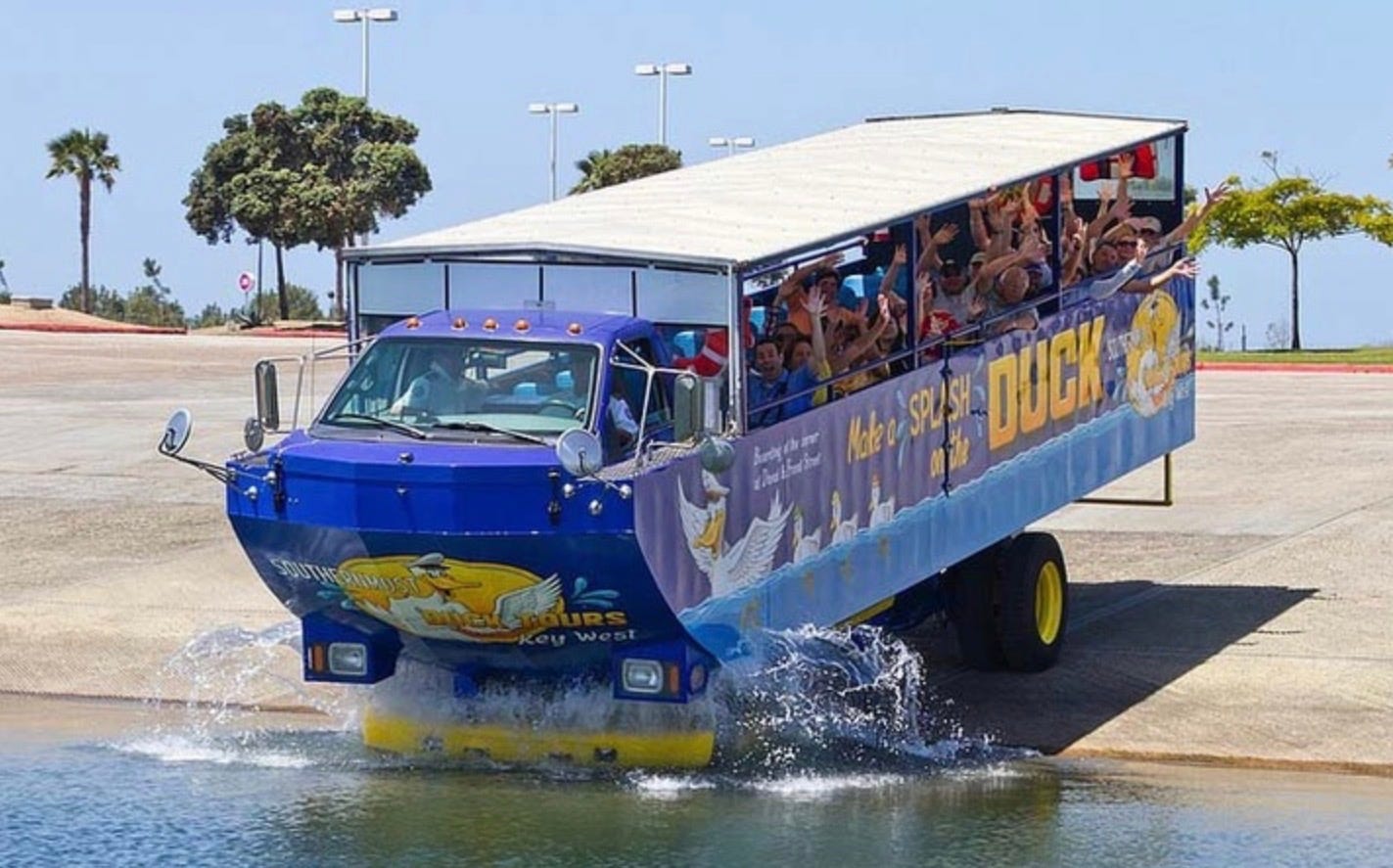
In Key West, that growth has long been intertwined with city policy — and litigation. In the mid-1990s, the city’s sightseeing franchise structure became the subject of a high-profile legal challenge brought by Duck Tours Seafari, Inc., an amphibious tour operator seeking to enter the local market. The principal of Duck Tours was John Murphy, who was married into the Swift family and served as the company’s managing partner.
Duck Tours argued that Key West’s franchise ordinances unlawfully restricted competition by protecting incumbent operators affiliated with Historic Tours of America. A federal jury ultimately found the city liable, concluding that its enforcement of the ordinances violated constitutional and antitrust principles. While the damages award was later contested on appeal, the case ended with a settlement reported in the $8 million range, a cost borne by city taxpayers.
The Duck Tours litigation has since become a cautionary reference point in Key West governance, cited by attorneys, former officials and residents as an example of how incremental regulatory decisions favoring entrenched operators can expose the city to significant legal and financial risk.
Lloyd argues that the current agenda items echo those historic concerns. While the city is not being asked to grant exclusivity explicitly, he contends that expanding sightseeing vehicle capacity, granting new or renewed franchises, and extending a long-term lease for an HTA-affiliated entity — all within the same meeting — risks reinforcing market dominance through cumulative administrative actions rather than overt policy declarations.
Under Agenda Item #21, the commission is asked to approve a 10-year lease extension covering approximately two acres of city-owned land behind Mallory Square and the waterfront Aquarium. Lloyd questions the timing, particularly as the city considers authorizing new or expanded private shuttle services — including Buggy Bus — which some residents view as a private-sector substitute for the defunct Duval Loop.
He also objects to placing the lease extension on the 9 a.m. consent calendar, arguing that it limits public scrutiny of an item he says is factually and functionally linked to the evening-session transportation ordinances. Lloyd cites recent grand jury recommendations emphasizing transparency, meaningful notice and deliberative governance.
Central to the objection is the use of public streets and rights-of-way adjacent to the leased property. Although the lease explicitly excludes Wall Street, a public right-of-way, Lloyd notes that Wall Street and nearby Wolkowsky Street function in practice as loading, unloading and parking areas for Old Town Trolley and Conch Tour Train operations. He argues that these public assets appear to support private commercial activity without clear documentation of authorization or compensation.
Those concerns intersect directly with Agenda Items #36, #37 and #38. Item #36 would increase the citywide cap on authorized sightseeing vehicles from seven to nine. Items #37 and #38 would grant or renew franchises for the Conch Tour Train and Buggy Bus, respectively, formalizing routes, stops and operational authority on city streets. Lloyd argues that approving a long-term lease extension without clarifying how affiliated tour operations use adjacent public rights-of-way risks locking in practices that may not have been fully reviewed, valued or authorized.
Financial oversight is another focal point. The underlying Tropical Shell lease requires rent equal to the greater of $200,000 annually or 10% of gross admission receipts. Lloyd notes that the agenda packet does not document audits or independent verification of gross admissions to confirm whether the city consistently received the higher amount due. He argues that extending the lease for another decade without first exercising existing audit authority exposes the city to long-term revenue risk and weakens its negotiating leverage.
While staff have verified that the lessee met capital improvement requirements — spending approximately $827,560 — Lloyd contends that capital compliance does not substitute for ongoing verification of revenue obligations, which directly affect city finances year after year.
The letter further raises concerns about affiliated commercial use of city land at Mallory Square and 1 Whitehead Street as staging, loading and transportation hubs for tour operations not explicitly referenced in the lease. Lloyd argues that such use affects valuation, fairness and compensation, and should be clearly documented before any extension is approved.
Taken together, Lloyd characterizes the agenda items as a single policy moment rather than separate administrative actions: a lease extension advancing early, expanded sightseeing capacity, and new or renewed private transit franchises, all benefiting interrelated tourism operators.
He urges the commission to either deny the lease extension outright or postpone consideration of all related items until questions about authorization, compensation, audit compliance and public use of streets are fully examined. Approving the lease extension now, he argues, would risk repeating mistakes that previously cost the city millions and would disregard recent grand jury recommendations for reform.
Whether commissioners treat the items as discrete or interconnected decisions may determine how the city balances tourism operations against stewardship of public land, streets and long-term revenue — and whether the Jan. 6 meeting marks a routine approval or a turning point in how such deals are scrutinized.