


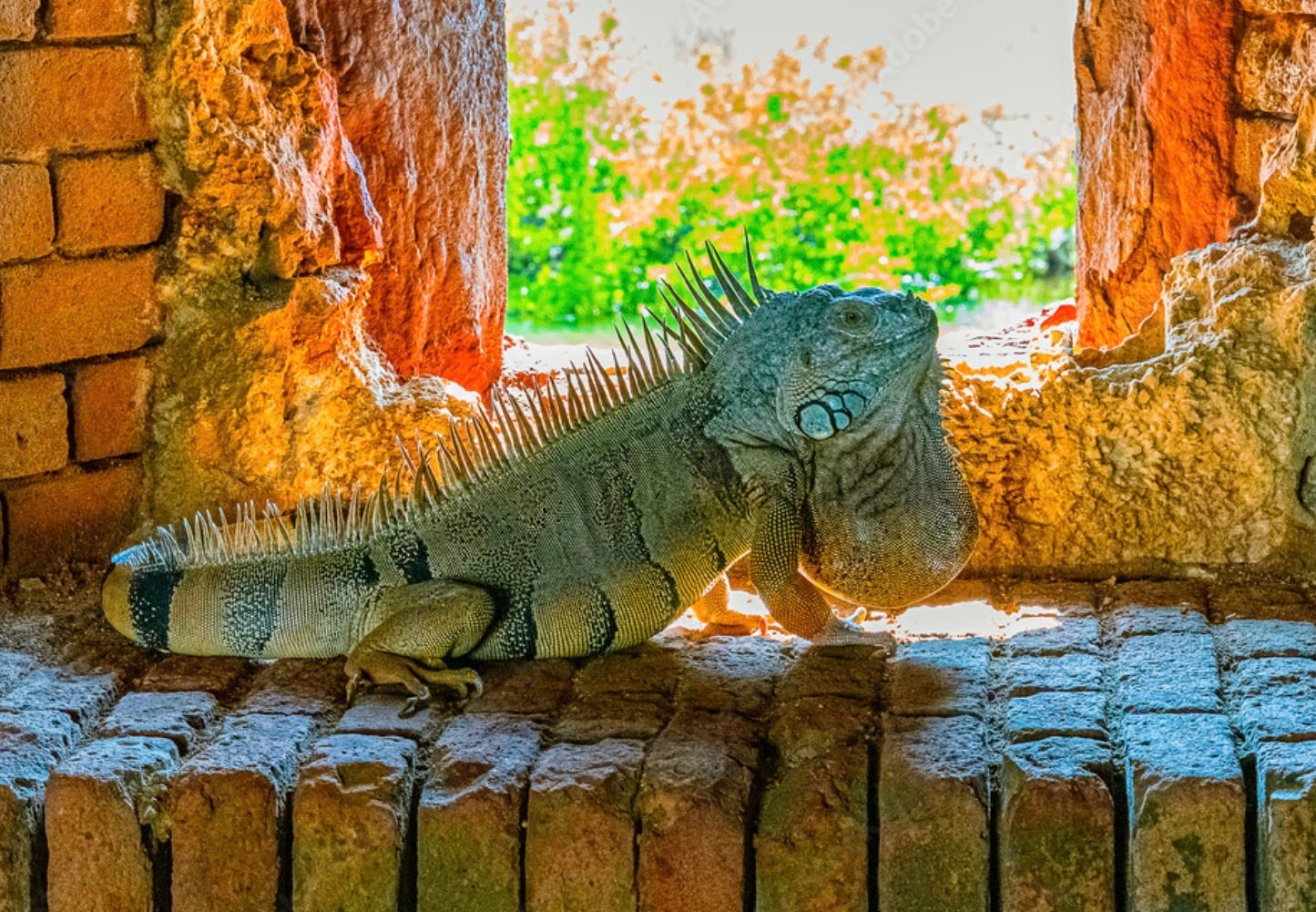
Ah. The chicken of the tree. Now is your chance.
The Florida Fish and Wildlife Conservation Commission on Friday issued an executive order temporarily allowing members of the public to collect live, cold-stunned green iguanas from the wild without a permit, citing the invasive reptile’s impacts on Florida’s environment and economy.
“Green iguanas are an invasive species in Florida and have adverse impacts on the state’s environment and economy,” the commission said in a statement.
FWC staff will accept cold-stunned green iguanas collected by the public at five designated locations on Sunday, Feb. 1, from 9 a.m. to noon, and Monday, Feb. 2, from 8 a.m. to 4 p.m. The drop-off sites are:
FWC South Florida Regional Lab, 2796 Overseas Highway, Marathon
FWC Office, 10052 NW 53rd St., Sunrise
FWC Tequesta Field Lab, 19100 SE Federal Highway (U.S. 1), Tequesta
FWC Law Enforcement Office, 2423 Edwards Drive, Fort Myers
FWC Southwest Regional Office, 3900 Drane Field Road, Lakeland
Under the temporary regulations, green iguanas may be removed by property owners or by members of the public with landowner permission. The rules also apply on commission-managed lands in South and Southwest Florida.
FWC officials urged caution when handling cold-stunned iguanas. The agency recommends wearing protective gloves, long sleeves and pants to prevent scratches. Iguanas must be placed in a secure, escape-proof cloth sack or bag that is fully closed. Only cloth bags may be used for primary containment to ensure the animals can breathe.
Before transport, the sealed collection bag must be placed inside a second, locked transport container labeled “Prohibited Reptiles.” Collected iguanas should be transported directly to an FWC facility to reduce the chance they regain mobility.
Once transport begins, collection bags must remain sealed until transferred to FWC staff to prevent escape or injury if the animals recover from torpor.
Cold-stunning occurs when temperatures drop near freezing, causing reptiles and amphibians to temporarily lose muscle control. Green iguanas, which often perch in trees, may become immobile and fall during such cold snaps.
FWC warned the public not to bring cold-stunned iguanas into homes or buildings to warm them and not to place them in vehicles unless transporting them directly to an FWC drop-off location.
Tags: Florida Fish and Wildlife Conservation Commission, green iguanas, invasive species, wildlife management, Florida
For years, I’ve wondered why city staff doesn’t do this when it is this cold. Surely euthanasia could be handled locally.