


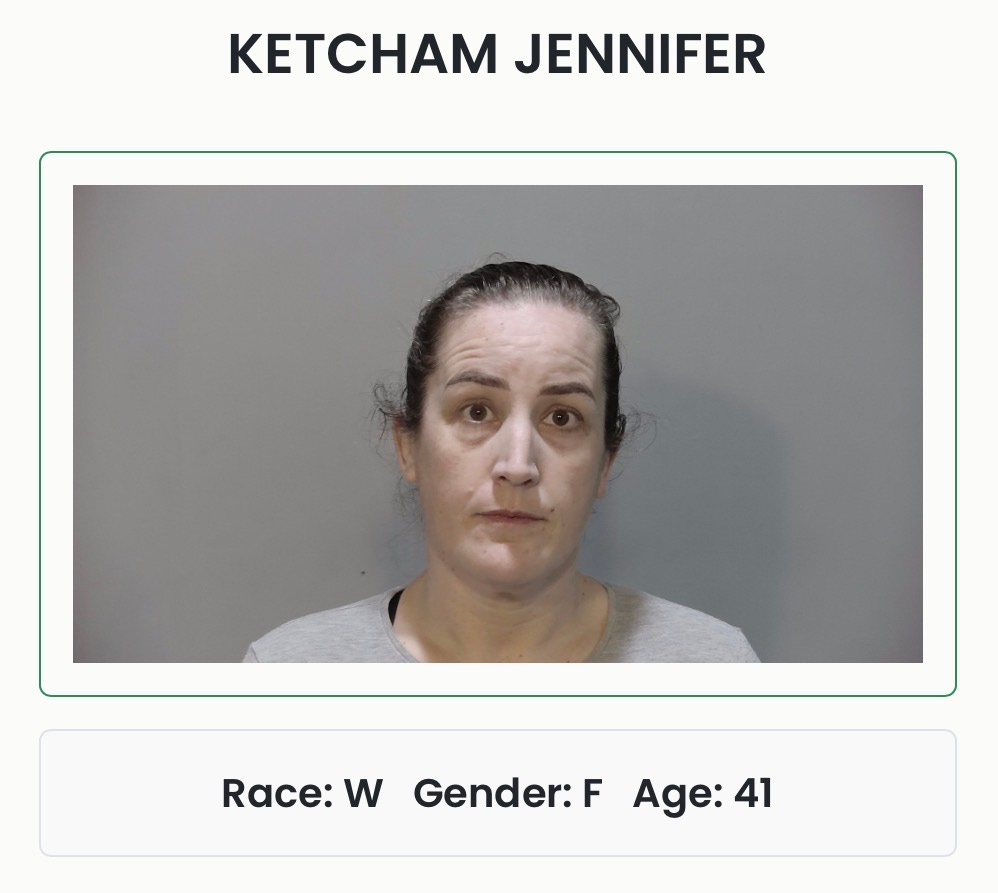
Former Monroe County Sheriff’s Office deputy Jennifer A. Ketcham, 41, is facing more than three years in state prison after prosecutors filed a detailed sentencing memorandum outlining what they say was a deliberate, months-long pattern of illegally accessing law-enforcement databases and leaking confidential intelligence to a 19-year-old boyfriend. Sentencing is scheduled for Monday, Nov. 24.
The memorandum comes less than three weeks after Ketcham pleaded no contest to 40 felony counts before County Judge Sharon Hamilton, admitting to unlawful computer use, misuse of public office and unlawful use of a two-way communication device. During that hearing, Hamilton found her competent, accepted the plea and set the Nov. 24 sentencing date.
State Seeks Prison, Supervision and Permanent Decertification
In its filing submitted to the Sixteenth Judicial Circuit’s Lower Keys criminal division, prosecutors asked the court to impose 37.725 months in Florida State Prison, followed by five years of supervision, permanent revocation of all law-enforcement certifications and reimbursement of investigative and court costs.
Both Monroe County Sheriff Rick Ramsay and Key West Police Chief Sean Brandenburg are expected to speak at the hearing in support of the State Attorney’s Office recommendation — a rare joint appearance underscoring the seriousness with which local law enforcement views the breach.
Defense Seeks Downward Departure
Ketcham’s attorney, Dustin S. Hunter, has filed a request for a downward-departure sentence under Florida Statute 921.0026(2)(d), citing a diagnosis of Post-Traumatic Stress Disorder and arguing she has made “substantial progress” through therapy. Psychological evaluations by psychiatrist Dr. Xingjia Cui and therapist Kathryn Cady recommend continued community-based treatment rather than incarceration.
Under Florida’s sentencing guidelines, Ketcham faces a minimum of 37 months in state prison and a potential maximum of five years per count.
Investigators: Misuse Was Systematic, Not Accidental
According to prosecutors, the evidence came from digital audits of her MCSO-issued laptop, criminal-justice databases and thousands of text messages recovered from her phone.
They say Ketcham conducted at least 19 unlawful searches of FCIC/NCIC, the state’s DAVID system and the Monroe County Sheriff’s Office license-plate reader network — all at the request of the young man with whom she was romantically involved.
The State alleges she:
Provided him driver-license photos and personal information
Ran tag and vehicle queries for purely personal reasons
Checked plate-reader hits so he could locate vehicles to tow for profit
Conducted a traffic stop to confirm a vehicle’s address and then relayed it to him
“These unlawful searches were done for the benefit of another … and not for any legal purpose,” prosecutors wrote.
Disclosure of Active Criminal Intelligence Called ‘Truly Reprehensible’
The sentencing memorandum also outlines 11 disclosures of active criminal investigative intelligence, including:
Locations of undercover narcotics units
Identities of targets of ongoing investigations
The identity of an informant
Positions of unmarked patrol units
SMARTCOP screenshots of a live search-warrant operation
Prosecutors said the disclosures “created significant and unjustifiable danger” for deputies, informants and undercover officers.
A Case Marked by Judicial Reassignments and a High Bond
Ketcham’s case has cycled through three judges. It began under Acting Circuit Judge Mark Wilson, who recused himself under judicial rules in August 2024. Circuit Judge Albert Kelley later also recused himself, and the case was reassigned to Judge Sharon Hamilton, who will preside over the Nov. 24 sentencing.
Ketcham was arrested in July 2024 following an internal affairs investigation that uncovered widespread misuse of criminal-justice databases. She was fired the following month and has remained free on a reduced bond of $610,000, down from $1.9 million.
Sentencing Ahead
If the court adopts the State Attorney’s Office recommendation, it would mark one of the most significant penalties imposed on a Monroe County law-enforcement officer for misuse of confidential police systems in recent history.
This is a developing story and will be updated.