


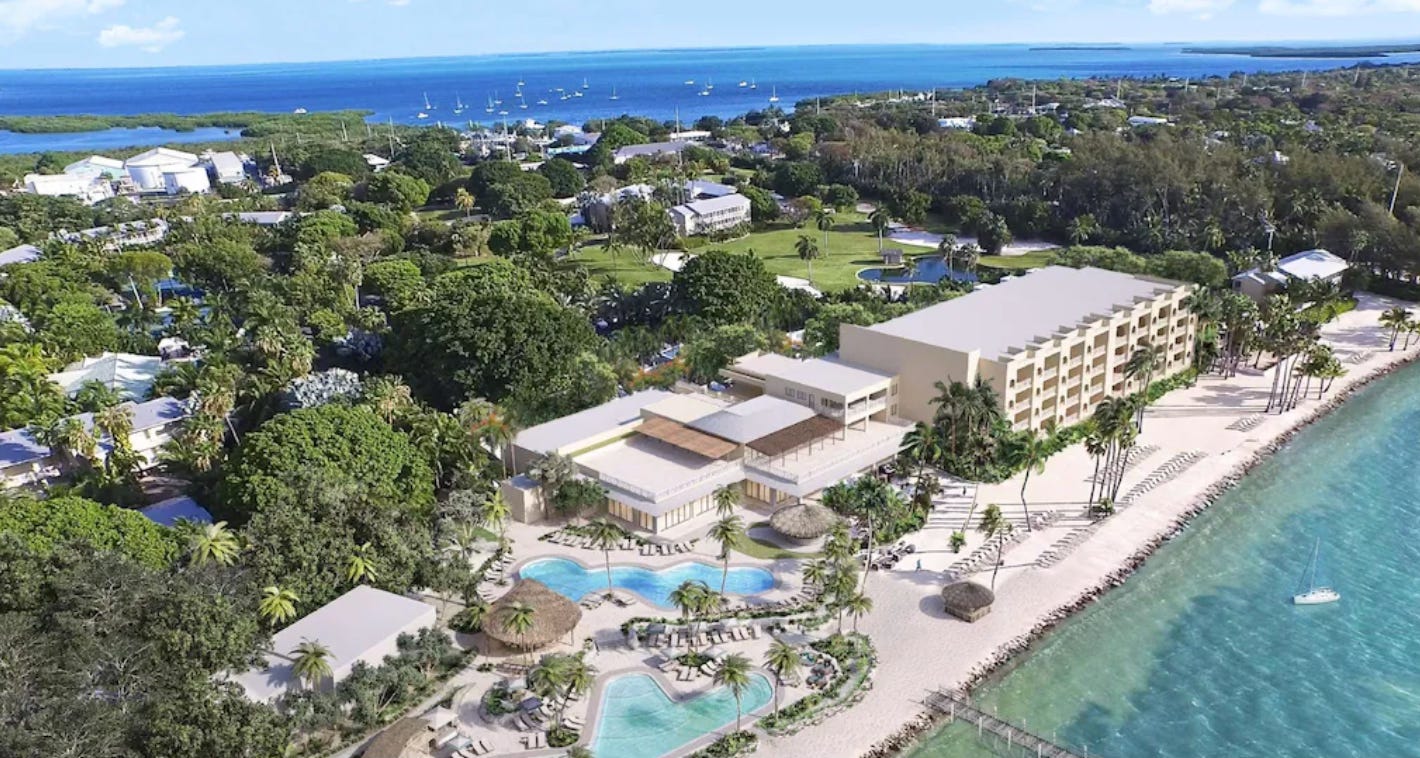
ISLAMORADA, Fla. — The Sugarloaf Lodge isn’t the only iconic Florida Keys resort to hit the market in recent weeks, as the storied Cheeca Lodge & Spa is now being quietly marketed for sale with a potential valuation approaching $300 million.
The 27-acre oceanfront resort in Islamorada, long considered one of the crown jewels of the Upper Keys, is being shopped by its current ownership amid surging investor demand for high-end, limited-supply coastal assets.
Cheeca Lodge’s potential listing marks the latest turn in a history that mirrors the Florida Keys themselves — a cycle of destruction, reinvention and rising land values stretching back more than a century.
The property began as a Bahamian Conch homestead in the 1800s, where early settlers including the Pinder family farmed pineapples and key limes on the same ground that now hosts one of the region’s most recognizable resorts. A cemetery built by those families still remains on site.
The land’s trajectory shifted in the early 1900s when railroad magnate Henry Flagler extended the Overseas Railroad through the Keys, opening Islamorada to wealthy anglers and transforming the area into an emerging sportfishing destination.
That momentum was erased in the 1935 Labor Day Hurricane, which destroyed nearly all infrastructure in the region, including what stood on the Cheeca site. The property was rebuilt in 1946 as the Olney Inn, an early postwar resort that hosted prominent guests including President Harry S. Truman.
Another hurricane in 1960 leveled the inn, continuing a pattern that would define the property’s evolution. It was rebuilt again in the 1960s by Cynthia and Carl Twitchell, who combined their names to create “Cheeca,” establishing the identity the resort carries today.
During the late 20th century, the lodge entered a defining era under ownership of Coca-Cola executive Carl Navarre, who helped elevate the property into a premier destination for both luxury travel and sportfishing. Under Navarre’s stewardship, Cheeca expanded its national profile, attracting high-profile guests and reinforcing its position as a cornerstone of Islamorada’s tourism economy.
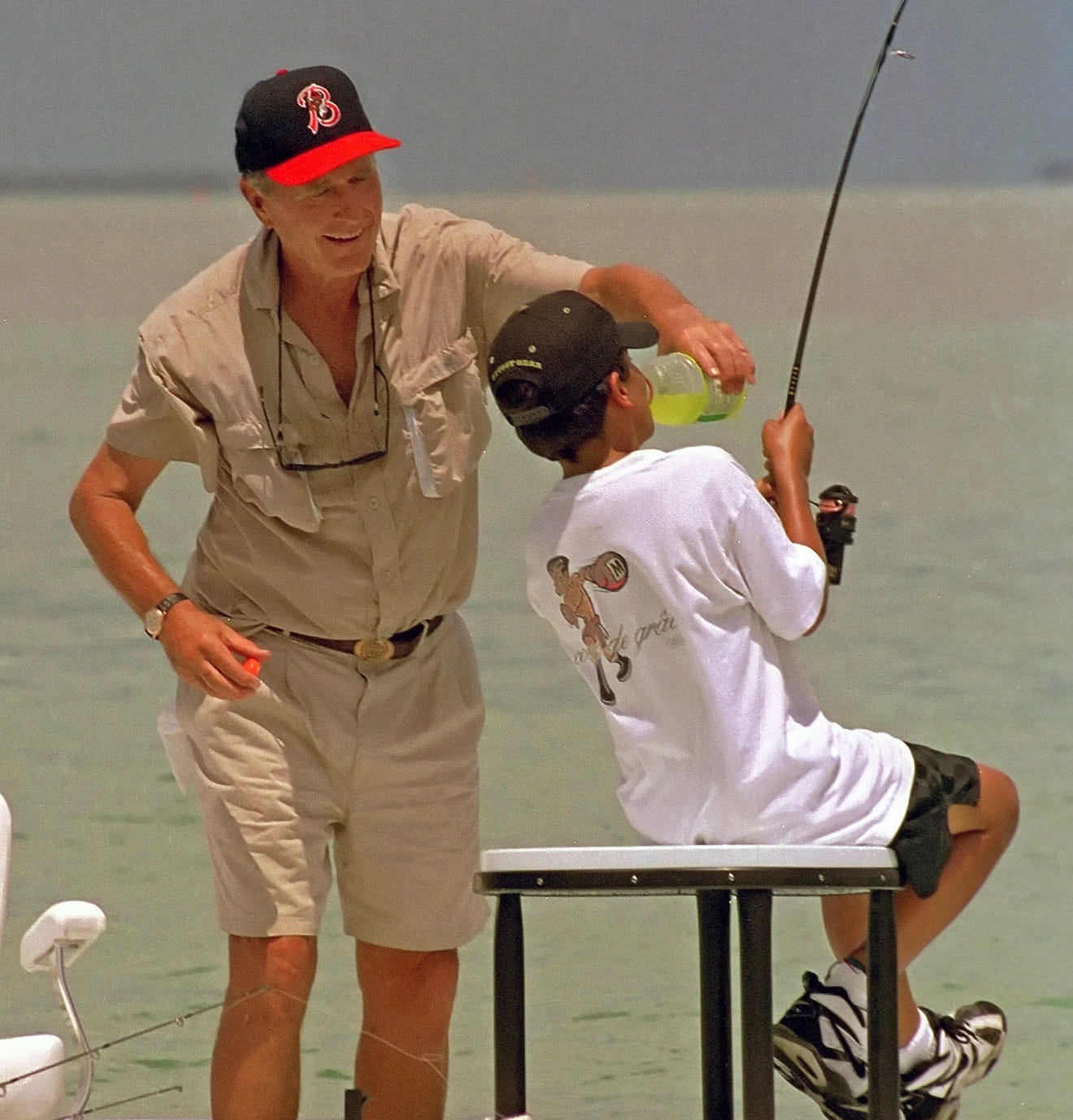
Over the following decades, the lodge grew alongside Islamorada’s emergence as the Sportfishing Capital of the World, serving as a base for anglers, guides and tournaments drawn by its direct access to both ocean and backcountry waters. Its long pier and marina made it a natural staging ground for competitive fishing, including the George Bush Cheeca Lodge Bonefish Tournament, co-founded by President George H. W. Bush and — cementing the property’s role in elite fishing culture.
The lodge also became intertwined with one of the Keys’ most enduring philanthropic angling traditions, the Redbone Tournament Series, a multi-event series launched to raise money for cystic fibrosis research. Cheeca Lodge served as a host site and gathering point for anglers and celebrities participating in the tournaments, which blended competitive fishing with fundraising and helped generate millions for the cause.
The Redbone events drew a rotating cast of high-profile participants over the years, including figures such as baseball legend Ted Williams, entertainers like Huey Lewis and Michael Keaton, and professional athletes and outdoors personalities who helped elevate the visibility of both the tournaments and Islamorada’s fishing culture.
The lodge’s connection to sportfishing was further amplified during the rise of televised outdoor programming, including segments of The American Sportsman hosted by Curt Gowdy, which brought national attention to the region’s fisheries and the resort itself. His guests included Bing Crosby, Jonathan Winters, Phil Harris, Terry Bradshaw and others.
Other celebs that have called Cheeca their home-away-from-home include Paul Newman and his wife Joanne Woodward, the artist Pink and elite athletes including Jack Nicklaus, Wade Boggs and Dale Earnhardt, Jr.
More recently, Cheeca has maintained a foothold in pop culture as a filming location. The resort and surrounding Islamorada locations appeared in the Netflix series Bloodline, part of a broader pattern of television, film and commercial productions using the property’s oceanfront setting as a backdrop.
Ownership changes over time tracked a sharp escalation in value, from roughly $4 million in the early 1980s to more than $100 million following a post-fire rebuild in 2011. The current marketing effort, which could push the price near $300 million, reflects both the property’s scale — approximately 214 rooms and condominium units — and its rare combination of beachfront, dockage and highway frontage.
Industry analysts point to strict development limits in the Keys as a primary driver of the valuation. Growth in Monroe County is tightly constrained by hurricane evacuation requirements, leaving few opportunities for new large-scale resort development and elevating the value of existing properties like Cheeca.
At the same time, rising insurance costs, climate risks and regulatory constraints present challenges for potential buyers, who must weigh long-term exposure against the scarcity of comparable assets.
The property has also undergone multiple rounds of rebuilding following major disasters, including a 2008 fire that destroyed the main lodge before it was reconstructed and reopened in 2011. Each event has effectively reset and upgraded the resort, contributing to its current positioning in the luxury market.
The potential sale comes as investor appetite for experiential travel destinations continues to grow, particularly in markets where supply is limited and demand remains strong.
For the Florida Keys, the listing signals a continued shift toward institutional ownership of legacy properties, where historic resorts once rooted in local culture are increasingly viewed as global investment assets.
Whether Cheeca ultimately trades near its reported valuation remains to be seen. But its trajectory — from a 19th-century homestead to a $300 million listing — underscores the transformation of the Keys from remote outpost to one of the most tightly held and highly valued coastal markets in the United States