


BIG PINE KEY, Fla. — The College of the Florida Keys Board of Trustees declined Tuesday to authorize a proposed wildlife passage for endangered Key deer after discussing the issue, entertaining a motion and disposing of it before opening the floor to public comment, a sequence that critics say raises serious questions about compliance with Florida’s open government requirements for the second time this year.
The proposal was not listed on the board’s published agenda, according to attendees. Trustee Robert Broton made a motion directing the college to approve what supporters have dubbed a “Freedom Gate,” a monitored opening in the property’s perimeter fence that would allow endangered Key deer trapped on the former prison property to leave and return to their natural habitat. The motion died without receiving a second.
CFK Board Could Face Sunshine Law Questions as Residents, Key Deer Advocates Reject Big Pine Truck School

A meeting of the College of the Florida Keys Board of Trustees on Tuesday drew sharp criticism from residents and environmental advocates after the board initially declined to place a proposed commercial truck driver training center on its official agenda, then limited public access while considering the issue.
TRUSTEES LISTENED TO PUBLIC — AFTER DECIDING WHAT TO DO
Only after the motion failed did the board hear public comment, according to attendees.
Save Our Key Deer, the nonprofit advocating for the animals, said many residents chose not to attend the meeting because the issue was not publicly noticed on the agenda and therefore had no reason to believe trustees would consider or dispose of the proposal.
The organization contends the sequence deprived the public of a meaningful opportunity to participate in the decision-making process and has called for the board to revisit the matter.
Florida’s Government in the Sunshine Law generally requires meetings of public boards to be open to the public, while a separate state law requires members of the public be given a reasonable opportunity to be heard before a board takes official action on a proposition, subject to limited exceptions. Whether the board’s actions complied with those requirements has not been determined by a court or state enforcement agency.
The trapped Key deer, a federally endangered species found only in the Lower Florida Keys, have remained confined on the college’s Big Pine Key property for more than four months, according to Save Our Key Deer.
The organization has repeatedly urged the college to authorize installation of a wildlife passage that would allow the deer to leave the fenced property while maintaining campus security. Save Our Key Deer said it would pay for the installation, monitor the gate and remove it at its own expense if the college later determined it was no longer needed. The group also said the opening could be located within view of existing security cameras.
“CFK’s Board of Trustees needs to be respectful of the residents and our wildlife if they want to be our neighbor. So far they are failing miserably,” Save Our Key Deer President Valerie Preziosi said in a statement.
College officials said the U.S. Fish and Wildlife Service will continue pursuing alternative methods to remove the deer after previous attempts were unsuccessful, according to advocates who attended the meeting. When a resolution will occur is anybody’s guess — although U.S. Fish and Wildlife is attempting to release them using a “new technique” since previous attempts have failed to release the entire group.
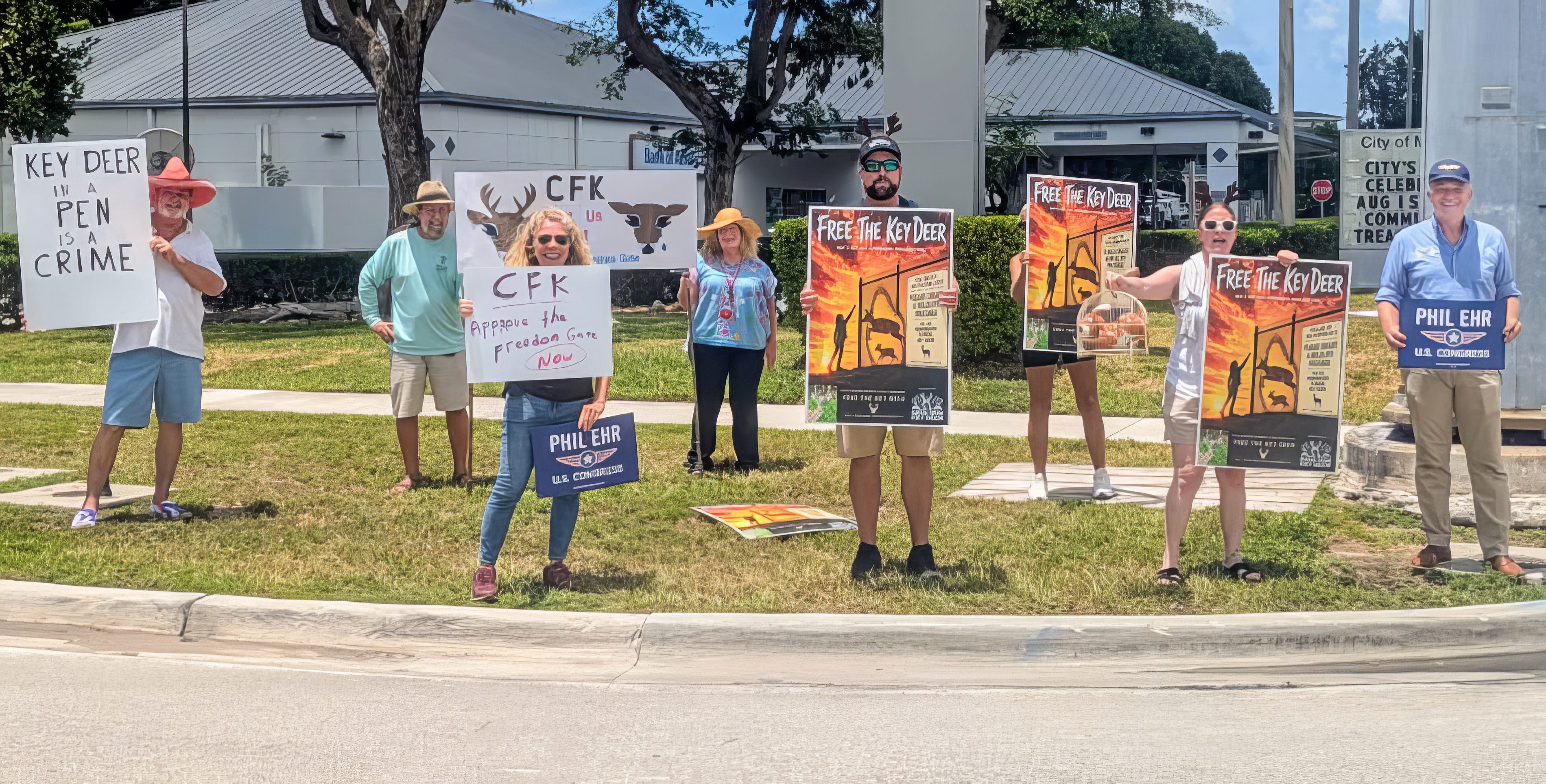
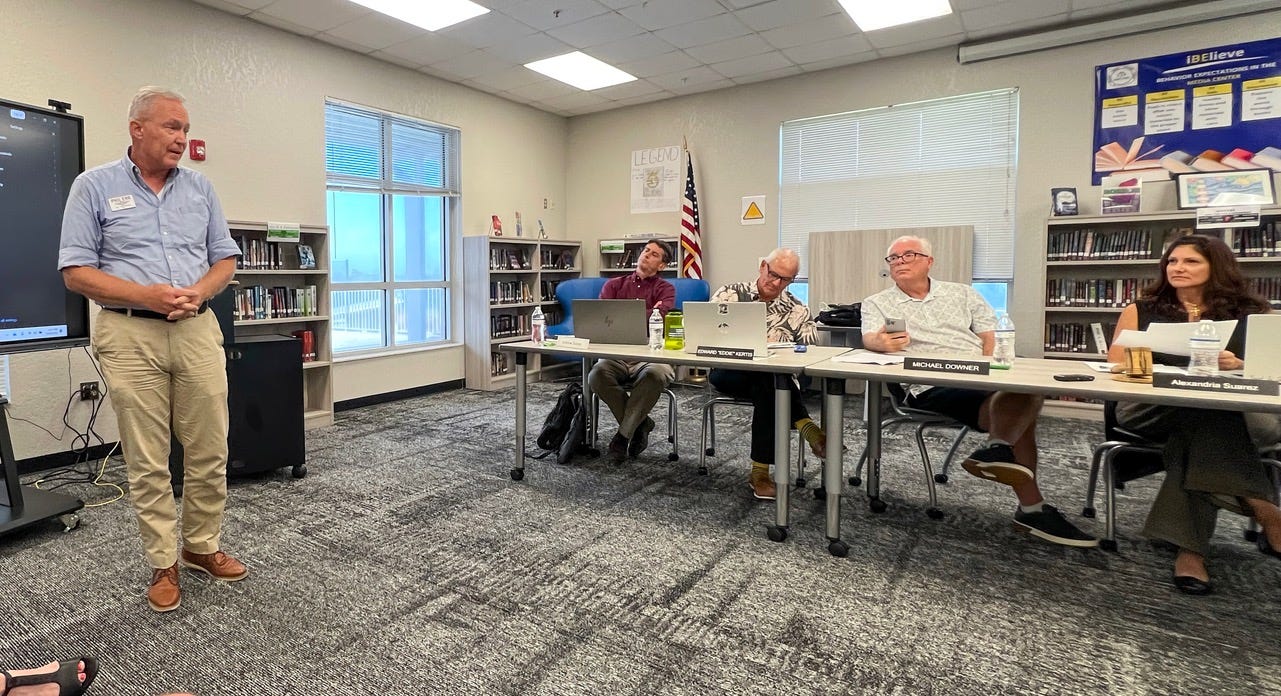
The issue has drawn increasing public attention throughout the Florida Keys. Save Our Key Deer said hundreds of letters have been submitted urging the college to approve the gate, while demonstrations have been held in Key Largo, Key West and Marathon. Congressional candidate Phil Ehr participated in Tuesday’s protest in Marathon before speaking during the trustees meeting in support of the proposed wildlife passage.
Board Chair Alexandria Suarez and Robert Broton supported the measure, but it fell on deaf ears with the rest of the trustees: Andrew Dulcey, Peter Batty, Jr., Florida Keys National Marine Sanctuary Superintendent Edward Kertis, Republican politico Michael Downer and Susan Raffenelo. Interim President Brittany Snyder has also been a vocal opponent of the installation of a two-way freedom gate that would allow deer to move in and out of the property at will.
During the meeting, officials with the college said that the property had been “vandalized” in recent weeks — most likely attempts from concerned citizens attempting to create pathways in the fence to allow the deer to escape.
Save Our Key Deer said it intends to continue pressing the college to reconsider the proposal, arguing the Freedom Gate offers the quickest and most humane solution for the trapped animals while preserving the property’s security. Preziosi said the group did not condone any illegal activities or acts of vandalism
CFK Board of Trustees and Administration
Those interested in voicing their views on the imprisoned Key deer are encouraged to email the trustees and interim president:
Trustee Andrew Dulcey
Board Chair Alexandria Suarez
Trustee Robert Broton
Trustee Peter Batty, Jr.
Trustee Michael Downer
Trustee Susan Raffanello
Trustee Edward John Kertis
Interim President Brittany Snyder

Thank you for continuing to shine a light on this important issue. The ongoing confinement of these endangered Key deer deserves the community's full attention, and your reporting has helped ensure that it remains a matter of public concern.
This is about more than a fence. It is about environmental stewardship, protecting a species found nowhere else on Earth, and the reputation of the College of the Florida Keys as an institution that should lead by example in conservation and community responsibility. Every additional delay has the potential to further impact the well-being of these deer while eroding public confidence in the College's commitment to responsible stewardship.
I also appreciate your including the email addresses for the Board of Trustees and Interim President. Giving residents a direct way to communicate respectfully with decision-makers is an important public service and encourages meaningful civic engagement.
Thank you again for your thoughtful reporting and your commitment to covering issues that matter to the Florida Keys.
— Loretta