



A seaplane pitched forward and nosed down while attempting to depart Fort Jefferson around 8 a.m. Saturday after waves washed over its floats in gusty conditions. No injuries were reported, according to multiple sources familiar with the incident.
The aircraft, identified by tail number N708KA and believed to be a de Havilland DHC-3T Turbine Otter, is registered to Single Otter Leasing Two LLC and is believed to be operating as part of the Key West Seaplane Adventures fleet under a National Park Service concession. The Otter platform is among the most widely used seaplane types, particularly in Alaska and the Pacific Northwest. The plane was built in 1954.
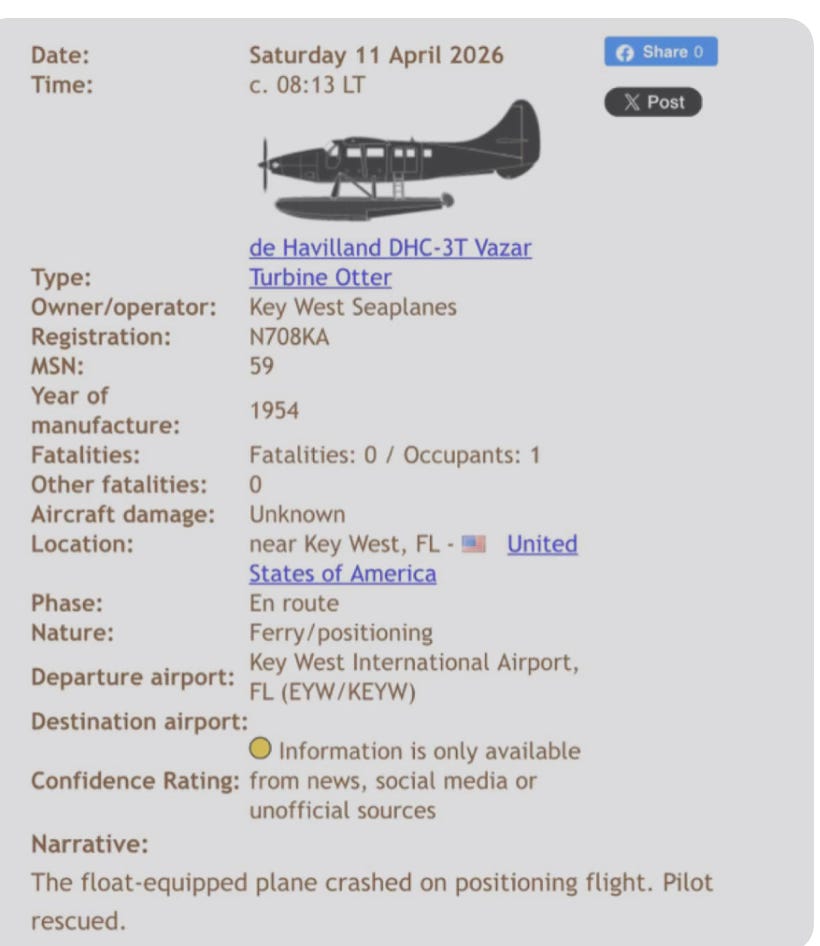
It had just completed the first passenger drop-off of the day at Dry Tortugas National Park and was attempting to take off to return to Key West without passengers when it encountered rough seas driven by approximately 20-knot winds, sources said.
Witness accounts, including posts circulating on social media from individuals who said they were in the vicinity of Fort Jefferson, described the aircraft struggling in choppy water before a wave overtook the floats, causing the plane to pitch forward and nose down. Those accounts could not be independently verified but were consistent with descriptions provided by aviation sources in Key West.
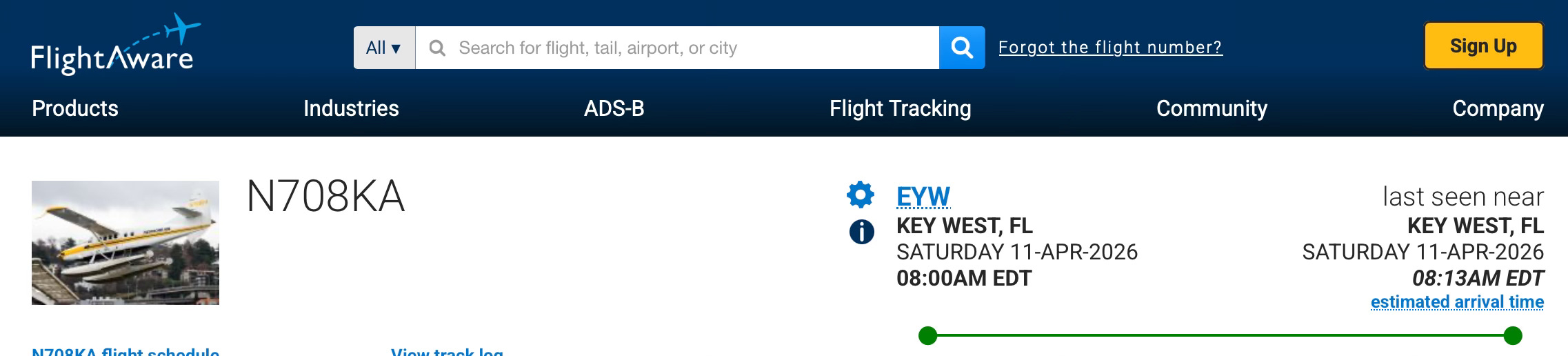
Flight tracking data reviewed on FlightAware appeared to corroborate that the aircraft did not complete its scheduled return leg to Key West following the morning drop-off.
Several towing and marine salvage operators in the Lower Keys confirmed the incident and said inquiries were circulating Saturday morning as bids were being sought to recover the aircraft from the shallow waters near the fort. Those operators said the ultimate disposition of the seaplane remained unknown.
Boaters in the area and personnel with the National Park Service were among the first to respond, assisting the pilot after the incident.
Officials with the United States Coast Guard had not issued a formal statement as of Saturday morning. It was also not immediately clear whether the Federal Aviation Administration or the National Transportation Safety Board had opened an investigation, though such incidents are typically reviewed.
Aviation sources at Key West International Airport confirmed the aircraft had been operating a routine morning run to the remote island park and was “deadheading” back — a return flight without passengers — when the incident occurred.
Seaplane operations in the Dry Tortugas are highly dependent on sea state, wind, and tidal conditions. The open-water runway used near Fort Jefferson can become hazardous when winds increase, and conditions can deteriorate depending on the tide, with waves capable of overtopping floats and destabilizing aircraft during takeoff or landing.
The site of the incident, Fort Jefferson, is a 19th-century coastal fortress in the Dry Tortugas. It later served as the prison where Samuel Mudd was held for aiding John Wilkes Booth following the assassination of Abraham Lincoln.
The park is accessible only by boat or seaplane.
Further details were not immediately available.
This is an evolving story. Watch this space.