


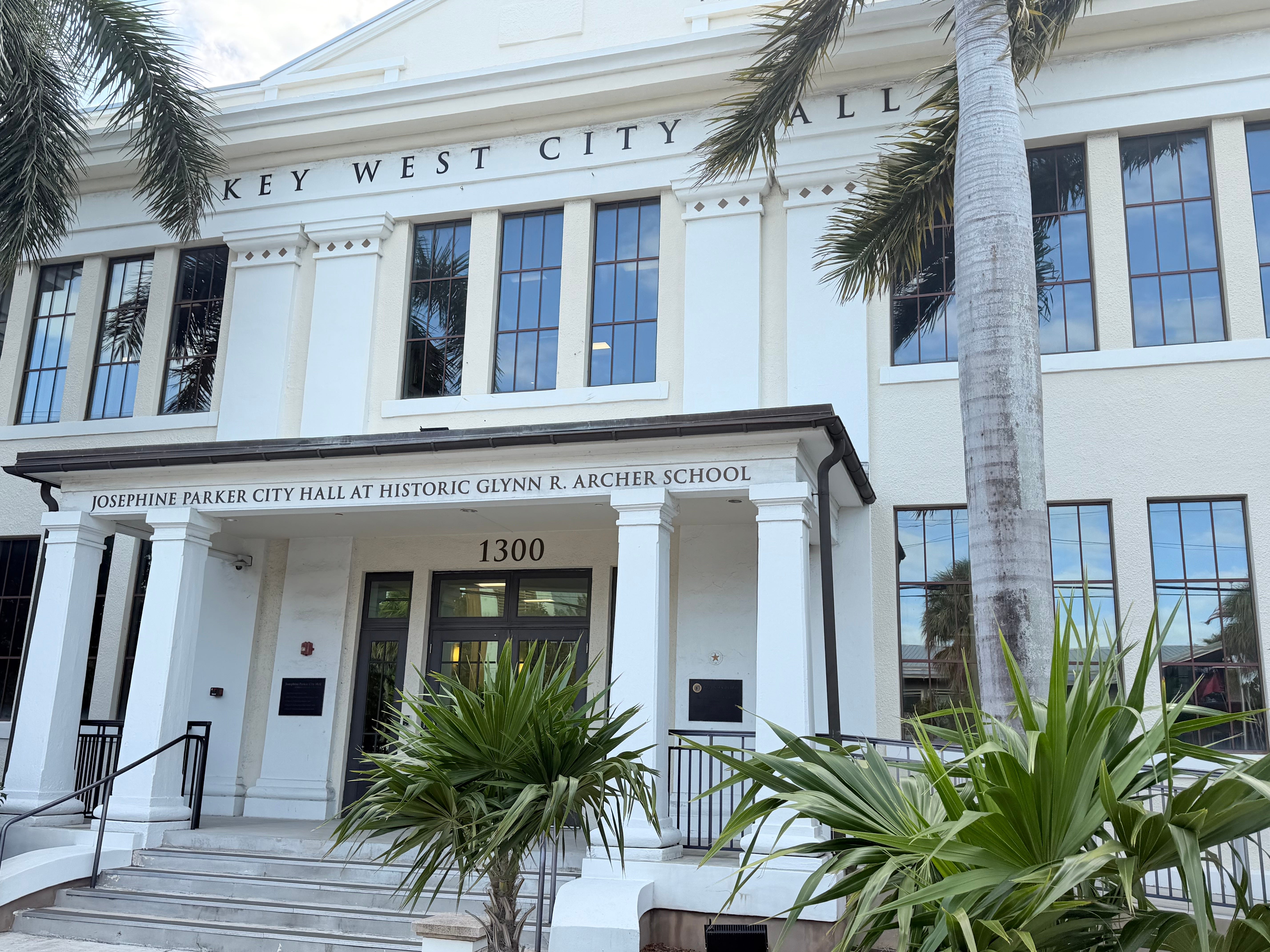
KEY WEST, Fla. — A newly released City of Key West planning report warns that any major reopening of U.S.-Cuba travel could transform Key West into one of the country’s most strategically important civilian maritime gateways to Cuba, bringing sweeping economic, infrastructure and political consequences to the island city.
The preliminary report, circulated Wednesday by City Manager Brian Barroso and authored by Senior Policy Strategist Todd Stoughton, outlines how expanded Cuba travel could affect the city’s ferry terminal, housing market, transportation network, tourism economy and public safety operations if federal restrictions are relaxed.
“If U.S.-Cuba travel reopens in a meaningful way, Key West could become one of the most strategically relevant civilian maritime gateways between the United States and Cuba,” the report states.
City officials emphasized the document is a contingency planning exercise and not an endorsement of Cuba ferry service or changes in federal policy.
“This report does not recommend initiating Cuba ferry service,” Stoughton wrote. “Rather, it identifies the issues the City should understand in advance if federal policy or private-sector interest changes.”
The report arrives amid renewed public discussion in Key West about Cuba-related travel and ferry operations after city leaders met May 20 with officials from United States Coast Guard Sector Key West to discuss maritime readiness, security coordination and operational impacts tied to any future federal policy changes.
According to the report, Key West is uniquely positioned because the city owns the ferry terminal at 100 Grinnell St., already supports passenger ferry operations and maintains federally regulated maritime facilities governed under Coast Guard security rules.
The report outlines three possible future scenarios ranging from limited authorized travel to broader normalization involving routine passenger ferry service, cargo movement, cruise activity and expanded commerce with Cuba.
Under the broadest scenario, the report warns Key West could experience increased ferry traffic, heavier demands on police and emergency services, rising property values, intensified workforce housing shortages and growing congestion around the Historic Seaport and downtown waterfront.
“The likely net effect is higher property values and rents islandwide,” the report states, “with increased affordability stress and potential resident pushback.”
City officials estimate expanded Cuba travel could generate new revenue through terminal lease agreements, passenger fees, dockage, concessions, parking and tourism-related business activity.
The report also argues Key West could strengthen its position for federal infrastructure funding tied to port security, customs processing, resiliency upgrades and transportation improvements.
At the same time, the document warns that poorly structured agreements could leave taxpayers absorbing costs associated with policing, security, sanitation, traffic control and terminal improvements while private operators capture most of the financial benefit.
The report repeatedly stresses that Cuba policy remains under federal control and that no local ferry service could begin without approvals involving agencies including U.S. Customs and Border Protection, the U.S. Treasury Department’s Office of Foreign Assets Control, the State Department and the Coast Guard.
It also notes that tourist travel to Cuba remains prohibited under federal law and references recent sanctions activity that tightened, rather than loosened, some commercial operations involving Cuba.
Among the recommendations, the report calls for a federal coordination meeting involving the Coast Guard, Customs and Border Protection, Monroe County officials, the Sheriff’s Office and federal agencies. It also recommends a feasibility study examining whether the city-owned ferry terminal can physically support international passenger operations.
The document proposes future planning for customs inspection areas, passenger screening zones, multilingual signage, ADA upgrades, traffic circulation changes, remote parking lots and emergency staging procedures.
The report warns that any future Cuba ferry operation could intensify existing tensions in Key West over overtourism and quality-of-life concerns already associated with cruise ships and heavy visitor traffic.
“Key West should develop a federal coordination framework, terminal feasibility analysis, cost-recovery model, and community impact plan so that if the federal government opens the door, the City is not forced into a reactive posture,” the report concludes.
The release of the report comes as Sam Kaufman is scheduled to host a Cuba-related stakeholder forum Wednesday at 5:30 p.m. at the Frederick Douglass School in Bahama Village. Kaufman has said the meeting will focus on community concerns surrounding potential changes in Cuba travel policy and their possible local impacts.
City officials said any future policy decisions involving terminal agreements, operational changes or local regulations would require public review and approval by the Key West City Commission.