
BREAKING: Iconic Pier House Resort Under Contract for $190 Million; Records Link Buyer to Sixth Street Partners
Key West landmark built by David Wolkowsky in 1967 — where Jimmy Buffet got his start — would sell for more than double what current owner paid a decade ago. Could it become a Margaritaville?

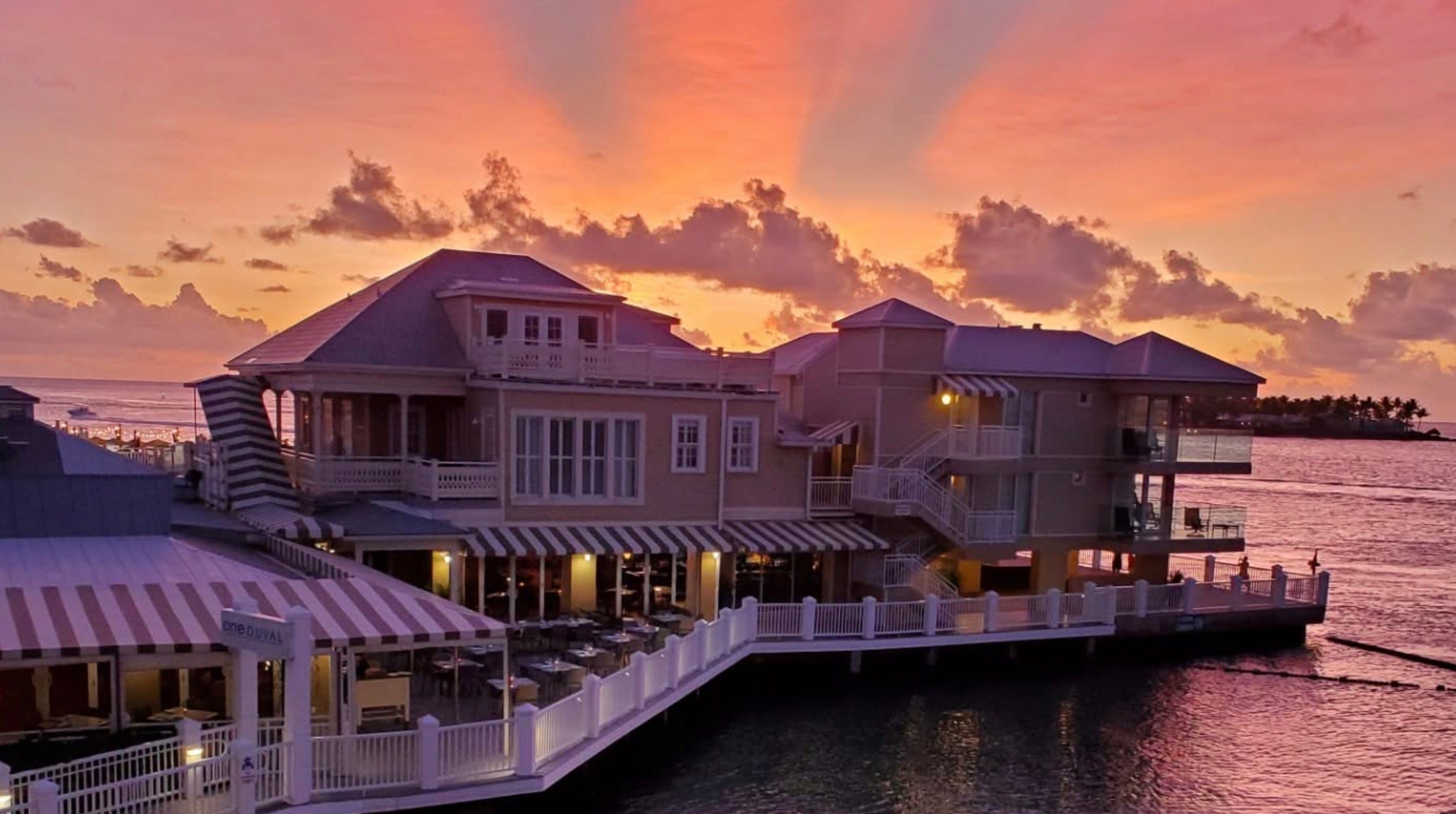
KEY WEST — The Pier House Resort & Spa, the 142-key oceanfront hotel that anchors the foot of Duval Street, is under contract to sell for $190 million — and corporate records reviewed by Above the Fold reveal the mystery buyer is tied to Sixth Street Partners, a global investment firm managing more than $75 billion.
Braemar Hotels & Resorts disclosed the deal in a July 17 filing with the Securities and Exchange Commission. The seller’s affiliates — Ashford Pier House LP and Ashford TRS Pier House LLC — entered the purchase-and-sale agreement on July 13 with an entity called Last Mango Owner LLC, according to the filing.
Industry outlets including Bisnow and The Real Deal reported the sale but noted it was not immediately clear who controlled the buyer entity.
Above the Fold traced the LLC through Florida Division of Corporations records. Last Mango Owner LLC is a Delaware limited liability company registered in Florida on July 7 — six days before the purchase agreement was signed. Its sole listed member is TAO Finance 1 LLC, headquartered at 2100 McKinney Ave., Suite 1500, Dallas — the same address as Sixth Street Partners’ Dallas office.
“TAO” is the name of Sixth Street’s flagship cross-platform investment fund, which the Wall Street Journal has reported holds roughly $22.5 billion. The firm was co-founded in 2009 by Alan Waxman, the former co-head of Goldman Sachs’ Americas Special Situations Group.
The Pier House would be Sixth Street’s second acquisition from Braemar in two months. In May the firm paid $176 million for the 193-key Park Hyatt Beaver Creek Resort & Spa in Colorado, a deal it announced publicly. Sixth Street has not commented on the Key West transaction.
The $190 million price tag works out to roughly $1.34 million per key — more than double the $93 million, or about $653,000 per key, that Braemar paid for the property in 2014 after a $12 million renovation.
The “per key” metric is a common way to value hospitality properties by looking at the value of each hotel room (or “key”). In hotel real estate, one key generally equals one rentable guest room, although suites or units can sometimes be counted differently depending on the asset.
On July 14 — one day after the Pier House agreement — Braemar completed the sale of three other properties, the Ritz-Carlton Sarasota, Hotel Yountville and the Bardessono Hotel and Spa, for approximately $432.7 million combined.
WOLKOWSKY, THE MAN WHO BUILT THE STAGE
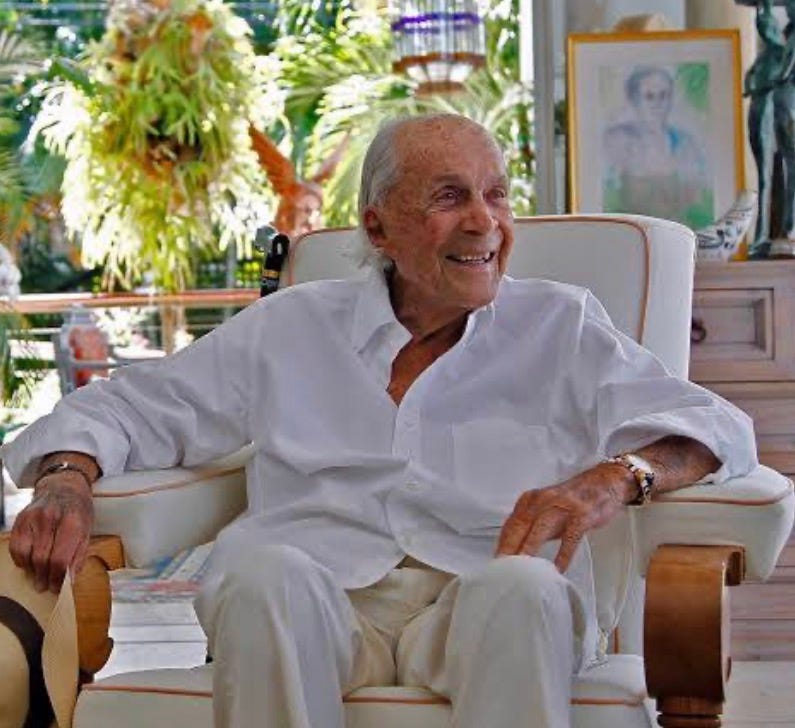
The Pier House exists because David William Wolkowsky — born in Key West on Aug. 25, 1919, to a family whose grandfather had arrived from Russia in 1886 — came home.
Wolkowsky grew up between Key West and Miami, studied architecture at the University of Pennsylvania, served in the merchant marine and spent the 1950s restoring Rittenhouse Square and Society Hill in Philadelphia under the name “David Williams” to avoid antisemitism. Town & Country magazine named him “Man of the Month” in 1955 for his efforts.
When his father, Isaac, died in 1962, Wolkowsky returned to Key West to manage the family’s aging properties.
He found a village, and he decided to rebuild it.
He rescued the condemned bar on Greene Street that had been Ernest Hemingway’s original Sloppy Joe’s — today Captain Tony’s Saloon. He developed Pirate’s Alley and the Original Cigar Factory on lower Duval and Front streets.
In 1963 he purchased the old Cuban Ferry Dock near Mallory Square for $106,000 and helped transform the derelict wharf into the nightly sunset celebration that defines Key West tourism to this day.
In 1967, on a mud flat at the foot of Duval Street, Wolkowsky and architect Yiannis Antonidis built a 50-room motel. Fifty ocean-facing rooms followed quickly. Renee d’Harnoncourt, the former director of New York’s Museum of Modern Art, called it “the most unusual motel design in America.” The Miami Herald called its 1968 opening “the turning point in Key West’s transformation from washed-up military outpost to funky tourist destination.”
The Pier House became a magnet for the famous.
Truman Capote made it his winter home and wrote much of his unfinished novel Answered Prayers there; the book was published posthumously in 1986. Tennessee Williams was a regular. Wolkowsky — who served his guests hot dogs, white wine and potato chips, whether they were beachcombers or British Prime Minister Edward Heath — presided over a salon that mixed Rockefellers, Mellons and Vanderbilts with smugglers, shrimpers and poets.
THE CHART ROOM AND THE MAKING OF JIMMY BUFFETT
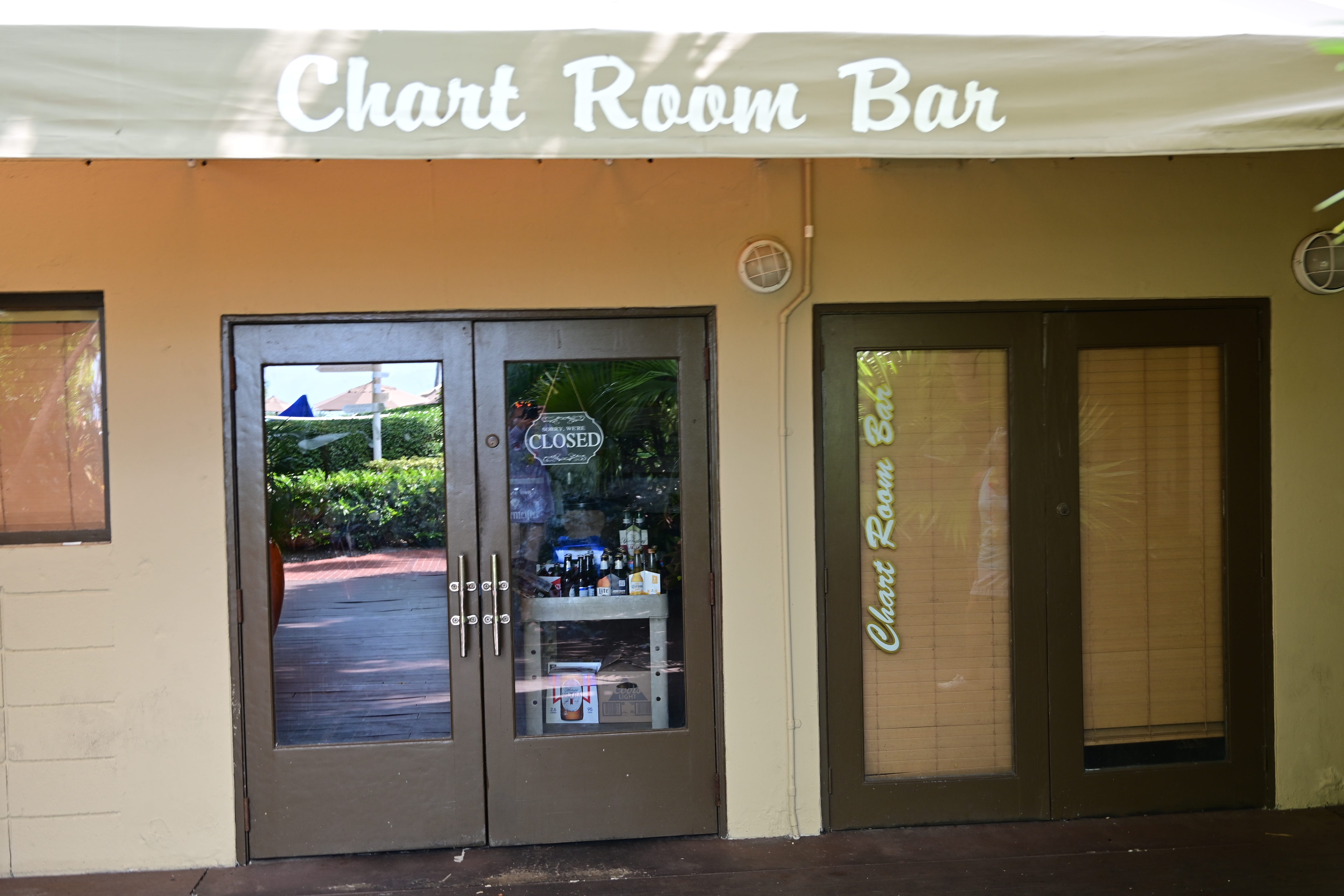
In the fall of 1971, a broke, shaggy-haired singer-songwriter named Jimmy Buffett climbed into a 1947 Packard sedan with Jerry Jeff Walker — the man who wrote “Mr. Bojangles” — and Walker’s girlfriend, Teresa “Murphy” Sadler, and drove from Coconut Grove to Key West.
“I had just come from Nashville, and I didn’t have enough money to get my own apartment,” Buffett told Keys Weekly in 2018.
Their first stop was a converted hotel room at the foot of Duval Street that Wolkowsky had turned into a bar by hauling in a mahogany counter, a few bottles and six barstools. He called it the Chart Room.
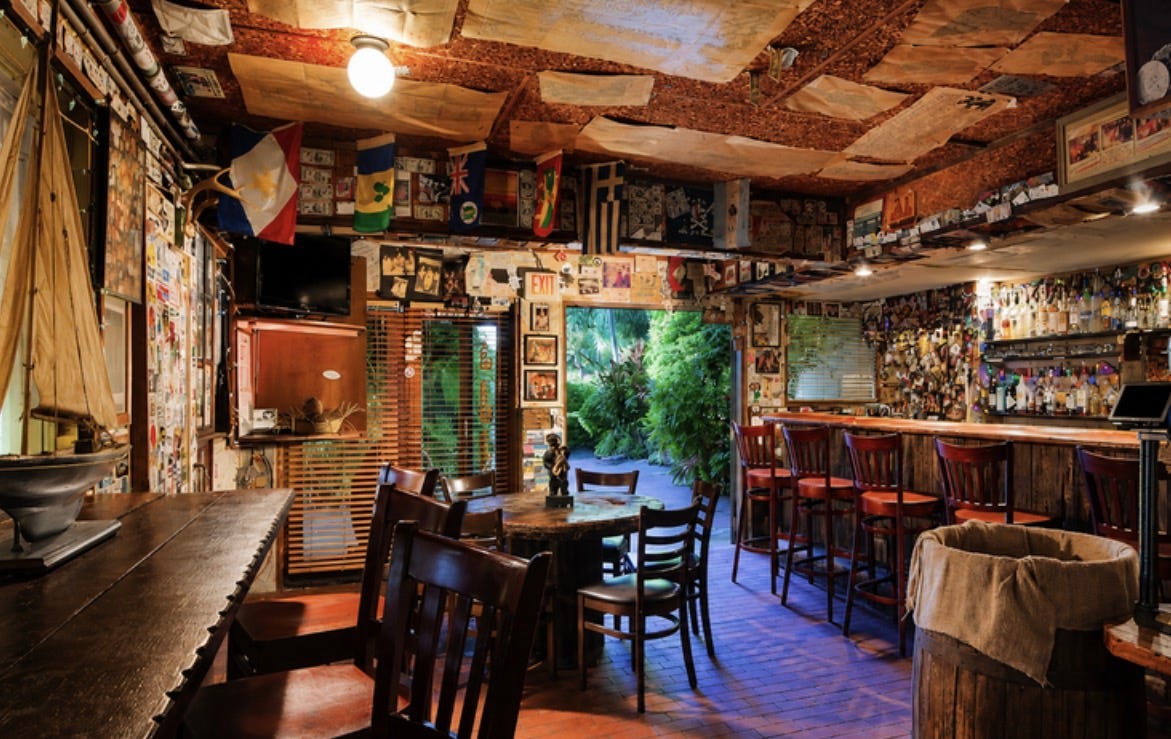
Tom Corcoran, a young bartender who had arrived in Key West in 1970, was behind the bar that afternoon.
“I hadn’t seen Murphy or Jerry Jeff for maybe a few months. And they had this sort of struggling young hippie with them,” Corcoran recalled in a 2022 interview with The Miami Herald. “I said to Jimmy, ‘What are you drinking?’ And he kind of got this look in his eyes that said, ‘Well, I wonder who’s paying?’ And I read that and I said, ‘First one’s free. Welcome to Key West.’
So he ordered a Heineken.”
Walker introduced Buffett around and then, as Buffett put it, “kind of left me there.”
It was the start of everything.
After a few days playing downtown, Buffett returned to Miami, but the island pulled him back. He picked up odd jobs and asked Corcoran if he could play the Chart Room in exchange for drinks.
Corcoran agreed.
The audience in that six-stool, three-table room included treasure divers, pot smugglers, local politicians and a murderer’s row of American writers — Hunter S. Thompson, Tom McGuane, Jim Harrison, Jim Croce and Steve Goodman among them.
Buffett, who understood the room, slapped a bumper sticker on his guitar case that read “Support Your Local Sheriff.”
The sheriff became a fan.
“Jimmy knew the power of this play,” Corcoran told Flamingo Magazine.
Politicians got every third drink free. Buffett got an audience that would carry him from bar stools to stadiums.
He met novelist Tom McGuane at the Chart Room; McGuane would marry Buffett’s sister, Laurie. He sublet McGuane’s apartment at 123 Ann Street and became a Key West resident. In the spring of 1972, he met a young woman in a red dress at the Chart Room — Jane Slagsvol, who would become his wife.
Wolkowsky became Buffett’s friend and patron.
“I don’t think David ever paid me there, but he let me sing … and we’d just lay out by the pool,” Buffett told Keys Weekly.
When Buffett and the Coral Reefer Band played their first gig — a dollar-a-ticket show at Logun’s Lobster House on the south end of Duval — “David had a table on the front row, and at the table was Truman Capote, John Malcolm Brinnin, Dotson Rader, and a few other people,” Buffett said.
Wolkowsky sold the Pier House in the late 1970s for $4.6 million.
In 1974 he had purchased Ballast Key, an uninhabited island eight miles off Key West, where he built a house and entertained writers. He donated it to the Nature Conservancy and the U.S. Fish and Wildlife Service. In 2018, the Monroe County Commission voted to rename it David Wolkowsky Key. He died on Sept. 23, 2018, at his home in Key West. He was 99.
THE NAME ON THE DEED
The LLC’s name — Last Mango Owner — is itself a nod to Buffett’s 1985 album “Last Mango in Paris.” The naming choice by a firm that has used locally themed LLCs for its other hotel acquisitions suggests Sixth Street researched the property’s cultural lineage before forming the entity.
It is unclear if the new owners have any plans on turning the iconic 0 Duval St. property into a Margaritaville-themed resort. The players involved have no other apparent ties to the Buffett brand, his estate or family.
The 18-seat Chart Room — full of pictures, memorabilia and, by one account, the occasional undiscovered hot dog — remains open inside the resort. It is the smallest and arguably the most consequential bar in Key West.
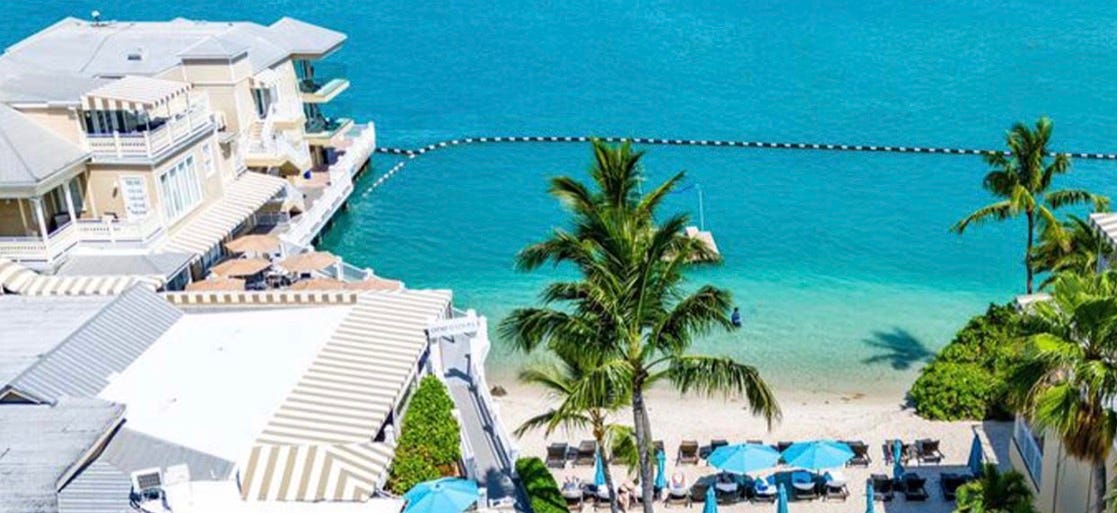
The hotel has grown to 142 keys with room rates currently ranging from $280 to $800 or more per night. It sits on prime waterfront property adjacent to Mallory Square, the nightly sunset celebration spot that Wolkowsky also helped develop,
From $4.6 million to $190 million — the property’s value has grown more than 41 times what Wolkowsky received for it in the late 1970s.
Several conditions to closing remain, according to Braemar’s SEC filing, and the company cautioned there is “no assurance that the sale transaction will be completed.”
Sixth Street did not respond to a request for comment.
Definitely overdue for a major renovation. Of course, the only relevant question is: Will the Chart Room survive?
Thanks for the deep dive on this property and especially all the background on the Chart Room.