

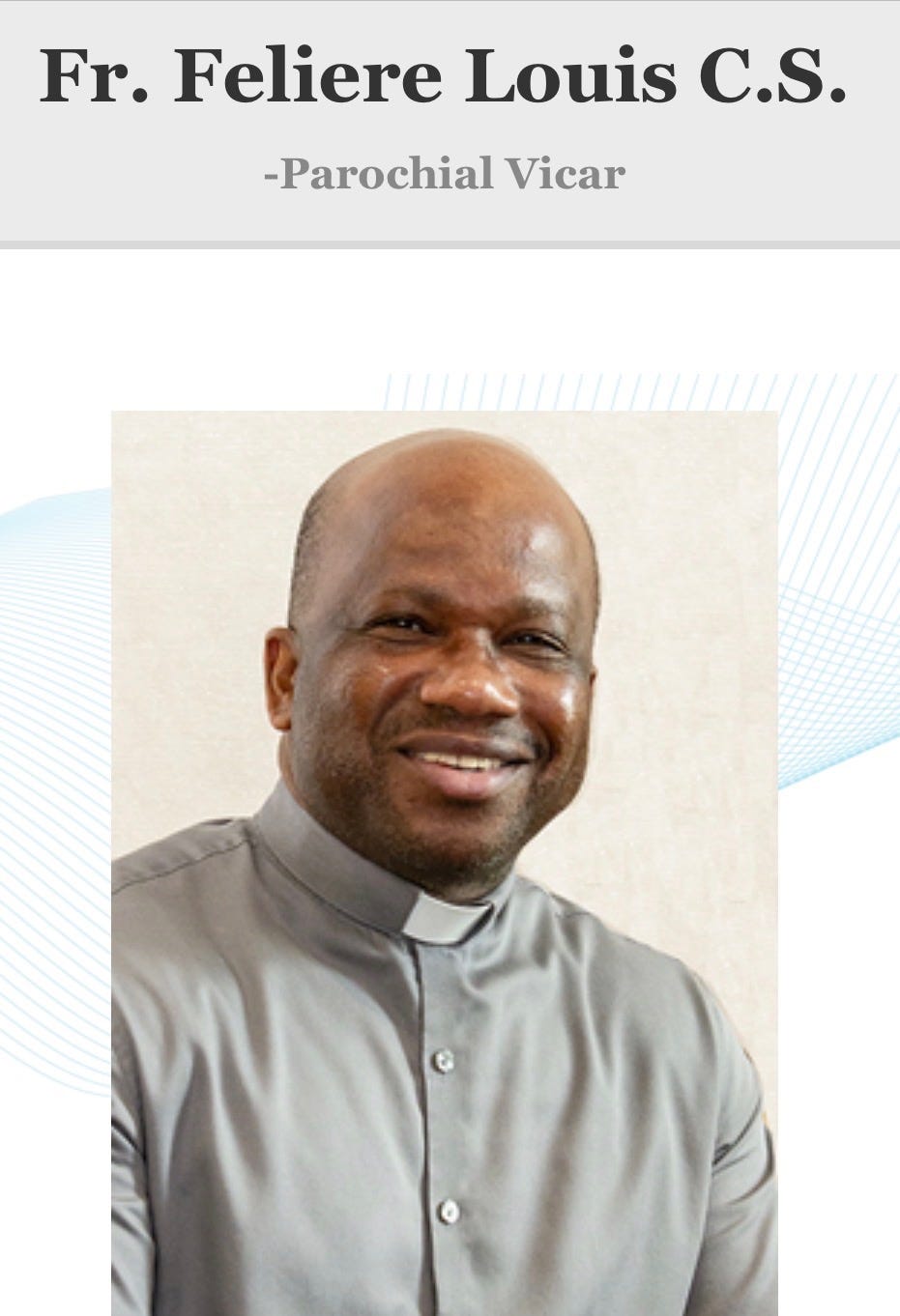
A beloved Parochial Vicar serving the nation’s southernmost Catholic Basilica is preparing to leave the United States ahead of the looming expiration of Temporary Protected Status for Haitians, a decision church sources say is intended to preserve his ability to seek lawful U.S. residency in the future.
According to multiple sources within the South Florida Archdiocese, who spoke on the condition of anonymity because they were not authorized to discuss internal personnel and immigration matters, Feliere Louis, a parish vicar at Basilica of St. Mary Star of the Sea, is voluntarily departing before the Feb. 3 deadline so he does not risk losing eligibility to lawfully return once TPS protections lapse.
Church officials said the decision reflects a hard legal reality: there is no reciprocal or special immigration accommodation for clergy under U.S. immigration law tied to TPS. Remaining beyond the expiration date could jeopardize future residency options, even for priests actively serving U.S. parishes.
The departure lands heavily in Key West, where Louis has been a central pastoral figure for Haitian and Creole-speaking Catholics, offering ministry in Haitian Creole and English at a parish that has long served as a spiritual and cultural anchor for immigrant families in the Florida Keys.
He is expected to return to minister at a small parish on the border of Haiti and the Dominican Republic.
A regional transfer that stalled
Archdiocesan sources said the Archdiocese explored a potential transfer to the Bahamas as a stopgap measure that would keep Louis in regional ministry while avoiding the risk posed by the TPS deadline.
Those efforts stalled amid escalating tensions between the Bahamas and Haiti over illegal immigration and marine-resource enforcement, including the poaching of lobster and queen conch by Haitian mothership operations in Bahamian waters on the Cay Sal Bank.
Sources said the deteriorating diplomatic and enforcement climate complicated visa approvals and clerical placement options, leaving voluntary departure as the least risky path to preserve Louis’ long-term ability to lawfully return to the United States.
They also confirmed that the entire issue facing multiple priests nation-wide made its way to the Vatican then to the Oval Office with no resolution.
A broader threat to Key West
Advocates and community leaders say the end of TPS represents the single largest threat to Key West’s service-industry workforce in decades, jeopardizing hotels, restaurants, construction firms and maritime businesses that rely heavily on Haitian and other immigrant labor.
The policy shift also collides with local politics.
Mayor Danise Henriquez oversaw the city’s adoption of a 287(g) agreement with DHS, CBP and ICE, reversing a prior city decision to negate the federal immigration-enforcement partnership.
Critics say the agreement has intensified fear across immigrant communities just as TPS protections are set to expire.
Children caught in the middle
Beyond clergy and workers, church leaders say the situation highlights a far larger unresolved issue: U.S.-born children of parents who have lived and worked legally under TPS.
Those children are American citizens, but the loss of legal status for their parents raises the prospect of family separation, parents living in undocumented limbo, or children being forced to relocate to countries they have never known. Parishes, schools and social-service agencies in the Keys are already grappling with how to respond.
At St. Mary Star of the Sea, parishioners have begun bracing for the loss of a priest many describe as a steady presence during a period of rising anxiety and uncertainty. Diocesan officials said they are evaluating interim pastoral arrangements while continuing to advocate for lawful pathways that would allow clergy and families to remain intact.
Absent federal action, church and civic leaders warn, the fallout from the end of TPS could reshape Key West’s workforce, congregations and classrooms — quietly, but profoundly.