


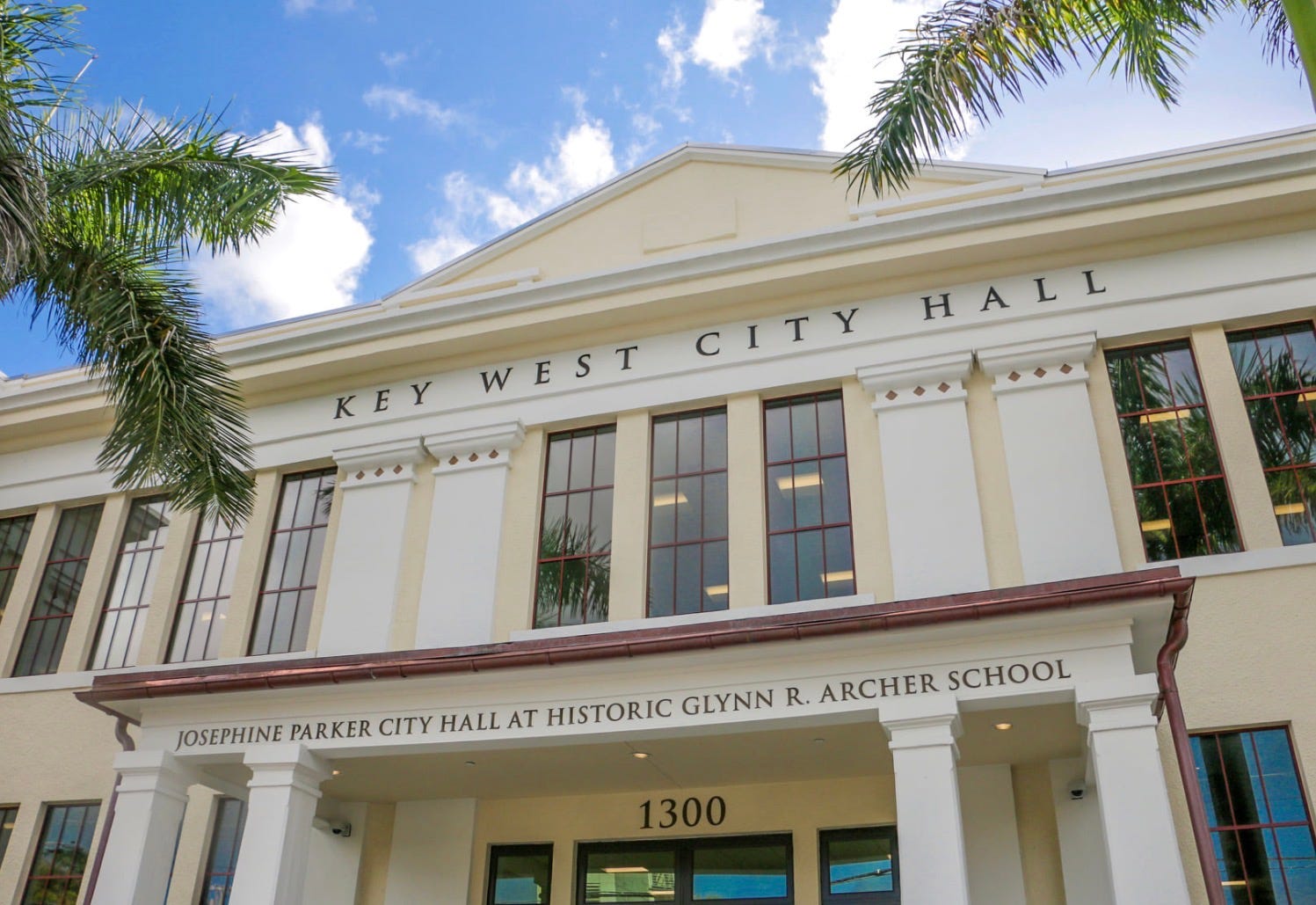
The Key West City Commission returns to City Hall on Tuesday with a crowded agenda that blends routine approvals with several high-stakes issues — including long-delayed water-quality monitoring, the approaching expiration of Temporary Protected Status critical to the local workforce, and a proposed decade-long lease extension for a major tourism operator.
Commissioners are also expected to discuss the possibility of using Tourism Development Council funds to help fund the beleaguered Key West Transit Authority.
Stantec water-quality scope draws frustration
Among the most closely watched items is a resolution approving the scope of work for Stantec Consulting Services Inc. to conduct a comprehensive water-quality assessment, mitigation strategy and long-term monitoring program.
While the item represents a formal step forward, commissioners had hoped negotiations would already be complete — as promised by City Manager Brian Barroso over the last several months — allowing the city to move directly into implementation. Instead, the commission is being asked to approve only what Stantec would do — not a finalized agreement, schedule or full cost structure.
Several members of the dais expressed disappointment that months after the issue first surfaced, the city remains at the scope-approval stage, raising the prospect of further delays before meaningful sampling resumes. The concern is amplified by ongoing public debate over nearshore water quality and environmental impacts.
Commissioners stopped short of accusing staff of wrongdoing, but frustration centered on what some described as prolonged inaction by city administration, including Barroso, on an issue that many believed should already be underway.
TPS discussion raises workforce concerns
The commission is also scheduled to discuss Temporary Protected Status (TPS) during the discussion portion of the agenda, with the federal designation set to expire Feb. 5.
While no resolution is attached to the item, its inclusion reflects mounting concern over how immigration enforcement and the loss of TPS protections could affect Key West’s workforce, particularly in health care, hospitality, construction and food services.
City officials and business owners have warned that the island’s tourism-dependent economy relies heavily on immigrant labor, including workers who are legally present but vulnerable to sudden federal policy shifts. Commissioners are expected to weigh what role, if any, the city can play in responding to potential workforce disruptions.
Historic Tours lease extension on consent agenda
Another item likely to draw attention is a proposed 10-year lease extension for the city-owned property at 1 Whitehead Street, home to operations tied to Historic Tours of America through Tropical Shell and Gifts Inc.
The resolution would extend the lease from July 15, 2028, through July 14, 2038, exercising an option previously granted by the city. Although listed on the consent agenda, the extension underscores ongoing debate about the city’s relationship with large tourism operators amid mounting pressures tied to housing, infrastructure and workforce stability.
Tourist tax for transit eyed after Duval Loop shutdown
The commission is also expected to discuss whether Key West should seek tourist tax funding to support visitor-serving transit, an item sponsored by Monica Haskell following the discontinuation of Key West Transit Authority services such as the Duval Loop.
The discussion centers on whether tourist development tax dollars could be used to stabilize or expand transit options that primarily serve visitors, including routes connecting hotels, attractions and beaches. Florida law currently allows tourist tax funds to be used for transportation systems and services designed to increase tourist-related business activity, provided the primary purpose is promoting tourism.
Supporters argue that services like the Duval Loop — along with shuttles serving the Lower Keys — helped reduce congestion and enhance the visitor experience, and that their loss underscores the need for a dedicated, sustainable funding source. Any expansion or redirection of tourist tax revenue would also require approval by the Monroe County Commission, and in some cases a local referendum.
The item comes as the city weighs broader transportation, workforce and tourism pressures, with commissioners expected to debate whether investing in visitor-friendly transit should be treated as core tourism infrastructure rather than a discretionary service.
HTA Again
In the evening session, commissioners are also expected to take up a newly conceived franchise agreement for Buggy Bus, which city staff has said would mirror the pay structure proposed for the Conch Tour Train renewal, also on the agenda. It would require payment to the city of either 5% of gross revenues or a guaranteed minimum of $7,500 per authorized vehicle annually.
Critics contend the proposal risks becoming a de facto privatization of the now-defunct Duval Loop, replacing a public transit service with a private sightseeing operation operating on public streets. They also point to long-standing complaints from residents and visitors that sightseeing trains and trolleys frequently stop primarily at Historic Tours of America–oriented businesses, creating what detractors describe as a “private Disney World on public rights-of-way — a pattern they say has contributed to congestion, traffic snarls, and crashes involving both residents and tourists, while generating new revenue streams for the City of Key West.
Both items are being proposed by the City Manager.
Long agenda, full day ahead
Beyond those headline items, the commission will consider a wide range of resolutions and ordinances, including lobbying contracts, utility and wastewater infrastructure spending, transit purchases, sightseeing vehicle franchises, solid-waste regulations and amendments to land-development rules.
The agenda also includes the annual performance evaluation of the city manager and first readings of ordinances affecting business taxes and green-building requirements.
The City Commission is scheduled to meet beginning with the morning session at 9 a.m. Tuesday, Jan. 6, at City Hall, 1300 White St. The afternoon session is scheduled for 5 p.m. The meeting will be live streamed on the city’s website, with both morning and evening sessions open to public comment.