



KEY WEST, Fla. — Key West City Manager Brian Barroso is pushing back against a second Monroe County Grand Jury report in as many years critical of City Hall, defending the city’s reform efforts while rejecting key recommendations for outside oversight — comments expressed in an email City Commissioners, the City Attorney and select members of the media early Friday morning.
In the email, sent in the wake following the release of the Winter Term 2026 Grand Jury report on Thursday, Barroso said the city acknowledges the findings but views them as largely consistent with work already underway.
Above the Fold first broke the news of the new Grand Jury Report on Thursday afternoon.

“We take the grand jury’s findings seriously,” wrote Barroso. “The City has made significant progress, but there is more work to do to modernize operations, strengthen accountability, and improve efficiency.”
The Grand Jury report cited ongoing concerns inside city government, including multiple layers of management, unclear accountability and confusing land development regulations, while recommending the creation of citizen-led committees to review staffing and building codes.
Barroso said the administration does not support those recommendations, arguing the city’s existing governance structure already provides the appropriate framework.
“At this time, we believe the existing City Charter provides a strong and appropriate governance framework,” said Barroso. “For that reason, we are not recommending the creation of additional advisory bodies. Instead, we are focusing on actionable improvements already in progress.”
He emphasized that oversight of staffing, operations and regulatory processes rests with the city’s professional administration and elected officials.
“Under the Charter, those responsibilities rest with the professional administration and the elected City Commission,” said Barroso. “We do not believe citizen-led committees on staffing and building regulations are the appropriate mechanism at this time.”
Instead, Barroso pointed to ongoing internal efforts, including a citywide budget review and a mandated 10% reduction exercise, as the primary tools for reform.
“Through the budget process and the 10% reduction exercise, departments are identifying opportunities to streamline costs, improve operations, remove redundancies, and enhance revenue,” said Barroso. “These recommendations will be shared openly with the Commission and the public and we remain committed to transparent communication, data-driven decision making, and measurable progress.”
But those reductions, previously called for by the City Commission, were not reflected in a draft of the city’s strategic plan obtained and reviewed by Above the Fold, which instead proposed increased staffing and spending across multiple departments.
Addressing criticism of the city’s organizational structure, Barroso said recent staffing changes were aimed at stabilizing operations rather than expanding management.
“It is important to clarify that while several positions have been filled over the last 15 months, the City has not added new upper-level management roles,” said Barroso. “The additional roles referenced were either charter-based or operationally essential positions that had been vacant.”
He said the city has reduced overall staffing levels and labor costs as a percentage of the budget while continuing to evaluate its structure.
“Our ongoing span-of-control and structural review is focused on identifying opportunities to consolidate functions, reduce unnecessary layers, clarify lines of authority, and ensure accountability is both defined and measurable,” said Barroso.
Barroso also acknowledged concerns about the city’s land development code, which the Grand Jury said creates unnecessary costs and confusion for residents and applicants.
“We agree the land development code can be clearer, and we are already taking steps to address this,” said Barroso, citing efforts to improve internal coordination, simplify procedures and evaluate technology upgrades to make permitting more predictable.
On the issue of public trust, which the Grand Jury said has been undermined by structural and procedural issues, Barroso said the city’s approach is focused on measurable results.
“We restore trust through performance, not promises,” said Barroso. “The steps we are taking — organizational review, fiscal discipline, process improvements — are concrete demonstrations of our commitment to responsible, effective government.”
He pointed to existing oversight mechanisms, including independent audits, public budget hearings, open meetings and procurement requirements, as well as recent internal reforms such as enhanced controls, expanded training and improved financial tracking.
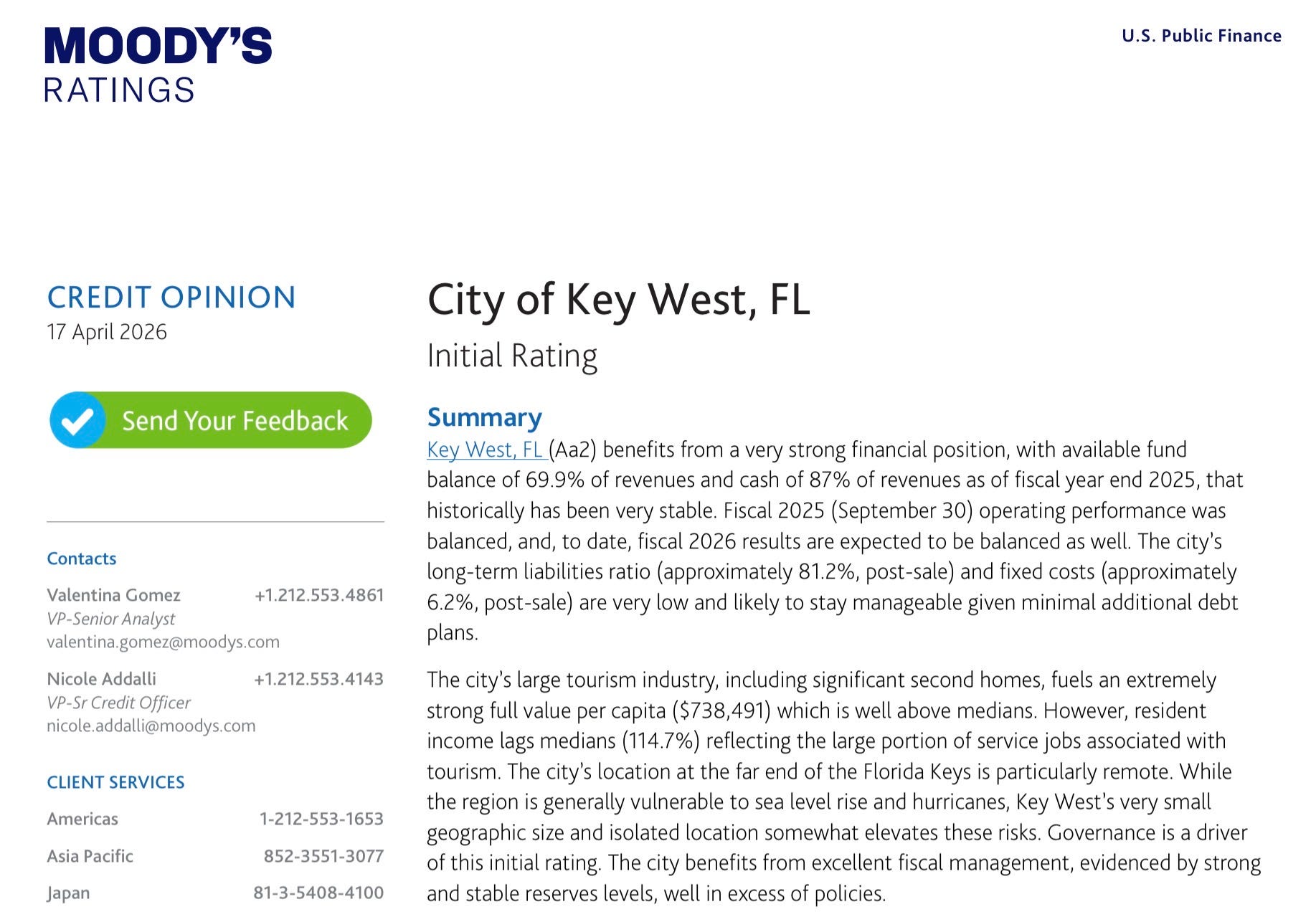
Barroso also cited the city’s recent Aa2 bond rating from Moody’s as evidence of progress.
“A Moody’s rating is widely regarded as one of the most credible measures of municipal financial strength,” said Barroso, adding that the designation reflects strong management and reserve levels exceeding policy requirements.
The latest Grand Jury report follows a prior review in 2025 that also scrutinized city operations and was tied to a sweeping public corruption investigation that resulted in the indictments of former City Attorney Ron Ramsingh, his brother, former Chief Building Official Rajindhar Ramsingh, and former Code Enforcement Director Jim Young.
Critics have said the city has not done enough to address concerns raised in that earlier report. Among the recommendations were calls for the resignation of Commissioner Lissette Carey, the termination of Assistant City Attorney Todd Stoughton, the creation of a citizen review board, the establishment of an independent auditor or inspector general, making Human Resources a charter position and requiring commissioners to certify that they reviewed materials on major agenda items.
Those measures were not implemented.
Carey did not resign, Stoughton was later promoted to oversee legislative issues for the city (for which they have an outside lobbying firm at both the state and federal levels), and other proposals failed to gain Commission approval, often on 5-2 votes.
However, many of those items were later reflected as completed on the city’s public-facing tracking system, drawing additional scrutiny from critics.
Commissioner and mayoral candidate Sam Kaufman said he agrees with the importance of the Grand Jury’s work but questioned the city’s approach to implementing reforms.
“I appreciate the City Manager’s response and agree that the Grand Jury’s work is important and deserves serious consideration,” said Kaufman. “We all want a more efficient, accountable, and effective city government.”
Kaufman believes the report highlights longstanding issues that have yet to be fully addressed.
“The Grand Jury didn’t just suggest minor adjustments — it identified structural issues that have been raised before and remain unresolved,” said Kaufman. “Many of the key recommendations from the first report … were not implemented. Those reforms go directly to transparency and accountability, and in my view, they should not be set aside.”
He said relying primarily on internal reviews is not sufficient to restore public confidence.
“The current approach described by the City Manager is largely internal … While that work may have value, it is not a substitute for open, public engagement,” said Kaufman. “These are policy decisions that should involve the City Commission and the community, not just internal administrative review.”
Kaufman also raised concerns about the timing of budget discussions and access to information.
“Being told that the Commission and the public will see the work product in early July … does not allow for meaningful input or thoughtful decision-making,” said Kaufman.
He said the Grand Jury’s emphasis on transparency and public trust requires a more open process.
“Achieving that requires more than internal analysis,” said Kaufman. “It requires open discussion, public participation, and Commission leadership.”
Kaufman said he supports the report’s recommendations and has requested the issue be formally discussed.
“I support the Grand Jury’s recommendations and believe they provide a clear roadmap for real reform,” said Kaufman. “I have asked that this report be placed on the May 7th Commission agenda so we can begin that discussion in the open, where it belongs.”
Other commissioners and Mayor Danise Henriquez did not respond to requests for comment by deadline.
Barroso said the city will continue its current course while considering the report’s findings.
“We appreciate the Grand Jury’s time, diligence, and thoughtful review of City operations,” said Barroso. “We will continue building on this progress as we move forward with the organizational review, budget reduction exercise, and broader modernization efforts already underway.”
Kaufman framed the moment as an opportunity for broader action.
“This is an opportunity to move forward in a way that restores confidence in our local government,” said Kaufman. “We should take it.”
This is an evolving story. Watch this space.