

Big Pine Key Mahogany Named Among Largest In Florida, Gains Protection Amid Development Concerns
“Sentinel of the Keys” recognized as near-record specimen on site of proposed commercial driving school.

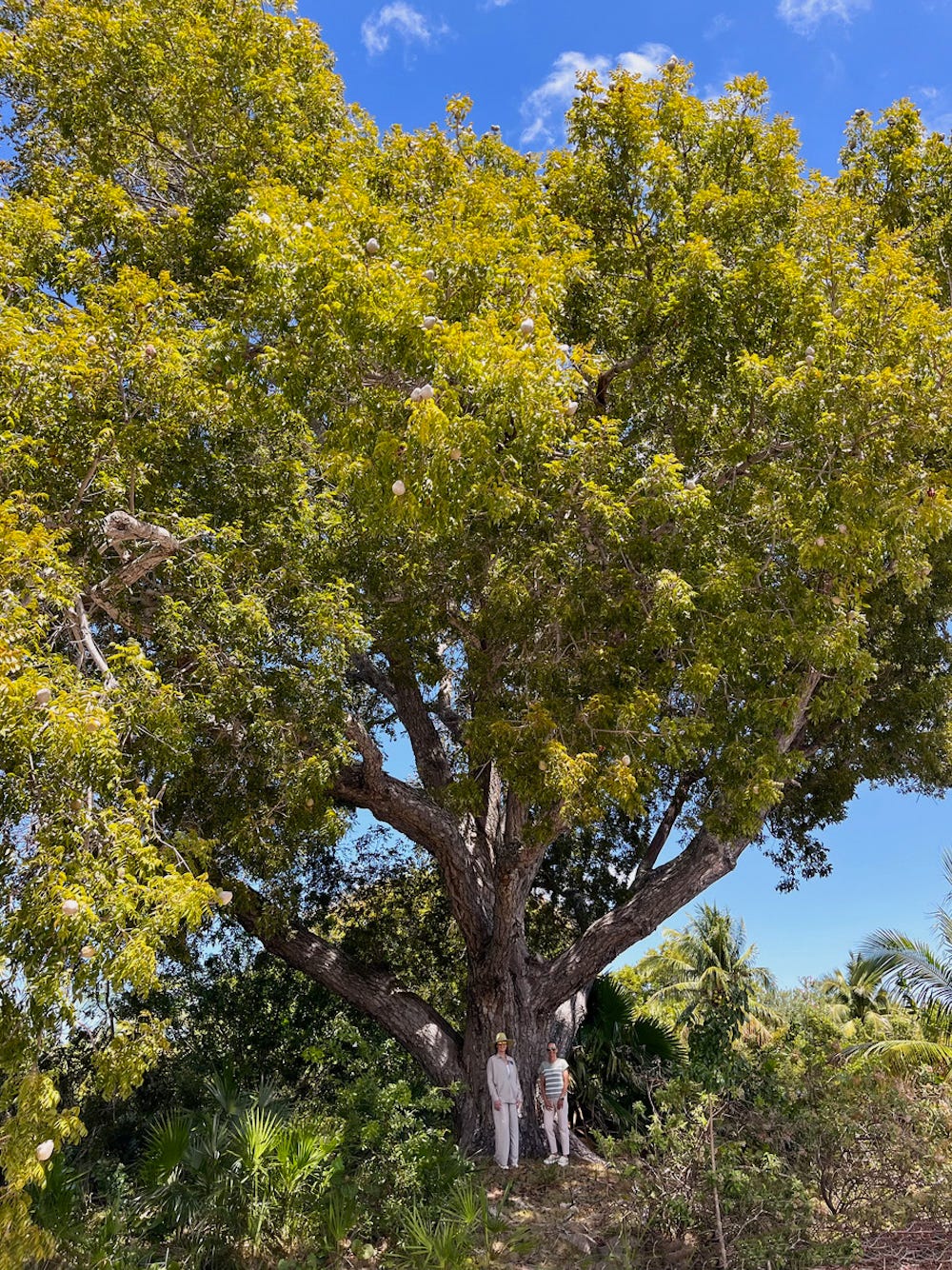
BIG PINE KEY, Fla. — A massive West Indian mahogany tree at the former state prison site on Big Pine Key has been officially recognized as one of the largest of its kind in Florida and is now protected from development under Monroe County policy.
The Florida Department of Agriculture and Consumer Services announced the designation of the tree — known locally as the “Sentinel of the Keys” — as a “Florida Challenger,” a classification used for trees that fall just short of state champion status based on a scoring system that evaluates trunk circumference, height and crown spread.
The tree was measured by Todd Little of the Florida Forest Service and is believed to be the second-largest West Indian mahogany in Florida and potentially among the largest worldwide.
The site where the tree stands is state-owned and leased to the College of the Florida Keys, which has proposed using the property for a commercial truck driving training center.

Under Monroe County Comprehensive Plan Policy 205.2.8, the tree now qualifies as a protected specimen. The policy safeguards trees whose diameter at breast height exceeds 75 percent of the state champion for the species, prohibiting disturbance from development.
The recognition followed a community effort led by the nonprofit Save Our Key Deer, which organized a public naming campaign for the tree. Christine Cook submitted the tree, and Michelle Birdwell suggested the name.
Photos released by the Florida Forest Service show the scale of the tree, including images of people standing at its base for comparison.
Large specimen trees such as the Sentinel of the Keys are considered ecologically significant. Experts say they represent resilient genetic stock capable of surviving hurricanes, drought and historic harvesting pressures, making them valuable for conservation and restoration efforts.
West Indian mahogany, once widely used in shipbuilding and fine woodworking, is now relatively rare in its native range in South Florida and the Caribbean.
Mature trees can also support biodiversity, including epiphytes and species such as the endangered mahogany mistletoe, and provide environmental benefits including carbon storage, shade and wind resistance in coastal areas.
The designation comes as development pressures continue in the Lower Keys, where remaining native habitats and large specimen trees are increasingly limited.